society
The New Economy of Despair Drugs, Easy Money, and The Fragmentation of Kashmiri Youth
By Sohail Bhat | Mon Jun 08 2026
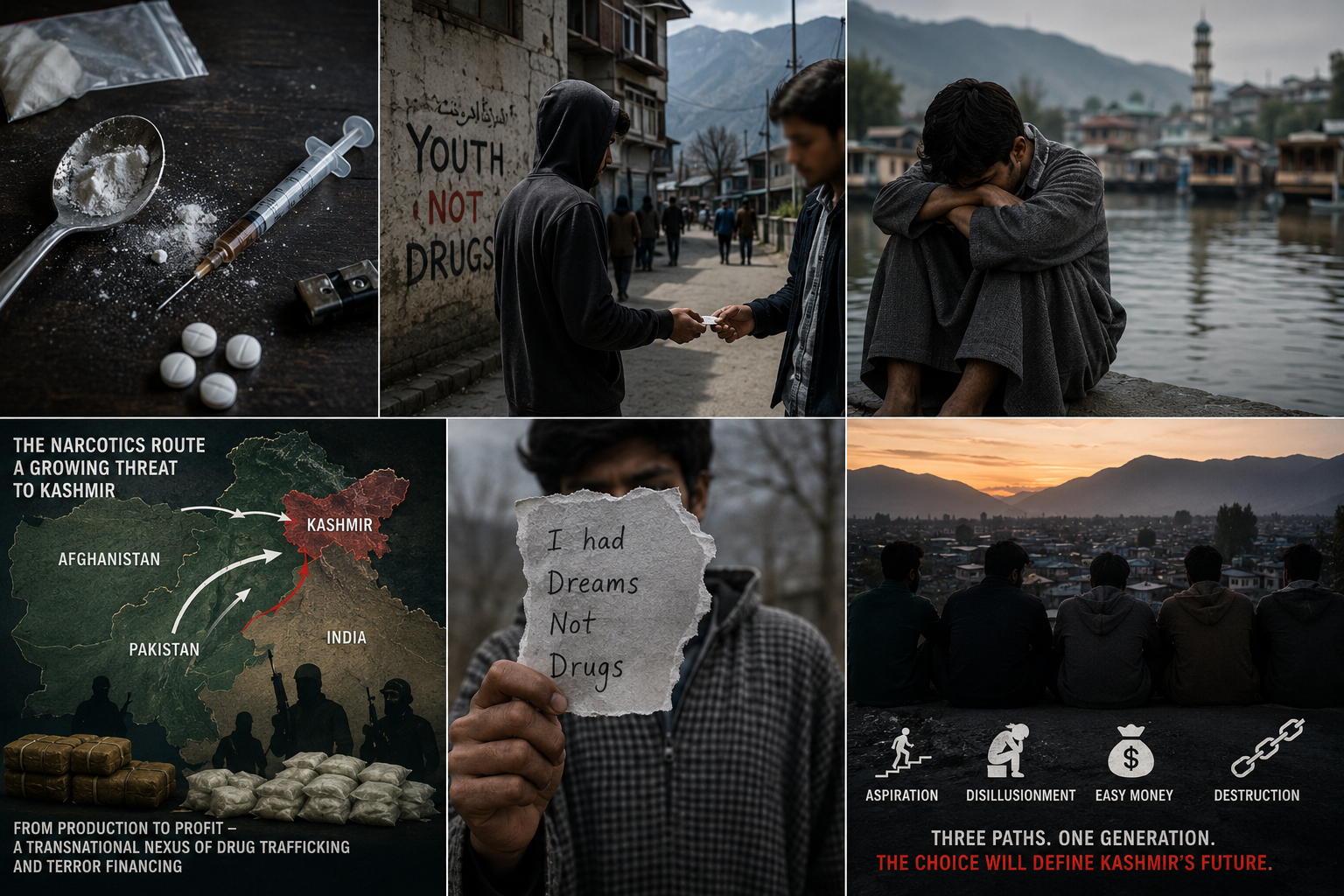
The contemporary Kashmiri social landscape is increasingly being shaped by two parallel and deeply contradictory realities. On one side stands a visibly aspirational generation attempting to reposition itself through education, entrepreneurship, digital culture, tourism, technology, competitive examinations, and new forms of professional mobility. On the other side exists a growing ecosystem of narcotics, addiction, trafficking, informal criminal economies, and easy money networks that are gradually consuming another segment of the same generation. These two realities now coexist simultaneously within Kashmiri society, often within the same neighborhoods, educational institutions, and even families.
Yet beneath this visible narrative of aspiration lies another equally significant but deeply disturbing reality: the rapid expansion of drug addiction and narcotics trafficking across the Valley.
This contradiction represents one of the most important yet insufficiently understood sociological transformations occurring in Kashmir today. Public discourse frequently celebrates the emergence of a new aspirational Kashmiri youth, and that transformation is undeniably real. One encounters young entrepreneurs opening cafés and startups, students preparing for civil services examinations, content creators building digital identities, professionals seeking global opportunities, and families increasingly investing in education and social mobility. Yet beneath this visible narrative of aspiration lies another equally significant but deeply disturbing reality: the rapid expansion of drug addiction and narcotics trafficking across the Valley.
The scale of the crisis is no longer anecdotal. Rehabilitation centres across Kashmir report alarming increases in substance abuse among young people, including teenagers. Law enforcement agencies have repeatedly acknowledged the expansion of narcotics networks within the region. Public health professionals increasingly describe addiction not merely as a criminal issue but as a widening social and psychological emergency. Some statistical assessments and rehabilitation data now suggest that Jammu and Kashmir has emerged among the most severely affected regions in India in terms of youth drug dependency, surpassing even states historically associated with narcotics crises.
Yet the deeper significance of this phenomenon lies not merely in addiction statistics. The narcotics crisis in Kashmir reveals something larger about the transformation of social values, economic behaviour, political conflict, and generational psychology. Drugs in Kashmir today cannot be understood only through the language of criminality or public health. They must also be understood through the sociology of prolonged conflict, the political economy of militancy, the culture of easy money, institutional corruption, fractured aspiration, and the emergence of parallel economies operating beneath formal structures.
The discussion becomes even more complex because the narcotics problem in Kashmir contains two interconnected but distinct dimensions. The first is addiction itself: the expanding number of young people consuming heroin, synthetic drugs, pharmaceuticals, and other narcotic substances. The second is trafficking: the sophisticated networks through which drugs move across borders, districts, and local markets while simultaneously generating enormous illicit financial flows.
These two dimensions increasingly reinforce one another. Addiction creates demand. Trafficking creates supply. But in Kashmir, trafficking has acquired additional strategic significance because narcotics are no longer merely commercial commodities. Increasingly, they intersect with militancy financing, underground networks, cross border destabilization, and informal conflict economies. This is why many security analysts now describe the phenomenon not simply as drug trafficking, but as narcotic terrorism.
The phrase may initially appear dramatic, but it reflects an evolving security reality. Over the past decade, state institutions significantly disrupted traditional hawala funding systems that once financed separatist and militant ecosystems in Kashmir. Surveillance mechanisms intensified. Financial monitoring expanded. Informal cross border transfers became more difficult. As older channels weakened, narcotics emerged as an alternative financial architecture capable of generating sustained underground revenue.
This transformation fundamentally altered the strategic significance of drug networks. Narcotics trafficking now serves multiple functions simultaneously. It generates profits for organized criminal syndicates. It finances militant infrastructure. It corrodes social stability internally. And it produces psychological deterioration among youth populations already exposed to prolonged uncertainty and political fatigue.
The geography of trafficking further reinforces the complexity of the crisis. Narcotics do not originate solely within Kashmir. The Valley increasingly functions as both destination and transit corridor within a much larger transnational network stretching across South Asia. Drugs originating in Afghanistan often move through Pakistan before entering Kashmir through multiple channels. Simultaneously, narcotics circulate through Punjab, Rajasthan, and other Indian states, creating multidirectional trafficking flows rather than a single linear route.
This larger regional ecosystem cannot be separated from broader geopolitical instability. Afghanistan’s decades long conflict economy historically produced one of the world’s largest narcotics industries. Pakistan’s border regions became deeply entangled with trafficking infrastructures over time. In such an environment, narcotics naturally intersected with arms networks, smuggling economies, insurgent financing, and informal border systems. Kashmir’s geographical vulnerability and prolonged conflict exposure made it particularly susceptible to becoming incorporated into these wider underground circuits.
However, external networks alone cannot explain the internal spread of narcotics within Kashmiri society. The more uncomfortable question concerns why segments of local youth increasingly enter these ecosystems either as consumers, facilitators, or traffickers. The answer lies partly within the transformation of social psychology during decades of insurgency and political instability.
For nearly three decades, Kashmir functioned within an abnormal economic environment where informal money flows became normalized. Funds entered through multiple unofficial channels including cross border financing, hawala systems, political patronage networks, underground trade, and conflict linked economies. Large sections of society gradually became exposed to forms of unregulated wealth disconnected from ordinary labour structures.
This produced long term sociological consequences that are still insufficiently examined. One of the most significant consequences was the normalization of easy money psychology. Wealth increasingly appeared detached from productivity, entrepreneurship, or institutional professionalism. Young people observed individuals accumulating influence and resources through informal connections, political access, underground networks, or conflict economies rather than through conventional labour and gradual economic mobility.
Over time, this altered the moral imagination of economic success itself. Labour lost prestige. Patience weakened as a social virtue. Informal wealth became socially visible. Consumption aspirations expanded faster than legitimate economic opportunities. The result was the gradual emergence of a fragmented aspirational culture where desires increasingly exceeded available institutional pathways.
This contradiction is crucial for understanding contemporary Kashmiri youth psychology. Today’s young generation is simultaneously exposed to unprecedented visibility of global lifestyles through social media and unprecedented structural uncertainty within local reality. Smartphones expose Kashmiri youth to luxury culture, digital celebrity, fast consumption, global mobility, and aspirational modernity on a daily basis. Yet many continue facing unemployment, economic stagnation, political uncertainty, emotional exhaustion, and limited institutional trust.
Under such conditions, easy money economies acquire dangerous attraction. Drug trafficking becomes appealing not merely because it generates profit, but because it promises accelerated status mobility without the slow discipline of conventional labour. For many young participants, narcotics networks appear less like criminal structures and more like alternative economic systems functioning outside institutional constraints.
This is precisely where the crisis transcends ordinary criminality and becomes civilizationally dangerous. When societies begin losing faith in legitimate pathways of advancement, underground economies gradually acquire cultural legitimacy. The trafficker no longer appears purely deviant. He increasingly appears efficient, resourceful, and economically successful within a society obsessed with visible consumption.
The tragedy is that this transformation disproportionately affects precisely those segments of youth already psychologically vulnerable. Many addicts emerge not from absolute poverty alone, but from emotional disorientation, social fatigue, fractured families, unemployment, suppressed anxiety, or identity instability. Addiction in Kashmir increasingly reflects not simply recreational behaviour but social despair masked beneath silence.
The situation becomes even more alarming when institutional complicity enters the equation. Law enforcement agencies have periodically uncovered cases involving facilitators linked to administrative structures, policing systems, or local protection networks. While such individuals represent only a small minority within institutions, their involvement reveals how narcotics economies penetrate formal structures through corruption and patronage.
This is one reason the narcotics crisis proves so resilient. Drug trafficking today operates not as isolated criminal activity but as a layered ecosystem involving smugglers, local distributors, financial intermediaries, compromised facilitators, cross border handlers, and consumers. Dismantling individual networks therefore does not automatically dismantle the larger system because demand, profit incentives, and structural vulnerabilities remain intact.
Meanwhile, public discourse often continues oscillating between moral panic and simplistic criminalization. Neither approach adequately addresses the deeper sociological dimensions of the crisis. Drug addiction cannot be resolved solely through policing because addiction itself often emerges from psychological and social fragmentation. Nor can trafficking be addressed through rehabilitation alone because trafficking increasingly intersects with organized crime, border management, corruption, and security challenges.
What Kashmir faces today is therefore not merely a narcotics problem. It faces the emergence of parallel value systems among youth populations. One value system remains rooted in education, professional mobility, entrepreneurship, and institutional participation. The other gravitates toward informal economies, accelerated consumption, emotional escape, and underground financial networks.
This internal fragmentation may ultimately become one of the defining social questions of contemporary Kashmir.
The danger is particularly severe because addiction destroys not only individual lives but collective social energy. A society already carrying decades of political exhaustion cannot afford widespread generational deterioration. Every addict represents not merely a personal tragedy but a weakening of social capacity itself. Families collapse emotionally. Communities internalize fear and shame. Public trust deteriorates. Institutions become overwhelmed. And the future gradually narrows.
Yet despite the gravity of the situation, the response still lacks a sufficiently integrated long term framework. Security agencies approach narcotics primarily through law enforcement. Health professionals frame it through rehabilitation. Families often approach it through stigma and concealment. Politicians periodically invoke it rhetorically. But the crisis demands something larger: a civilizational response combining security strategy, psychological intervention, educational reform, employment generation, institutional accountability, and cultural reconstruction simultaneously.
Most importantly, Kashmir must confront the deeper moral economy that enabled the normalization of easy money culture in the first place. Societies cannot indefinitely celebrate visible wealth while ignoring the origins of that wealth. Nor can they expect youth to value patience and institutional discipline when informal power structures continue rewarding shortcuts and patronage.
The future of Kashmir may ultimately depend upon which generation prevails sociologically: the aspirational generation seeking dignity through legitimate mobility, or the fragmented generation increasingly seduced by narcotics, informal economies, and accelerated consumption without moral restraint.
That struggle is no longer occurring invisibly beneath the surface of society. It is now unfolding openly across neighborhoods, campuses, rehabilitation centres, marketplaces, digital culture, and family life itself. And perhaps that is what makes the narcotics crisis in Kashmir far more than a law-and-order issue. It is increasingly becoming a battle over the moral, psychological, and civilizational direction of an entire generation.
"
Related Articles
Kashmir tourism and the Architecture of Reassurance
Bashir Assad
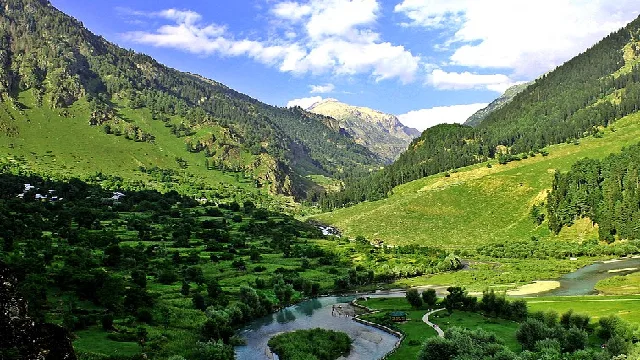
Every summer, Kashmir begins preparing itself for observation. Roads are repaired with unusual urgency, flowerbeds appear along major boulevards, security visibility becomes more calibrated, and tourism statistics start acquiring political significance beyond economics. Hotels reopen after long winters, houseboats are repainted, taxi operators negotiate seasonal expectations, and social media fills with carefully framed images of lakes, mountains, tulip gardens, saffron fields, cafés, and snow-covered meadows.

Managing Instability in the Modern Middle East
Mohammad Zaid Malik
The contemporary Middle East is no longer merely a region experiencing recurring crises. It is increasingly becoming a geopolitical system in which instability itself has acquired structural permanence.
Beyond Surveillance: Reimagining Madrasas and Religious Seminaries in Jammu and Kashmir
Yawar Yousef
The debate surrounding madrasas and religious seminaries in Jammu and Kashmir has remained trapped within a narrow and repetitive framework for far too long. Public discourse oscillates between suspicion and defensiveness, between securitized scrutiny on one side and emotional religious rhetoric on the other

The Decade of Connectivity How Roads, Railways and Digital Networks Are Reshaping Kashmir
Yawar Yousef/Yasir Lone
For much of its modern history, Kashmir has been discussed through the language of conflict, diplomacy, security, and constitutional politics. Governments changed, policies evolved, and public debates shifted, yet the dominant narratives surrounding the region remained remarkably consistent.
Waiting for a Vacancy Education, Aspiration and the Politics of Waiting in Kashmir
Suhail Bhat
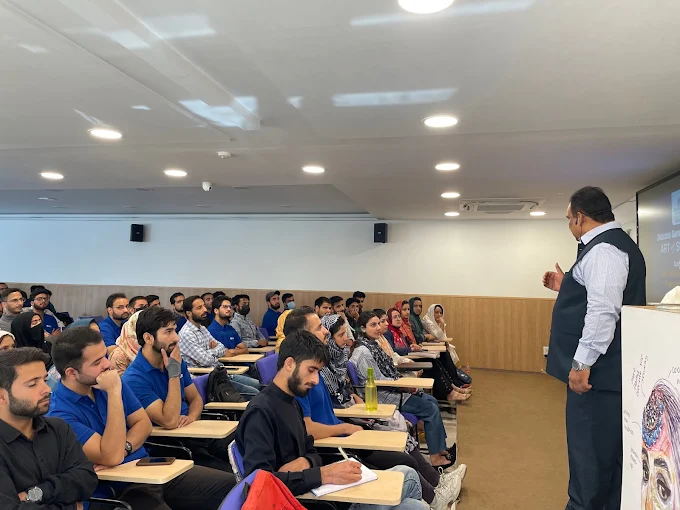
At six o'clock on a cold winter morning, long before the markets of Srinagar begin to stir and before office-goers emerge onto the roads, hundreds of young men and women can already be seen standing outside examination centres.

Islam Beyond Arab Identity and Symbolism
Mohammad Zaid Malik
There are moments in history when a message emerges from a particular land yet refuses to belong to that land alone. Islam was one such message. It rose in the sands of seventh century Arabia but from its very inception, it spoke in a language meant for all of humanity.