security
Managing Instability in the Modern Middle East
By Mohammad Zaid Malik | Sun Jun 07 2026
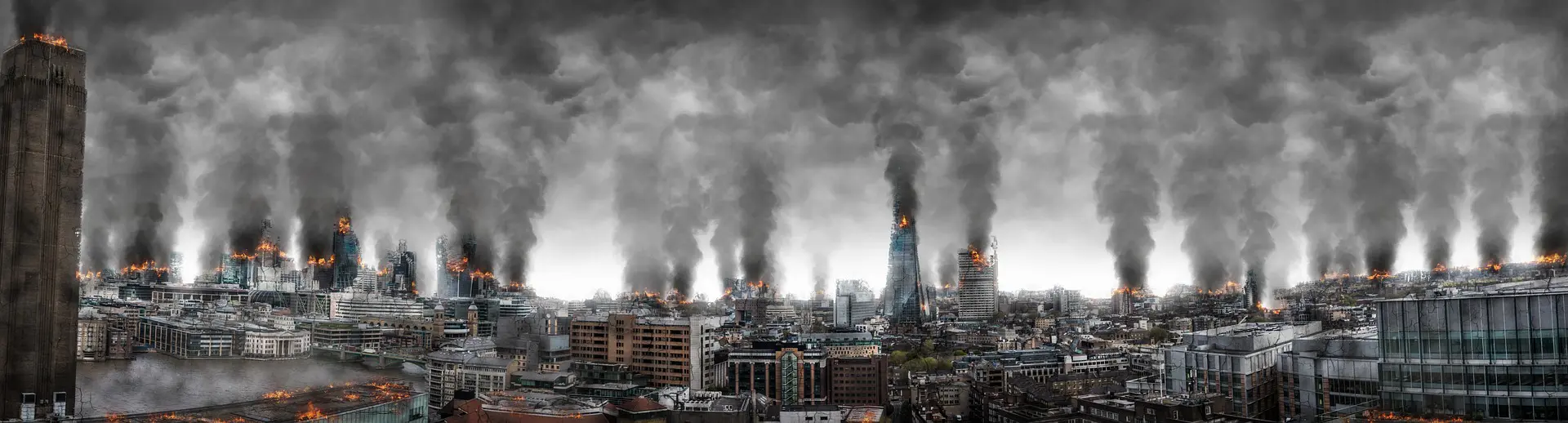
The contemporary Middle East is no longer merely a region experiencing recurring crises. It is increasingly becoming a geopolitical system in which instability itself has acquired structural permanence. What appears externally as a succession of wars, insurgencies, proxy confrontations, and humanitarian disasters is in fact the manifestation of a deeper transformation within the regional order: the gradual institutionalization of conflict as an enduring instrument of power, legitimacy, and strategic influence.
For decades, policymakers and international observers approached Middle Eastern instability as a temporary condition awaiting diplomatic resolution. Yet the persistence of violence across Palestine, Lebanon, Syria, Iraq, Yemen, and the Red Sea corridor suggest a different reality.
For decades, policymakers and international observers approached Middle Eastern instability as a temporary condition awaiting diplomatic resolution. Yet the persistence of violence across Palestine, Lebanon, Syria, Iraq, Yemen, and the Red Sea corridor suggest a different reality. Conflict in the region is no longer simply episodic. It has evolved into a self-reproducing security architecture sustained by competing ideological visions, fragmented sovereignties, external intervention, proxy militarization, and the strategic management of controlled instability.
At the centre of this evolving order lies the unresolved Palestinian question which continues to function not merely as a territorial dispute, but as the foundational psychological and political fracture of the modern Middle East. The creation of Israel in 1948 and the displacement of Palestinians during the Nakba did not simply redraw geography. It reshaped the political consciousness of the Arab world, produced enduring crises of legitimacy within regional regimes, and transformed resistance itself into a permanent organizing principle within Middle Eastern politics.
Yet the contemporary crisis can no longer be understood solely through the traditional Arab Israel framework that dominated twentieth century geopolitics. The region has undergone a profound structural transition. Conventional interstate warfare has gradually given way to asymmetrical conflict, ideological mobilization, and proxy confrontation. State sovereignty itself has become increasingly fragmented as non-state actors, transnational militias, ideological networks, and externally supported armed movements now exercise strategic influence once monopolized by formal governments.
No event accelerated this transformation more significantly than the Iranian Revolution of 1979. Iran’s emergence as a revolutionary Islamic republic fundamentally altered the strategic grammar of the Middle East. Tehran no longer viewed itself merely as a nation state pursuing conventional regional interests. It increasingly positioned itself as the ideological centre of a broader resistance architecture opposed to Israeli power, Western influence, and Sunni Arab strategic alignment with the United States.
This ideological repositioning transformed regional competition from a primarily territorial contest into a struggle over legitimacy, identity, and regional order itself. Iran’s influence expanded not through direct territorial conquest, but through the cultivation of strategic depth via non state actors capable of projecting power across multiple theatres simultaneously. Hezbollah in Lebanon, Hamas in Gaza, Shiite militias in Iraq, and the Houthis in Yemen became components of a decentralized but interconnected geopolitical network designed to impose continuous strategic pressure without triggering total conventional war.
The significance of this model extends beyond military effectiveness alone. Proxy warfare in the contemporary Middle East increasingly functions as a mechanism for managing escalation itself. Regional actors seek to avoid direct interstate wars that carry unpredictable and potentially catastrophic consequences, yet they simultaneously require controlled confrontation to preserve deterrence, ideological credibility, and domestic legitimacy. The result is the normalization of calibrated instability.
This strategic logic is particularly visible in the relationship between Israel and Iran. Despite decades of hostility, both sides have historically exercised caution regarding direct conventional war. Instead, confrontation has been displaced geographically through Syria, Lebanon, Gaza, maritime routes, cyber operations, intelligence warfare, and targeted assassinations. Conflict thus becomes diffuse, continuous, and strategically managed rather than formally declared.
The Syrian conflict represents perhaps the clearest illustration of how modern Middle Eastern wars now operate as layered geopolitical ecosystems rather than isolated national crises. What began as an internal uprising rapidly evolved into a multidimensional struggle involving regional powers, transnational militias, great power competition, sectarian mobilization, energy corridors, and competing visions of regional order. Syria ceased to function merely as a sovereign state. It became an arena through which multiple actors pursued overlapping strategic objectives simultaneously.
Iran’s deep entrenchment in Syria was not simply about preserving the Assad government. It was fundamentally about maintaining a contiguous axis of influence extending from Tehran through Iraq and Syria toward Lebanon and the Mediterranean. For Israel, this represented an unacceptable alteration of regional military geography. Consequently, Syria became the site of sustained but undeclared confrontation between two rival strategic architectures.
At the same time, the region’s instability has increasingly acquired economic and institutional dimensions. Security sectors across the Middle East have expanded enormously over the past decades. Military industries, intelligence systems, border infrastructures, surveillance technologies, private security networks, and foreign military partnerships now constitute major components of state power and political legitimacy. In many cases, securitization itself has become economically and politically functional.
This is one reason why permanent instability proves so difficult to resolve. Entire state structures increasingly derive authority from the management of threat environments. Governments justify exceptional security measures through perpetual crisis conditions. Non state actors sustain relevance through resistance narratives. External powers maintain regional influence through security partnerships and military dependencies. Instability therefore becomes embedded not only in geopolitics, but within the institutional logic of the regional order itself.
The humanitarian consequences of this system have been devastating. Gaza, Yemen, Syria, and parts of Iraq and Lebanon have experienced prolonged civilian suffering on a scale that has normalized catastrophe itself within global consciousness. Yet even humanitarian crises increasingly operate within geopolitical calculations. Civilian suffering becomes instrumentalized through media warfare, diplomatic pressure, legitimacy narratives, and international polarization.
The recent cycles of violence in Gaza demonstrate this dynamic with particular intensity. Israel frames military operations through the doctrine of national security and counterterrorism, while Palestinian armed groups position resistance as anti-occupation struggle. Regional powers simultaneously weaponize the conflict symbolically to reinforce ideological narratives and geopolitical alignments. Humanitarian catastrophe thus coexists with strategic calculation.
Meanwhile, the Abraham Accords introduced another major realignment into the regional landscape. The normalization agreements between Israel and several Arab states reflected the gradual erosion of the older Arab consensus centred exclusively upon Palestine. For countries such as the United Arab Emirates and Bahrain, strategic modernization, technological cooperation, economic diversification, and shared concerns regarding Iran increasingly outweighed traditional ideological confrontation with Israel.
This shift revealed a profound transformation within Arab political priorities. The central regional divide is no longer simply Arab versus Israeli. Increasingly, it is becoming a contest between competing models of regional order: one centred around strategic normalization, economic integration, and state stability; the other organized around resistance, ideological mobilization, and anti-Western geopolitical positioning.
Yet normalization itself has not resolved the underlying crisis. If anything, it has intensified fragmentation within the region. For Iran and aligned movements, normalization represents the institutional legitimization of Israeli regional integration without meaningful resolution of Palestinian statehood. For normalization states, however, perpetual confrontation increasingly appears economically unsustainable and strategically counterproductive.
This fragmentation reflects a deeper collapse of collective regional architecture. The modern Middle East no longer functions through coherent blocs or stable alliances. Instead, it increasingly resembles a fluid security marketplace characterized by temporary alignments, overlapping rivalries, tactical partnerships, and fragmented sovereignties.
The role of the United States remains central within this evolving order, though its position has become increasingly paradoxical. Washington continues to function as Israel’s principal strategic guarantor while simultaneously attempting to maintain broader regional stability. Yet American interventions over the past two decades, particularly in Iraq, profoundly reshaped the regional balance in unintended ways. The destruction of Iraqi state capacity intensified sectarian fragmentation, expanded Iranian influence, and accelerated the proliferation of non-state militias across the region.
More broadly, American policy increasingly reflects the limitations of external power management within fragmented geopolitical environments. Military superiority alone has repeatedly failed to produce durable political settlements. Instead, interventions often redistribute instability rather than resolve it.
Simultaneously, new global actors such as China and Russia have expanded their regional presence through economic diplomacy, energy partnerships, arms relationships, and strategic positioning. The Middle East is therefore no longer exclusively shaped by American hegemony. It is becoming integrated into a wider multipolar competition where regional instability intersects with global strategic rivalry.
Perhaps the most important feature of the contemporary Middle East is the normalization of unresolved conflict itself. Entire generations across the region have grown up within conditions where ceasefires replace settlements, deterrence substitutes for peace, and temporary de-escalation is mistaken for stability. Political systems increasingly manage crises rather than resolve them.
This reality carries profound long-term implications. Societies exposed continuously to militarization, displacement, surveillance, ideological polarization, and economic insecurity gradually internalize instability as ordinary political existence. Public psychology adapts to perpetual uncertainty. Emergency conditions become normalized. Conflict becomes administratively managed rather than historically resolved.
The danger, therefore, is not simply the continuation of violence. It is the emergence of a regional order in which instability itself becomes permanently institutionalized.
The Middle East today stands at precisely such a threshold. The region is no longer moving predictably toward either comprehensive war or comprehensive peace. Instead, it increasingly oscillates within a controlled but highly combustible equilibrium sustained through proxy confrontation, securitized governance, fragmented legitimacy, and geopolitical competition.
Without a serious rethinking of regional security architecture, sovereignty, Palestinian statehood, and external interventionism, the cycle is unlikely to end. Military superiority alone cannot produce durable legitimacy. Proxy warfare cannot indefinitely substitute for political settlement. Economic normalization cannot permanently bypass unresolved historical grievances.
Until these structural contradictions are addressed, the Middle East will likely remain trapped within an era where conflict is no longer an interruption of political order, but one of its defining organizing principles.
Related Articles
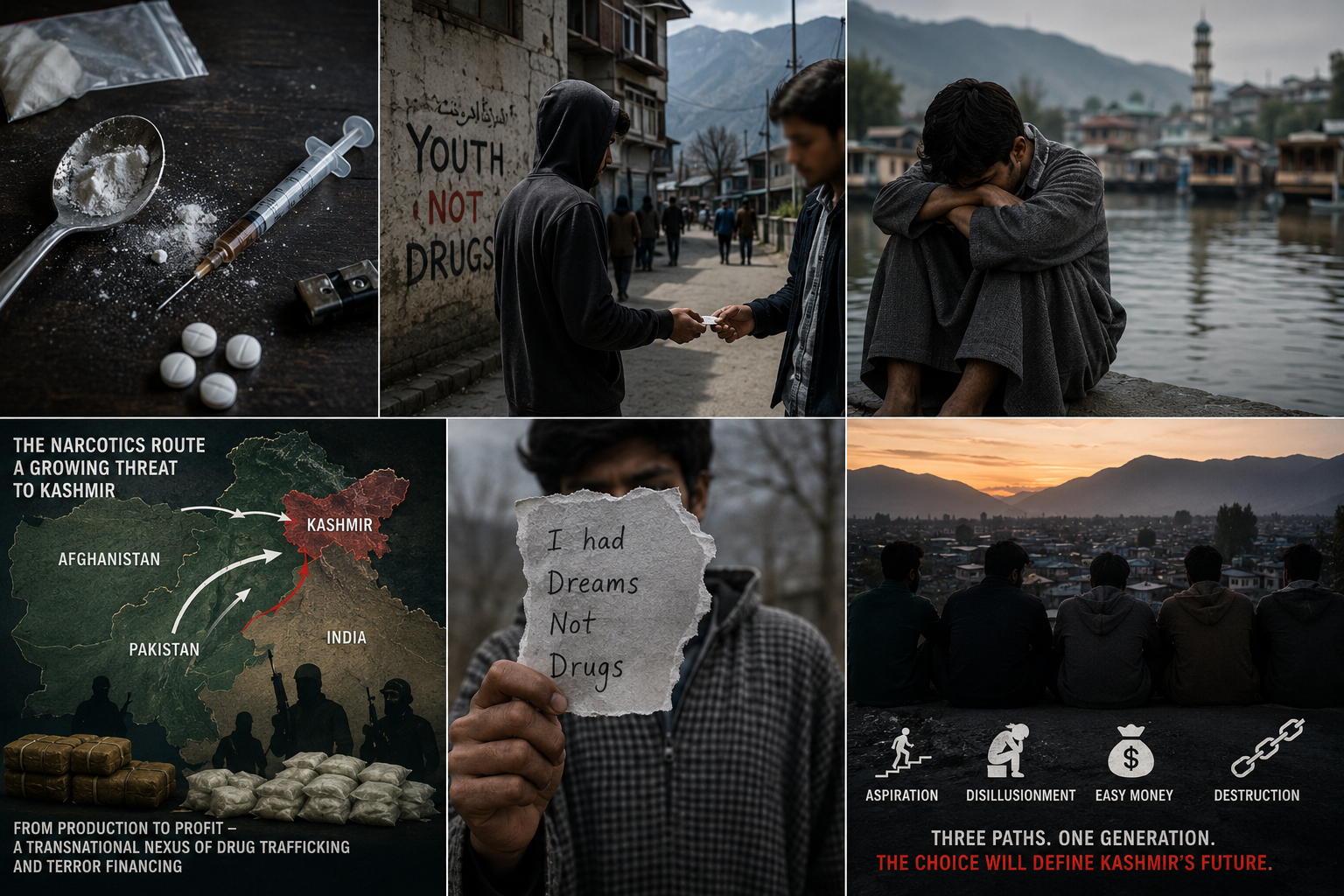
The New Economy of Despair Drugs, Easy Money, and The Fragmentation of Kashmiri Youth
Sohail Bhat
The contemporary Kashmiri social landscape is increasingly being shaped by two parallel and deeply contradictory realities. On one side stands a visibly aspirational generation attempting to reposition itself through education, entrepreneurship, digital culture, tourism, technology, competitive examinations, and new forms of professional mobility....

Kashmir tourism and the Architecture of Reassurance
Bashir Assad
Every summer, Kashmir begins preparing itself for observation. Roads are repaired with unusual urgency, flowerbeds appear along major boulevards, security visibility becomes more calibrated, and tourism statistics start acquiring political significance beyond economics. Hotels reopen after long winters, houseboats are repainted, taxi operators negotiate seasonal expectations, and social media fills with carefully framed images of lakes, mountains, tulip gardens, saffron fields, cafés, and snow-covered meadows.
Beyond Surveillance: Reimagining Madrasas and Religious Seminaries in Jammu and Kashmir
Yawar Yousef
The debate surrounding madrasas and religious seminaries in Jammu and Kashmir has remained trapped within a narrow and repetitive framework for far too long. Public discourse oscillates between suspicion and defensiveness, between securitized scrutiny on one side and emotional religious rhetoric on the other
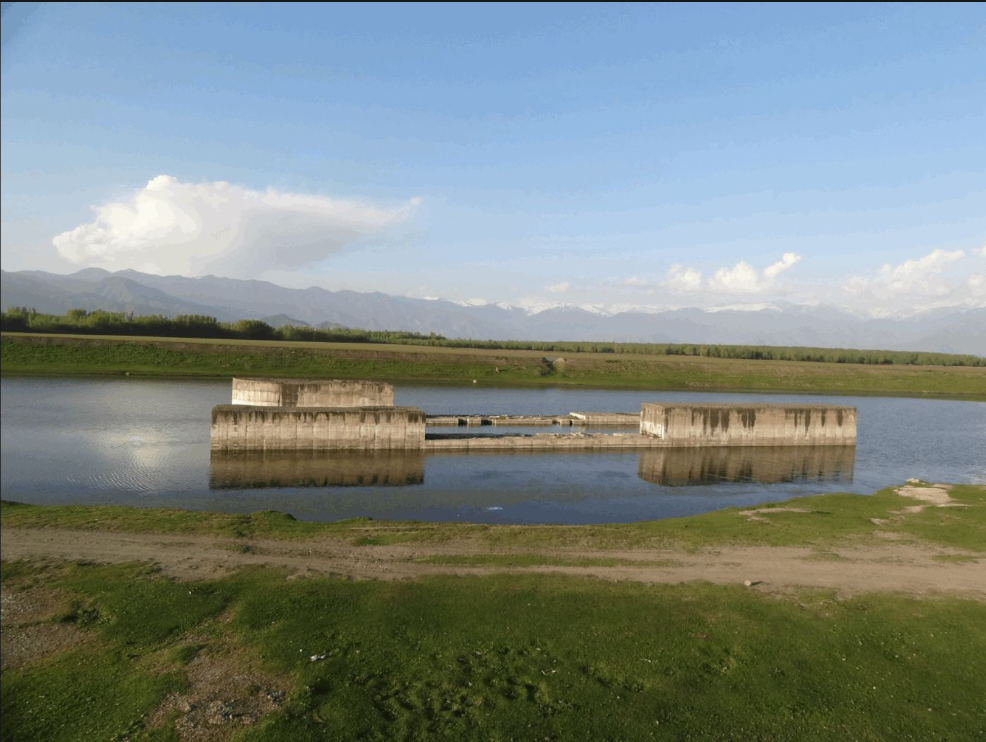
TULBUL NAVIGATION PROJECT: Four Decades of Deadlock and Kashmir’s Stunted Water Economy
Pradeep Kumar Saxena
A partially built structure at the outlet of Wular Lake in north Kashmir has stood frozen since 1987, which is a mute testimony to the decades of restraint India exercised in the name of goodwill and friendship vis-a-vis Pak. The Tulbul Navigation Project, a modest navigation lock on the Jhelum at the lake’s outfall, was suspended when India halted construction in good faith following Pakistan’s objection.
Is the Calm Holding
Bashir Assad
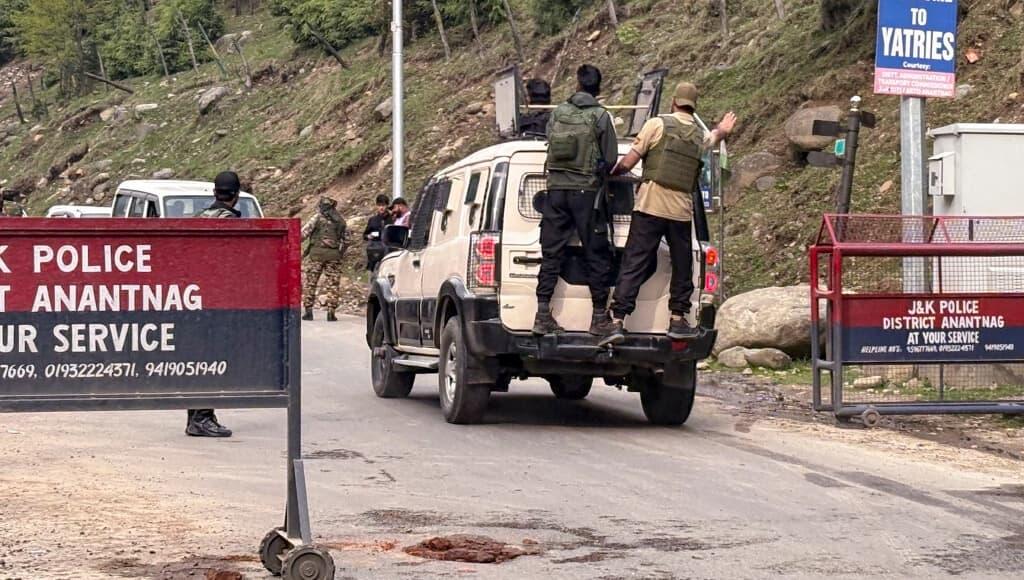
Kashmir after Anantnag and Kulgam For much of the period following the Pahalgam attack, the most striking feature of Kashmir's security landscape was the relative absence of major attacks. That did not mean the threat had gone away. The Valley remained heavily guarded, intelligence operations continued and security agencies maintained a close watch over areas that had, at different points, been active theatres of militancy.
India Kept the Indus Waters Treaty Alive — Until It Became an Unbearable Burden
Kushvinder Vohra
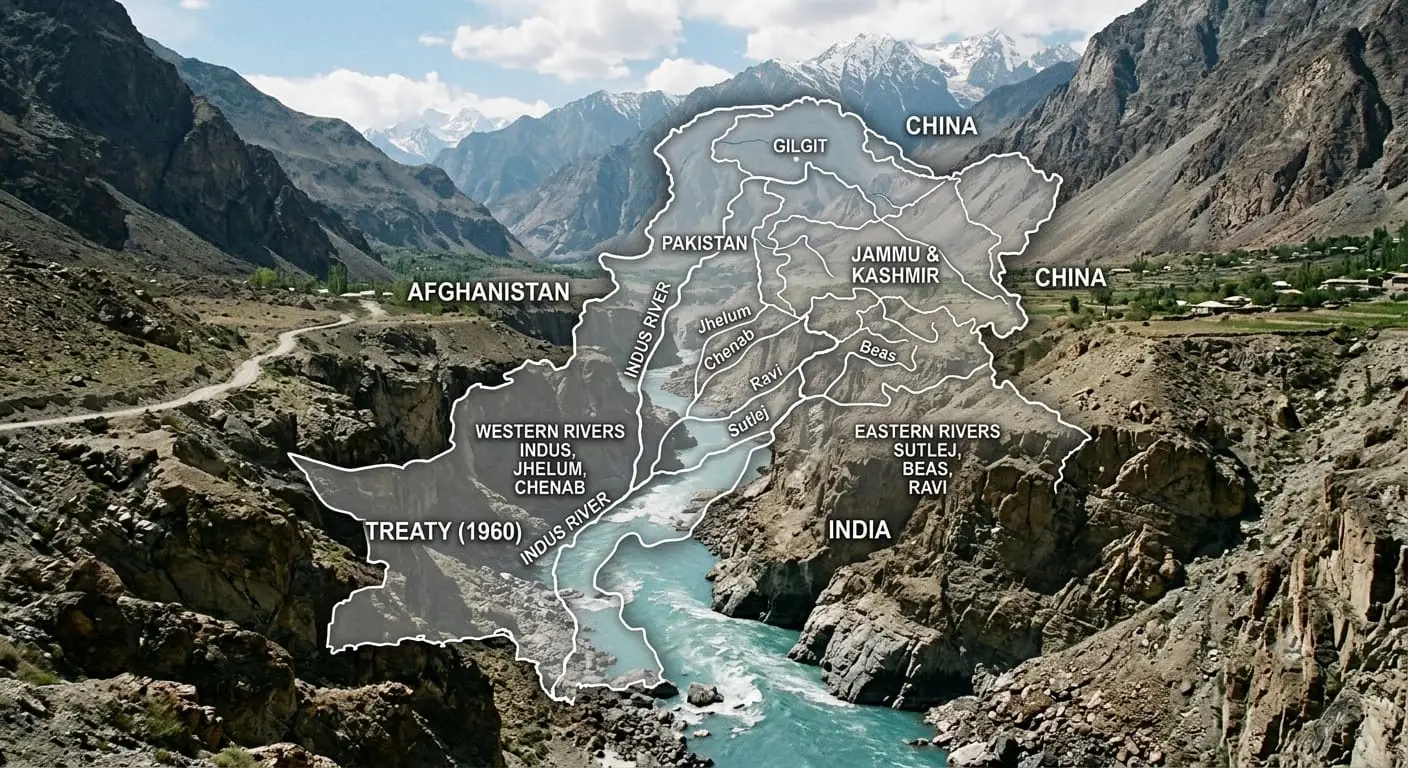
For decades, the Indus Waters Treaty (IWT) has been celebrated globally as one of the world’s most successful international water-sharing agreements. It survived wars, military stand-offs, and prolonged hostility between India and Pakistan. Yet one fundamental question has rarely been examined honestly: what actually kept the Treaty alive for over six decades?