politics
Kashmir tourism and the Architecture of Reassurance
By Bashir Assad | Mon Jun 08 2026
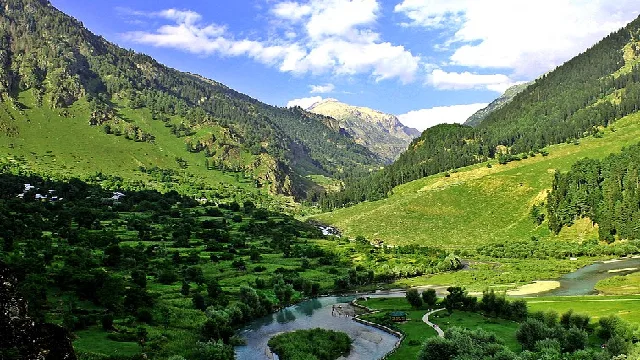
Every summer, Kashmir begins preparing itself for observation. Roads are repaired with unusual urgency, flowerbeds appear along major boulevards, security visibility becomes more calibrated, and tourism statistics start acquiring political significance beyond economics. Hotels reopen after long winters, houseboats are repainted, taxi operators negotiate seasonal expectations, and social media fills with carefully framed images of lakes, mountains, tulip gardens, saffron fields, cafés, and snow-covered meadows. The Valley begins performing itself once again for visitors, for television cameras, for policy narratives, and increasingly for the digital gaze of the outside world.
In Kashmir, tourism functions not merely as an economic sector, but as a symbolic performance of stability where hospitality, perception, and political messaging increasingly converge.
Tourism in Kashmir has never been merely tourism. It has always carried symbolic weight disproportionate to its economic contribution. Tourist arrivals are interpreted as indicators of peace, decline in tourist numbers is read as evidence of instability, and every successful season is projected as confirmation of political normalization. The tourist in Kashmir therefore occupies a peculiar role. He is not simply a consumer of landscape. He becomes an unwitting participant in a larger political theatre where his presence itself acquires interpretive value.
This relationship between tourism and politics is not unique to Kashmir. States across the world often use tourism to signal stability and attractiveness. But in Kashmir the symbolism becomes unusually intense because tourism operates within the shadow of a conflict that has lasted for decades and has deeply shaped both internal society and external perception. The Valley has become a place where ordinary economic activity frequently acquires political meaning. A crowded market is not just a crowded market. A full hotel season is not just an economic indicator. Even photographs of tourists skiing, boating, or shopping become embedded within wider narratives about order, legitimacy, governance, and public mood.
Yet beneath this visible surface lies a more complicated reality. Tourism in Kashmir simultaneously functions as livelihood, aspiration, emotional relief, symbolic reassurance, and performance labour. It produces income but also anxiety. It creates optimism but also exhaustion. It offers visibility to local businesses while sometimes obscuring the deeper structural uncertainties that continue shaping everyday life. The image of normalcy projected through tourism often exists alongside invisible forms of social fatigue that remain outside camera frames.
The uncertainty surrounding tourism in Kashmir cannot be understood merely through the language of market fluctuation or seasonal instability. It is rooted in a much deeper historical condition shaped by decades of political violence, externally sustained militancy, and recurrent disruptions to civilian life. The Valley’s social and economic rhythms have repeatedly remained vulnerable to episodes of cross border terrorism that continue to interrupt processes of normalization even during periods of visible calm.
The significance of such violence extends far beyond its immediate security implications. Incidents targeting civilians, particularly those directed at symbolic sectors such as tourism, exert disproportionate psychological and economic consequences because they destabilize the very architecture of public confidence upon which tourism economies depend. The Pahalgam terrorist attack of last year, in which twenty-seven tourists were killed, represented precisely such a rupture. Beyond the human tragedy itself, the attack functioned as a reminder that the tourism sector in Kashmir operates within a fragile environment where perceptions of safety remain continuously susceptible to sudden destabilization by actors seeking to disrupt normal civic and economic life.
What is sociologically important is not only the episodic nature of such violence, but the long term behavioural adaptations it produces within society. Repeated exposure to uncertainty gradually generates what may be described as a culture of conditional normalcy, where communities continue to engage in routines of commerce, hospitality, mobility, and public life while simultaneously internalizing the possibility of abrupt interruption. The consequence is the emergence of a society that learns to function not through the resolution of anxiety, but through accommodation with it.
Tourism in Kashmir therefore exists within a paradoxical framework. It represents aspiration, recovery, and economic vitality, yet it also remains structurally dependent upon the management of insecurity generated by forces operating beyond the local tourism economy itself. The performative calm visible within tourist spaces must consequently be understood not as the absence of underlying tension, but as a socially cultivated response to a prolonged condition of geopolitical vulnerability.
What makes the Kashmiri tourism experience sociologically important is not merely the number of visitors or revenue generated. It is the way tourism restructures social behaviour itself. Entire communities become dependent on seasonal perceptions generated elsewhere. Hotel owners monitor news channels not simply as citizens but as economic survivors. Taxi operators interpret political developments through anticipated tourist cancellations. Artisans track geopolitical tension through customer footfall. A single violent incident, even geographically distant from tourist zones, can collapse months of economic planning overnight. Stability therefore becomes not an experienced certainty but a fragile atmosphere continuously vulnerable to interruption.
The tourism worker in Kashmir consequently inhabits a psychologically complex position. He must project calm regardless of internal anxiety. He performs hospitality within an environment where unpredictability remains permanently present beneath ordinary life. This performance gradually evolves into a social discipline. Smiling becomes labour. Reassurance becomes occupation. The maintenance of normalcy itself becomes economically necessary.
Visitors often encounter extraordinary warmth in Kashmir and interpret it simply as cultural hospitality. While hospitality certainly possesses deep roots within Kashmiri culture, the modern tourism economy has layered additional pressures upon it. For many workers in the sector, emotional presentation is inseparable from survival. The tourist must leave reassured, relaxed, enchanted, and willing to return. Negative atmospheres become economically dangerous. This creates subtle behavioural conditioning within tourism spaces where discomfort, political tension, frustration, or fear are carefully managed or concealed.
In recent years, social media has intensified this process. Tourism is no longer experienced privately. Every tourist now becomes a broadcaster. Lakes, cafés, gondolas, mountain roads, gardens, and snowfall are instantly transformed into circulating digital images consumed by millions. Kashmir increasingly exists simultaneously as physical territory and online visual product. Local businesses adapt accordingly. Cafés are designed for photography as much as for food. Tourist spots become stages for digital self-representation. Scenic beauty is curated for algorithms.
This digitalization of tourism has produced new forms of aspiration among Kashmiri youth as well. Young entrepreneurs open boutique cafés, adventure businesses, photography services, and luxury homestays designed around aesthetic appeal. A generation raised amidst conflict now seeks economic and psychological distance from older narratives through lifestyle entrepreneurship connected to tourism culture. Yet this shift also produces tensions. The desire to project modernity and cosmopolitan normalcy often coexists uneasily with unresolved political memory and social anxiety.
What emerges is a layered social landscape where tourism simultaneously conceals and reveals deeper truths about Kashmir. On one level, tourism undeniably brings employment, mobility, optimism, and economic circulation. Entire sectors depend upon it. Thousands of families survive through seasonal tourism economies. On another level, tourism also produces what might be called performative stability. Public calm becomes economically incentivized. Emotional management becomes occupational behaviour. Social exhaustion becomes hidden beneath aesthetic presentation.
The outside observer often misunderstands this complexity because tourism images possess enormous persuasive power. Human beings instinctively associate crowded leisure spaces with safety and stability. When tourists ride shikaras on Dal Lake or upload videos from Gulmarg, external audiences naturally conclude that peace has returned. Yet visible leisure does not automatically reveal internal social conditions. A society may continue carrying deep uncertainty even while functioning outwardly with efficiency and hospitality.
Kashmir therefore presents a particularly important case study in how tourism can become intertwined with political symbolism and social psychology simultaneously. The Valley is not simply marketing beauty. It is continually negotiating perception. This negotiation occurs between the state and the outside world, between local society and economic necessity, and between visible calm and invisible fatigue.
The tourism season becomes a recurring cycle of collective emotional investment. Every year brings hope that this season may finally provide sustained economic breathing space. Every year also carries underlying awareness that unpredictability remains one incident away. This unstable rhythm has shaped not only economic behaviour but emotional culture itself.
To understand tourism in Kashmir merely as leisure economics is therefore insufficient. It must also be understood as a theatre of reassurance, a mechanism of symbolic governance, and a social system through which ordinary people attempt to reclaim fragments of stability within prolonged uncertainty.
Tourism as Political Symbolism
The political significance attached to tourism in Kashmir has deep historical roots. Long before contemporary conflict transformed the Valley’s social and security landscape, Kashmir occupied a special place within the political imagination of the Indian state. It represented beauty, harmony, and civilizational continuity. Tourism therefore became more than an industry. It evolved into a symbolic demonstration of integration, accessibility, and national belonging.
The deeper consequence of prolonged conflict is not only episodic violence, but the emergence of a society that learns to live under the permanent possibility of interruption while continuing to perform normalcy.
Over time, especially during years of insurgency and instability, tourism statistics acquired strategic importance. Visitor numbers began functioning as indirect indicators of political mood. Every successful tourism season was interpreted as proof that stability had returned. Every decline in tourist arrivals became evidence of insecurity and instability. Tourism gradually ceased to be a neutral economic activity and instead became deeply embedded within narratives of governance and legitimacy.
This symbolic burden continues today. Public discourse surrounding Kashmir tourism often exceeds ordinary economic analysis. Television coverage of crowded tourist destinations frequently carries undertones of political messaging. Images of visitors skiing in Gulmarg or boating on Dal Lake are repeatedly circulated as visual confirmation that normal life has resumed. Tourism thus becomes a language through which political narratives are communicated both domestically and internationally.
The importance of these optics cannot be underestimated. In conflict affected regions, perception often becomes politically consequential. Governments seek visible indicators capable of communicating control and public confidence. Tourism serves this function effectively because it produces highly photogenic evidence of civilian movement, leisure, consumption, and social activity. A tourist destination filled with families conveys emotional reassurance more powerfully than official statements.
Yet this symbolic use of tourism also creates pressure upon local society. Economic dependency on tourism encourages communities to actively sustain atmospheres of calm even during periods of uncertainty. Public presentation becomes economically strategic. Shopkeepers, guides, drivers, hotel staff, and tourism operators learn to carefully manage conversations with outsiders. The visitor must encounter reassurance rather than anxiety. This does not necessarily involve deception. Rather, it reflects a social adaptation shaped by economic vulnerability.
Many tourism workers privately acknowledge this balancing act. They understand that tourists arrive carrying preconceived fears shaped by decades of media narratives about conflict. Their task therefore involves not only providing services but emotionally disarming apprehension. Visitors are repeatedly told that conditions are safe, welcoming, and peaceful. Hospitality becomes intertwined with perception management.
This phenomenon produces what may be described as emotional labour under political conditions. The Kashmiri tourism worker must often suppress his own frustrations, uncertainties, or political opinions while interacting with visitors. Economic survival depends upon maintaining atmospheres of ease. Over time, this repeated performance shapes social behaviour itself. Public emotional restraint becomes normalized within tourism spaces.
The political use of tourism also influences administrative priorities. Tourist zones frequently receive concentrated infrastructural attention because they carry representational value. Roads leading to major tourist destinations are repaired with urgency. Public cleanliness campaigns intensify in visible areas. Security arrangements become carefully calibrated to maintain reassurance without appearing excessively restrictive. Tourist movement is closely monitored because disruptions carry symbolic consequences beyond economics.
This creates uneven developmental visibility. Areas central to tourism narratives often receive disproportionate attention while less visible localities continue facing ordinary infrastructural challenges. Tourism therefore contributes to spatial hierarchies where certain landscapes are curated for presentation while others remain peripheral to public imagery.
The crowded cafés, houseboats, and tourist boulevards of Kashmir often conceal an invisible emotional economy in which reassurance itself becomes a form of labour and calm becomes economically necessary.
At the same time, tourism provides genuine economic relief to thousands of households. Any serious analysis must acknowledge this reality. For many families, tourism seasons determine annual financial survival. Hotel workers, transport operators, handicraft sellers, pony owners, photographers, guides, restaurant employees, and countless informal workers depend upon tourist inflows. In a region with limited industrialization and restricted economic diversification, tourism functions as one of the few accessible income generating sectors.
This economic dependence deepens the political importance of tourism further. When livelihoods depend heavily upon perceptions of stability, communities become acutely sensitive to external narratives. News coverage, diplomatic tensions, militant incidents, security operations, and political developments are interpreted through anticipated effects on tourist behaviour. The economy itself becomes psychologically tied to perception management.
One of the most striking aspects of this phenomenon is the fragility of confidence. Tourism booms in Kashmir often coexist with underlying awareness that conditions remain reversible. A single major incident can trigger widespread cancellations within hours. Families who invest heavily at the beginning of a tourism season therefore operate under persistent anxiety. Economic optimism exists alongside structural insecurity.
This cyclical instability has profound sociological consequences. It discourages long term planning and encourages short term survival thinking. Tourism entrepreneurs often hesitate to make large investments because uncertainty remains permanently embedded within the sector. Workers experience repeated emotional swings between hope and disappointment depending upon seasonal fluctuations. Collective optimism becomes episodic rather than stable.
For policymakers and external observers, this complexity is crucial to understand. Visible tourism activity should not automatically be interpreted as evidence that deeper social anxieties have disappeared. Tourism can coexist with unresolved political tensions because societies possess remarkable capacities for adaptation. Human beings continue working, marrying, studying, travelling, and entertaining guests even under prolonged uncertainty. The continuation of ordinary life does not necessarily signify the resolution of underlying structural conditions.
Indeed, one of the defining features of modern conflict societies is their ability to normalize contradiction. Kashmir today simultaneously contains genuine hospitality and deep fatigue, visible leisure and invisible anxiety, economic aspiration and emotional exhaustion. Tourism captures this contradiction more vividly than perhaps any other sector.
The tourist sees beauty, hospitality, and apparent calm. The local worker often sees opportunity mixed with fragility. The state sees symbolic validation. The policymaker sees indicators. The digital audience sees curated imagery. Each observer encounters a different Kashmir through the same tourism landscape.
Understanding these layered meanings requires moving beyond simplistic binaries of peace versus conflict. Kashmir’s tourism economy exists within a far more complicated social reality where normalcy itself has become both aspiration and performance.
The Economy of Appearances
In contemporary Kashmir, appearance itself has acquired economic value. The presentation of calm, beauty, hospitality, and order now directly influences livelihoods for thousands of people whose economic survival depends upon external perception. This transformation has created what may be called an economy of appearances, where visual reassurance functions almost like currency.
Entire commercial environments increasingly prioritize visual appeal. Cafés in Srinagar and Gulmarg now often resemble aesthetic studios as much as eating spaces. Interiors are carefully arranged for photography.
The growth of digital tourism has accelerated this process dramatically. Earlier generations of tourists carried back memories and photographs shared within limited personal circles. Today every visitor participates in global image production. Instagram reels, YouTube travel vlogs, drone footage, café photography, honeymoon videos, and influencer content circulate Kashmir continuously across digital platforms. Tourism therefore no longer ends with physical visitation. It extends into permanent online representation.
This shift has changed how tourism spaces are designed and experienced. Entire commercial environments increasingly prioritize visual appeal. Cafés in Srinagar and Gulmarg now often resemble aesthetic studios as much as eating spaces. Interiors are carefully arranged for photography. Scenic corners are curated for social media visibility. Hotels advertise through cinematic imagery emphasizing serenity and luxury. Tourism operators market not only destinations but moods.
Young Kashmiris have adapted rapidly to this digital economy. A new generation of entrepreneurs now engages tourism through branding, visual storytelling, and lifestyle marketing. Adventure tourism, boutique stays, luxury camping, café culture, wedding photography, and curated travel experiences have expanded significantly. Social media fluency has become an economic skill.
At one level, this transformation reflects resilience and adaptability. After decades of instability, many young Kashmiris seek forms of economic participation disconnected from traditional political narratives. Tourism entrepreneurship offers possibilities of creativity, independence, and global engagement. It allows young people to imagine futures centered around mobility and aspiration rather than conflict alone.
Yet the economy of appearances also produces subtler consequences. When livelihoods depend heavily upon maintaining visual narratives of calm and beauty, societies gradually internalize pressures to suppress discomfort from public visibility. Negative atmospheres become economically dangerous. Frustration, political tension, social fatigue, or insecurity are pushed away from spaces associated with tourism circulation.
This selective visibility creates distorted external understanding. Visitors often encounter highly curated versions of Kashmir where everyday anxieties remain hidden beneath hospitality and scenery. They leave believing they have witnessed the entirety of local reality when in fact they have mostly interacted with professionally managed emotional environments.
The tourism worker consequently becomes not only a service provider but a performer of reassurance. Drivers narrate safety. Hotel staff emphasize normalcy. Guides redirect uncomfortable conversations toward scenery and culture. Shopkeepers carefully read visitor psychology. This emotional management requires constant vigilance because tourism economies depend heavily upon customer comfort.
Such behavioural conditioning eventually reshapes public interaction itself. Tourism zones develop distinct emotional codes. Public conflict becomes socially discouraged because it threatens atmosphere. Calmness acquires economic necessity. Over time, these repeated performances can produce collective emotional exhaustion.
Many workers within the tourism sector privately describe this fatigue. They speak of the pressure to remain cheerful regardless of uncertainty, to reassure tourists even during tense periods, and to maintain optimism despite fragile economic realities. The emotional demands of hospitality under politically sensitive conditions differ substantially from ordinary tourism labour elsewhere.
The economy of appearances also influences how Kashmir is consumed intellectually by outsiders. Increasingly, external engagement with the Valley occurs through highly visualized narratives emphasizing beauty, leisure, and experience. Travel influencers frame Kashmir as paradise rediscovered. Wedding photographers present dreamlike landscapes detached from social complexity. Tourism campaigns foreground spectacle over history.
This aestheticization of Kashmir risks flattening public understanding. The Valley becomes reduced either to romantic scenery or geopolitical abstraction, leaving little space for nuanced recognition of its social transformations. Tourism imagery often unintentionally erases the psychological dimensions of prolonged uncertainty by replacing complexity with visual consumption.
At the same time, many Kashmiris consciously participate in this aesthetic economy because it offers one of the few accessible routes toward economic mobility. This participation should not be simplistically dismissed as manipulation or denial. Rather, it reflects pragmatic adaptation within constrained structural realities. People work with the opportunities available to them. If beauty generates income, beauty becomes professionalized.
Still, important questions emerge. What happens to a society when appearance becomes economically central? What forms of self-censorship emerge when visibility itself influences livelihood? How does prolonged performance of normalcy affect collective psychology?
In Kashmir, these questions remain especially significant because the line between perception and governance has become increasingly blurred. Tourism imagery is not only commercial. It often carries implicit political meaning. Consequently, ordinary workers become participants in larger symbolic processes they neither fully control nor entirely escape.
One can observe this most clearly during peak tourist seasons. Markets bustle, hotels overflow, cafés remain crowded late into the evening, and social media fills with celebratory content. Yet beneath this visible energy often lies profound uncertainty regarding duration. Tourism workers know that seasons can collapse abruptly. Economic confidence therefore remains cautious even during apparent prosperity.
The result is a peculiar social atmosphere where normalcy is simultaneously genuine and fragile. Daily life functions. Businesses operate. Visitors enjoy themselves. Yet an undercurrent of impermanence remains psychologically present. The performance of stability coexists with awareness of vulnerability.
For outside observers, especially policymakers and diplomats, recognizing this layered reality is essential. Tourism statistics alone cannot adequately measure social stability because visible calm may coexist with unresolved structural uncertainty. Nor should tourism success be dismissed cynically as mere propaganda because real livelihoods undeniably depend upon it.
The truth lies somewhere between celebration and skepticism. Tourism in Kashmir represents both authentic economic aspiration and symbolic political theatre. It embodies resilience while also revealing fragility. It creates opportunity while demanding emotional performance. It projects confidence while existing under permanent uncertainty.
In this sense, tourism becomes a mirror reflecting the wider condition of contemporary Kashmir itself.
Beyond the Postcard
The enduring tragedy of Kashmir’s global image is that it often oscillates between two extremes. Either the Valley is represented as paradise untouched by history or as a conflict zone emptied of ordinary life. Both images flatten reality. Both reduce a deeply complex society into simplified external narratives. Tourism plays a major role in sustaining this tension because it privileges visual beauty while often obscuring invisible social conditions.
Yet beneath the postcard imagery exists a society negotiating profound transformation. The most important changes occurring in Kashmir today are not always visible through conventional political reporting or tourism campaigns. They are psychological, behavioural, and cultural shifts emerging gradually through decades of prolonged uncertainty.
Tourism intersects with these transformations in subtle but significant ways. It shapes aspirations, public behaviour, urban culture, class formation, and emotional presentation. It influences how Kashmiris imagine themselves and how they wish to be seen by others. Increasingly, tourism spaces become arenas where competing visions of Kashmiri identity are negotiated.
One sees this especially among younger generations. Many urban youth today seek participation in global lifestyle culture through cafés, fashion, music, photography, travel entrepreneurship, and digital branding. Tourism offers access to these worlds. It allows young Kashmiris to project cosmopolitan identities often disconnected from older representations of victimhood or conflict. This desire for reinvention is understandable. Generations raised amidst instability naturally seek emotional distance from inherited trauma.
At the same time, these transformations generate cultural tensions. Questions emerge regarding authenticity, memory, and belonging. Older social rhythms rooted in local traditions increasingly coexist uneasily with rapidly expanding consumer aesthetics imported through digital culture. Tourism accelerates this process by rewarding commercially attractive representations of Kashmiriness.
Traditional cultural practices sometimes become commodified for visitor consumption. Local identity risks being reshaped according to marketable expectations rather than lived continuity. Folk aesthetics are packaged into experiences. Heritage becomes performance. Landscapes become brands.
Environmental pressures intensify these contradictions further. Fragile mountain ecosystems face growing strain from expanding tourist infrastructure, waste generation, traffic congestion, and unregulated construction. Lakes suffer ecological degradation while simultaneously functioning as symbols of beauty essential for tourism marketing. The same economy that depends upon nature often contributes to its exhaustion.
Many local residents increasingly express ambivalence toward mass tourism. They recognize its economic necessity while also feeling overwhelmed by overcrowding, rising prices, environmental decline, and cultural commercialization. Some speak privately of feeling alienated within spaces increasingly designed for outsiders rather than residents. Public infrastructure during peak seasons often becomes oriented toward visitors while local discomfort receives less attention.
This ambivalence reflects a broader sociological pattern visible across many tourism dependent societies. Economic reliance on visitors gradually alters relationships between local communities and their own spaces. Familiar landscapes become commercial zones. Public life becomes performative. Everyday interactions become transactional.
In Kashmir, however, these dynamics unfold within a context already shaped by decades of political conflict and emotional strain. Consequently, tourism does not simply transform economics. It interacts with deeper questions regarding dignity, visibility, identity, and psychological survival.
Perhaps the most striking aspect of contemporary Kashmir is the extraordinary capacity of ordinary people to continue constructing life amidst uncertainty. Weddings occur, businesses open, students pursue careers, tourists arrive, cafés flourish, families picnic beside lakes, and young people dream of futures larger than inherited instability. These realities are genuine and important. They should neither be romanticized nor dismissed.
But neither should they be misunderstood as evidence that deeper anxieties have disappeared. Human societies possess immense adaptive capacities. People learn to live inside uncertainty without necessarily resolving it. They create routines, aspirations, humour, hospitality, and economic systems capable of functioning even under prolonged structural tension.
Tourism in Kashmir must therefore be understood within this wider human context. It is not merely a state project, economic sector, or propaganda mechanism. It is also a collective attempt by ordinary people to reclaim fragments of dignity, mobility, and hope from circumstances often beyond their control.
The shikara operator smiling before tourists may indeed feel genuine warmth toward his guests. He may also carry private anxieties about debt, uncertainty, and economic fragility. The café owner designing beautiful interiors may sincerely believe in a more open and modern Kashmir while simultaneously navigating invisible social and political pressures. The hotel worker reassuring nervous visitors may truly desire peace while understanding how fragile perceptions of stability remain.
These contradictions do not invalidate each other. They coexist because contemporary Kashmir itself exists within contradiction.
For diplomats, policymakers, and intellectual observers, this complexity requires careful interpretation. It is easy to either celebrate tourism as proof of normalization or dismiss it entirely as superficial optics. Both positions miss the deeper sociological reality. Tourism in Kashmir is simultaneously authentic and performative, hopeful and anxious, liberating and exhausting.
Most importantly, tourism reveals how modern conflict societies increasingly function through management of perception. Visible calm becomes politically and economically consequential. Societies learn to curate themselves for external audiences. Emotional presentation acquires strategic value. Public life becomes partially theatrical not because people are insincere, but because survival itself demands performance.
Kashmir today stands at the intersection of these forces. It remains one of the most visually celebrated landscapes in the world while carrying invisible layers of fatigue accumulated across generations. Tourists often encounter beauty without fully perceiving the emotional discipline required to sustain the atmosphere through which that beauty is consumed.
And yet despite everything, Kashmir continues welcoming the world. Perhaps this is not merely economic necessity. Perhaps it also reflects a deeper civilizational instinct within Kashmiri society itself, an insistence on retaining hospitality, grace, and aesthetic sensibility even amidst prolonged uncertainty.
The visitor sees mountains, lakes, gardens, snowfall, and smiling faces. Beneath those images exists something more difficult to photograph: a society continuously negotiating between performance and reality, exhaustion and aspiration, fragility and resilience. That negotiation may ultimately be the truest story of tourism in Kashmir.
Related Articles
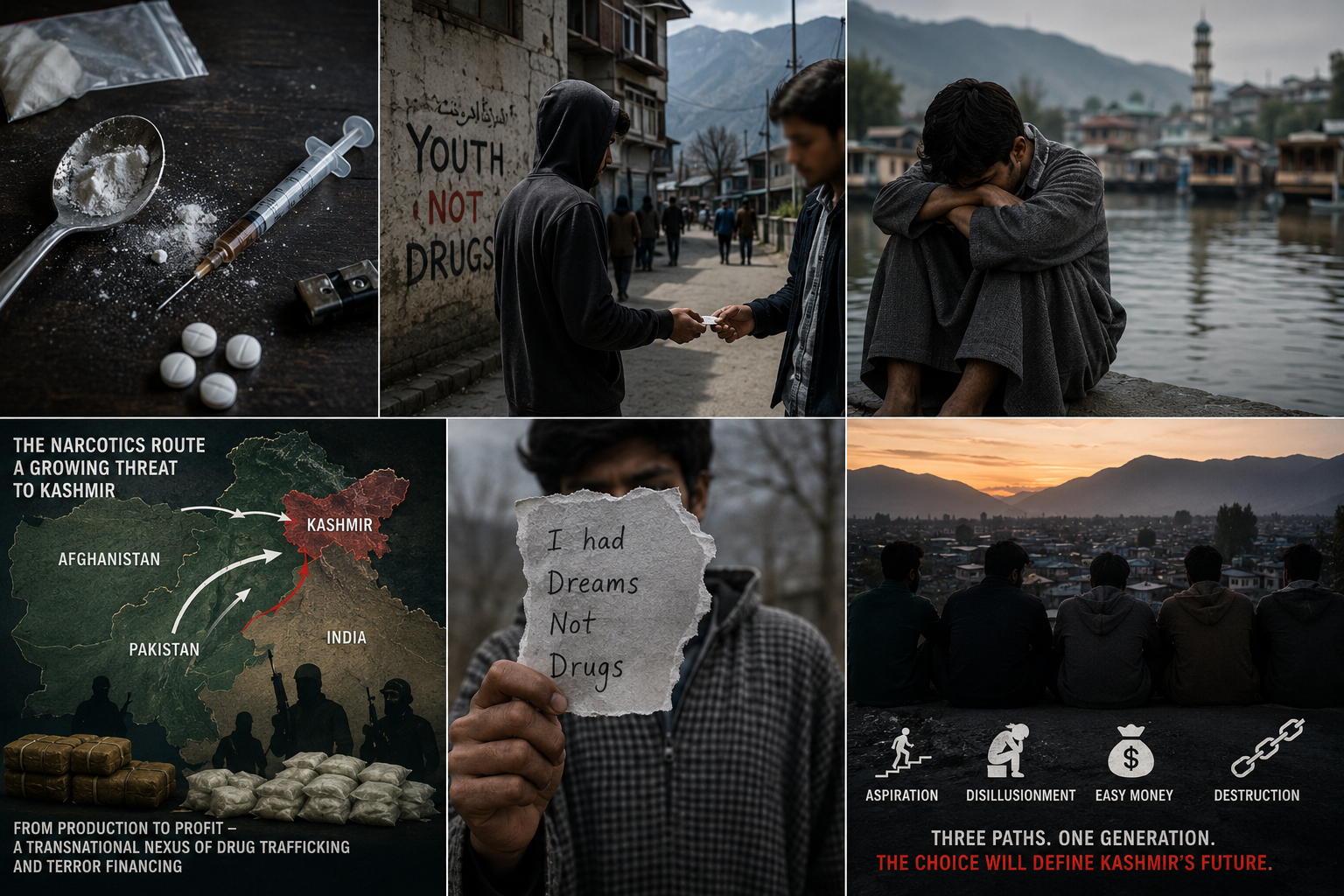
The New Economy of Despair Drugs, Easy Money, and The Fragmentation of Kashmiri Youth
Sohail Bhat
The contemporary Kashmiri social landscape is increasingly being shaped by two parallel and deeply contradictory realities. On one side stands a visibly aspirational generation attempting to reposition itself through education, entrepreneurship, digital culture, tourism, technology, competitive examinations, and new forms of professional mobility....
Managing Instability in the Modern Middle East
Mohammad Zaid Malik
The contemporary Middle East is no longer merely a region experiencing recurring crises. It is increasingly becoming a geopolitical system in which instability itself has acquired structural permanence.
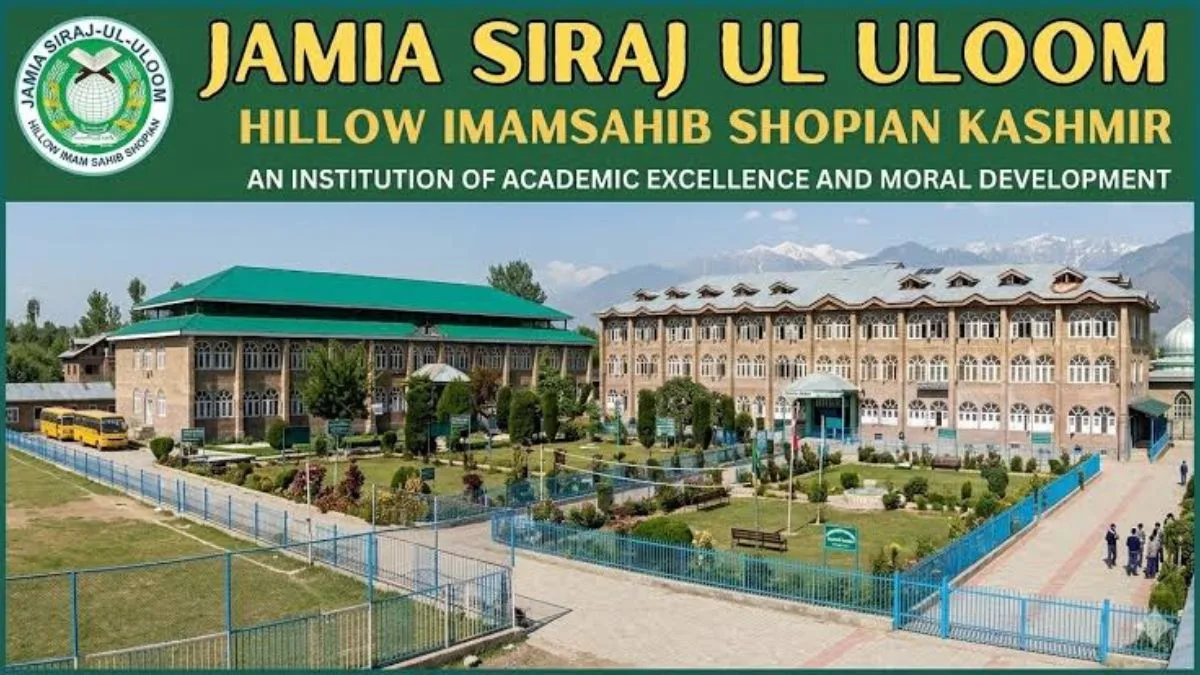
Beyond Surveillance: Reimagining Madrasas and Religious Seminaries in Jammu and Kashmir
Yawar Yousef
The debate surrounding madrasas and religious seminaries in Jammu and Kashmir has remained trapped within a narrow and repetitive framework for far too long. Public discourse oscillates between suspicion and defensiveness, between securitized scrutiny on one side and emotional religious rhetoric on the other
The Protest That Won’t Go Away
Rafi Ahmad Mir
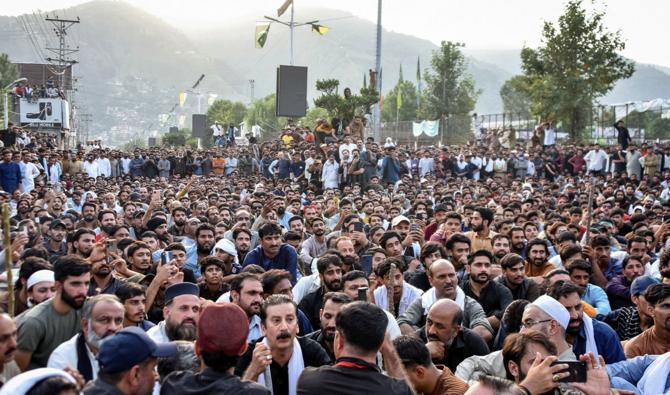
Pakistan-administered Kashmir and the limits of political management
WHO OWNS KASHMIR’S WATER?
Sohail Bhat
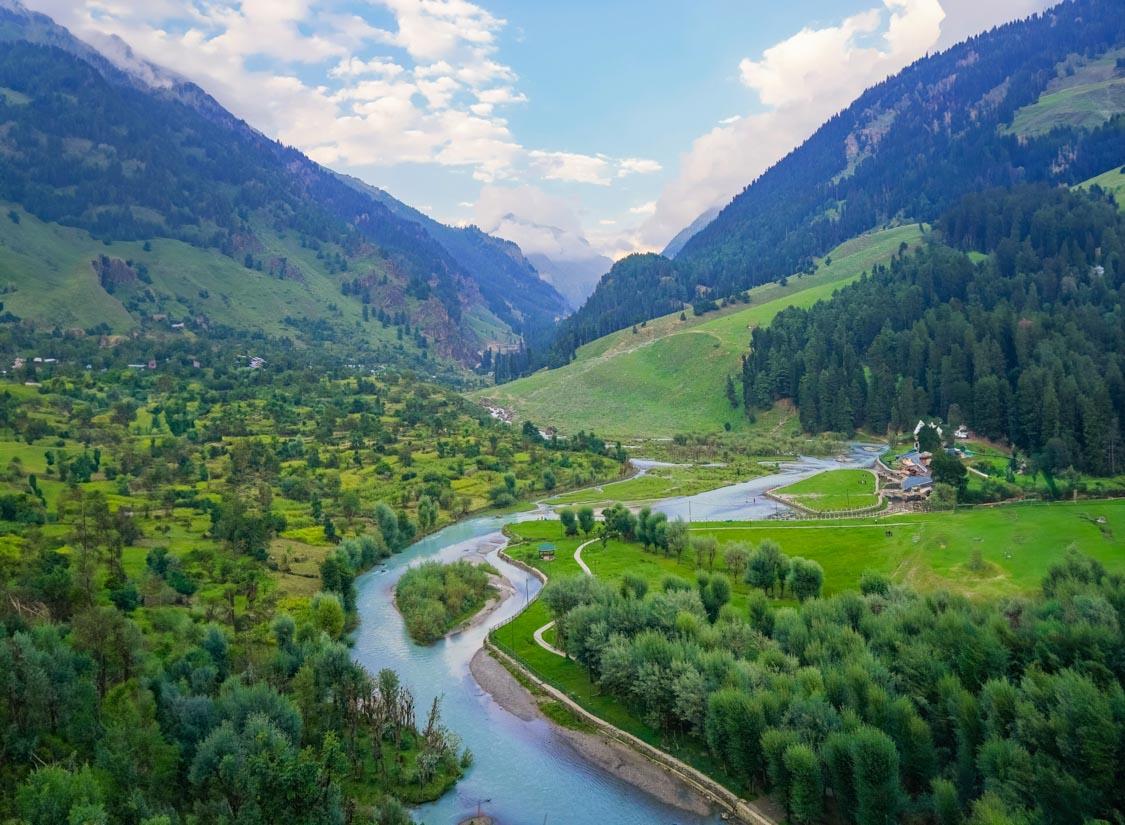
The rivers of Kashmir have always been more than scenery. They have carried people, shaped settlements, fed fields, powered machines and remained at the centre of one of South Asia’s enduring conflicts. As the old arrangements around water enter uncertain territory, a more immediate question is emerging inside Kashmir itself: who benefits from the water that flows through it?
Economics of Inflation Crusade
Dr Mehraj Ud Din Shah
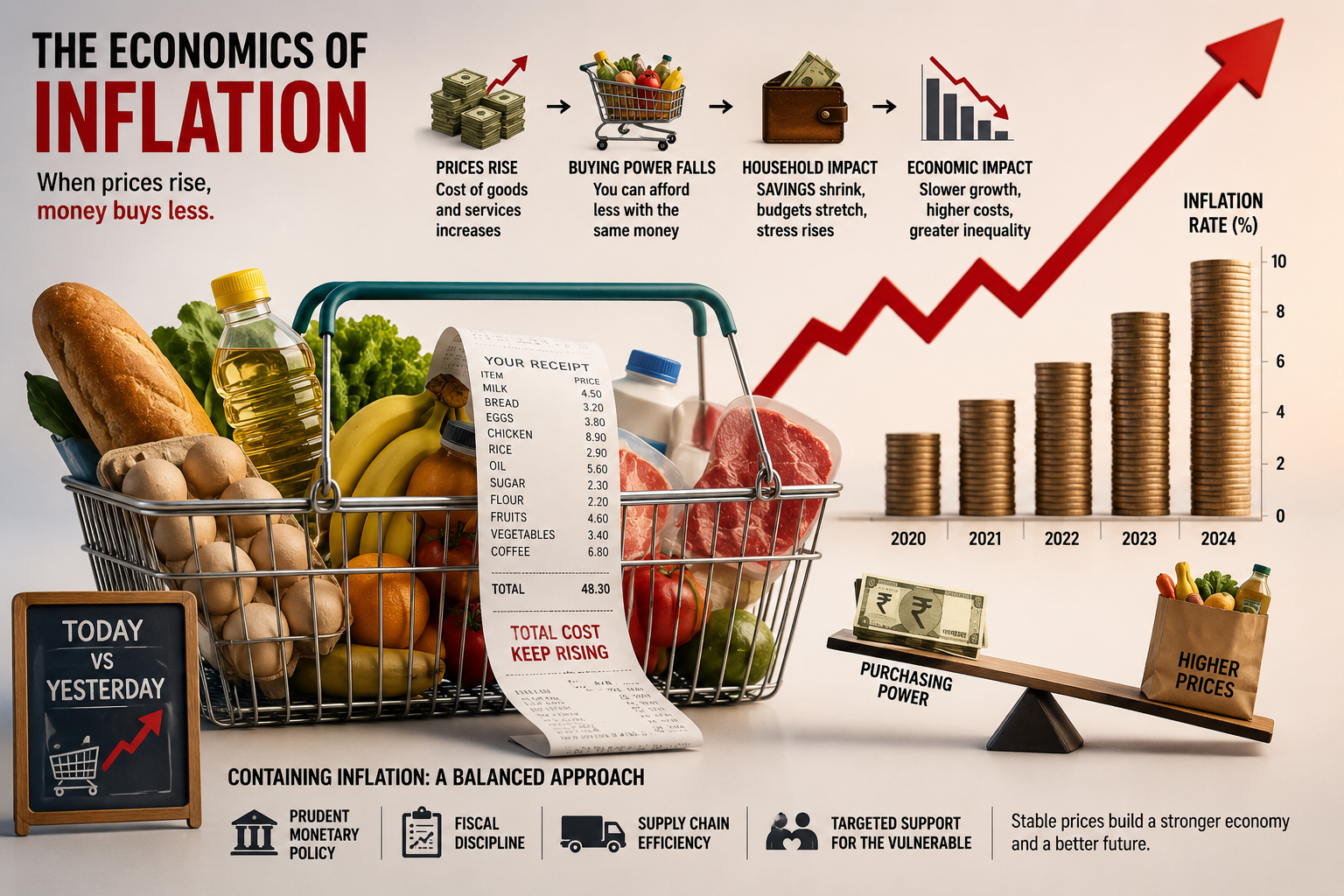
Inflation is swiftly unfolding macroeconomic fallout across the various sectors, wiping out income, savings, investment, demand, and employment, thereby giving a rude shock to the countries. The existing Inflationary phenomenon is intensively destabilizing the budget plans and regular consumption patterns of the majority of consumers across the globe, including in India.