society
KASHMIR: THE UNFILTERED TRUTH
By Waseem Hassan | Wed Feb 25 2026
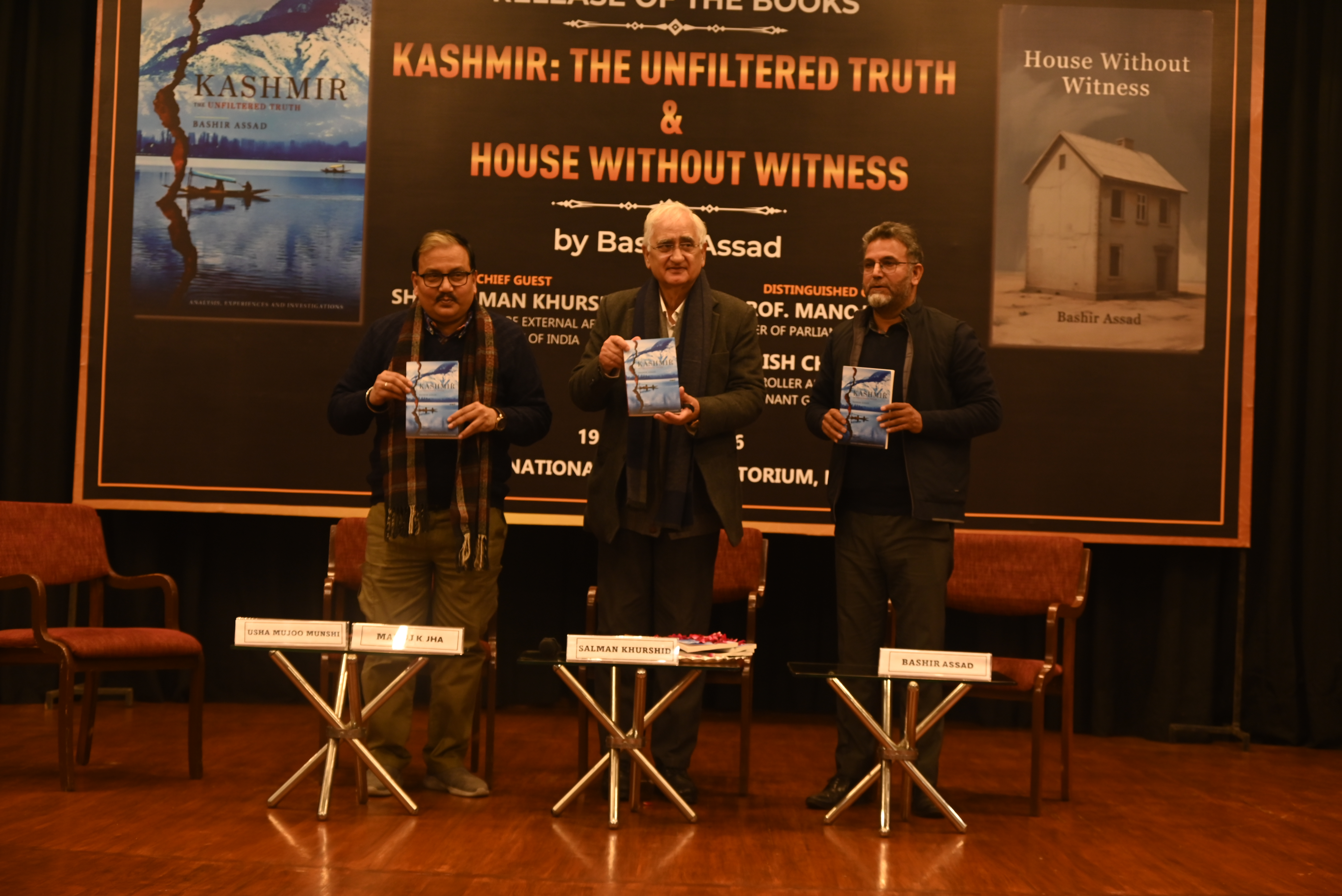
The release of Kashmir: The Unfiltered Truth by senior journalist and author Bashir Assad at the India International Centre, New Delhi, on 19 January 2026, unfolded a carefully observed public moment: one marked by intellectual seriousness, diplomatic attention and a rare convergence of political, academic and civil society voices. The event, held in one of New Delhi’s most respected institutional spaces, reflected the nature of the book as measured, reflective and situated at the intersection of constitutional discourse and lived experiences.
The book was formally released by former Union Minister for External Affairs, Salman Khurshid and Rajya Sabha Member of Parliament, Professor Manoj Kumar Jha, in the presence of a diverse gathering that included senior diplomats, scholars, journalists, policy professionals, civil society representatives and members of India’s strategic and intellectual community. The composition of the audience lent the occasion a distinctly international and deliberative character, underscoring the continued global interest in Jammu, Kashmir and Ladakh as regions of constitutional, strategic and political significance.
Representatives from several foreign missions were present at the release, including diplomats from Australia, Russia, Norway, Sri Lanka, Bangladesh, Singapore, Angola and other countries. Their presence was notable, not for overt political signalling but for the quiet acknowledgement that Kashmir after years of the constitutional changes of August 2019, continues to occupy an important place in conversations that extend beyond India’s borders. The gathering reflected an understanding that constitutional transitions in sensitive regions are not only domestic administrative matters but also subjects of sustained international observation and academic engagement.
Speakers at the event approached the book as a serious attempt to widen the conversation on Kashmir. Salman Khurshid, drawing on his long experience in law, diplomacy and public life, reflected on the importance of constitutional continuity, institutional trust and patience in addressing complex regional questions. Professor Manoj K Jha, known for his academic grounding and parliamentary interventions, emphasised the need for reflective discourse that moves beyond binaries and allows space for nuance, dialogue and democratic imagination. Together, their presence framed the book as part of an ongoing national conversation rather than a moment of confrontation or closure.
It is within this context of deliberation rather than declaration that Kashmir: The Unfiltered Truth situates itself. Appearing more than six years after the constitutional reorganisation of Jammu and Kashmir, the book enters a phase where immediacy has given way to introspection. The certainties that once dominated public debate, whether celebratory or sceptical, have softened into more complex questions about governance, legitimacy, participation and institutional evolution. Bashir Assad’s work does not seek to reopen settled legal questions nor does it offer prescriptive solutions. Instead, it undertakes the more demanding task of examining how constitutional change is experienced, interpreted and absorbed over time.
One of the defining features of the book is its resistance to what the author describes implicitly as the “Single Story Syndrome” approach to Kashmir. For decades, the region has been framed through dominant binaries like, security versus democracy, integration versus autonomy, nationalism versus separatism. While these frames have shaped policy and politics, they have often failed to capture the layered realities of a society shaped by history, conflict, accommodation and resilience. The book argues that Kashmir’s challenge has not been the absence of constitutional engagement but the narrowing of how that engagement is articulated and understood.
Rather than treating the abrogation of Article 370 as an isolated rupture, the book places it within a longer constitutional continuum. From accession in 1947 to the institutionalisation of a special constitutional status and through successive political and administrative adjustments, Jammu and Kashmir’s relationship with the Union of India has been marked by negotiation and recalibration. The constitutional reorganisation of 2019, in this reading, emerges as the most decisive intervention in a long series of adjustments, distinguished by its scale, speed and symbolic weight.
The transformation of the erstwhile state into two Union Territories represented a shift towards administrative uniformity, centralised authority and clearer institutional hierarchies. The book does not contest the constitutional authority of this change. Instead, it focuses on how authority is experienced on the ground, where legality intersects with perception and where governance structures shape everyday life. In regions with histories of political exception and prolonged uncertainty, perception plays a critical role in determining whether constitutional change generates confidence, caution or quiet disengagement.
A recurring theme throughout the book is the distinction between constitutional legality and constitutional legitimacy. While legality flows from formal authority, legitimacy is built gradually through participation, representation and institutional conduct. The book suggests that constitutional transformations tend to acquire durability when they are communicated and implemented as part of a continuing constitutional journey rooted in administrative necessity, institutional coherence and democratic continuity. When the same changes are perceived primarily through ideological lenses, they may encounter hesitation, even when they are legally sound.
The experiential dimension of Kashmir: The Unfiltered Truth lends the work its distinctive depth. Drawing on personal memories from the turbulent 1990s, Bashir Assad reflects on the human costs of prolonged instability of fear, coercion, institutional breakdown and moral ambiguity. These reflections are presented with restraint and sobriety not as grievance narratives but as historical testimony. They serve as reminders that constitutional arrangements operate within social realities that shape trust and memory over generations.
Significantly, the book avoids romanticising violence in any form. Accounts of militant coercion and intimidation are presented alongside reflections on governance and authority, offering a balanced portrayal of a society navigating multiple pressures. The emphasis consistently remains on ordinary citizens, individuals adapting to uncertainty, negotiating changing political structures and seeking dignity amid transition.
The book’s regional analysis further strengthens its contribution. Jammu, Kashmir and Ladakh are treated as distinct political and cultural spaces, each shaped by its own historical experience and contemporary concerns. While initial reactions to the 2019 reorganisation varied across regions, the book observes a gradual convergence around shared aspirations for participation, representation and institutional voice.
In Ladakh, early optimism associated with Union Territory status has evolved into discussions on constitutional safeguards, environmental sustainability and cultural preservation. In Jammu, long-standing aspirations for integration and development continue alongside debates on regional balance and economic opportunity. In the Kashmir valley, political articulation has increasingly centred on institutional normalcy, democratic participation and the restoration of statehood interpreted as an assertion of agency within a constitutional framework.
The book also engages thoughtfully with the evolving idea of Kashmiriyat. Once invoked as a syncretic cultural ethos, it has acquired layered meanings shaped by memory, politics and power. Rather than treating this evolution as erosion, the author argues for a more inclusive understanding of culture, as a bridge between history and constitutional belonging. The book expands the conversation without sharpening divisions, invites reflection rather than reaction and treats constitutional change as a process rather than an event.
In an era defined by speed, certainty and competing narratives, Kashmir: The Unfiltered Truth argues quietly for patience, continuity and institutional trust. It suggests that peace cannot be legislated, trust cannot be commanded and integration cannot be reduced to administrative alignment alone. Stability, the book reminds us, emerges through sustained engagement, sensitivity of governance and confidence in democratic institutions.
Ultimately, the book and the moment of its release stand as an invitation: to move beyond the single story, to recognise transition as a shared journey and to approach Kashmir not as a problem to be solved but as a constitutional relationship to be carefully, responsibly and continuously sustained.
"Related Articles
HAIR BY HAIR: HOW A HOME WAS UNDONE
Bashir Assad
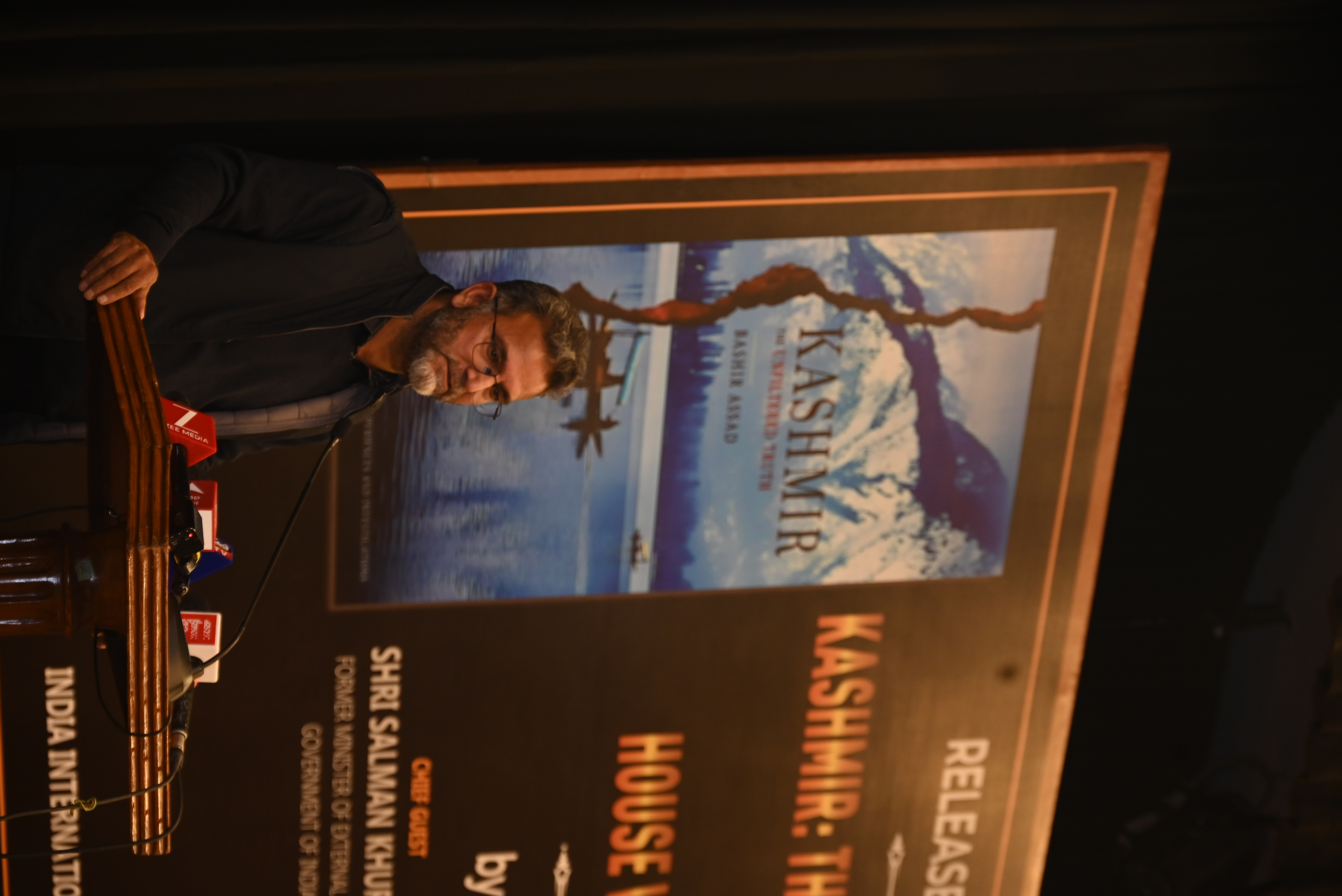
At the launch of the book, Kashmir: The Unfiltered Truth, the author chose allegory over accusation. Drawing from an old Kashmiri fairytale, this speech of the author reflects on possession, rivalry and exhaustion, offering a haunting meditation on how identities are lost to guardians who refuse to act together
THE CONSTITUTION AS CONTINUUM
Mian Tufail
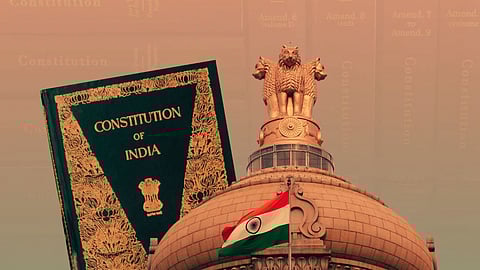
The debate over Article 370 has been dominated by legal arguments and political slogans. This article examines constitutional history, local politics and the exhaustion of conflict in Kashmir; it explains why the manner of constitutional change matters as much as the change itself and what the future depends on.
“THE MOTHER OF ALL DEALS” DECODING EU-INDIA FREE TRADE AGREEMENT
Dr. Mareaya Fayaz
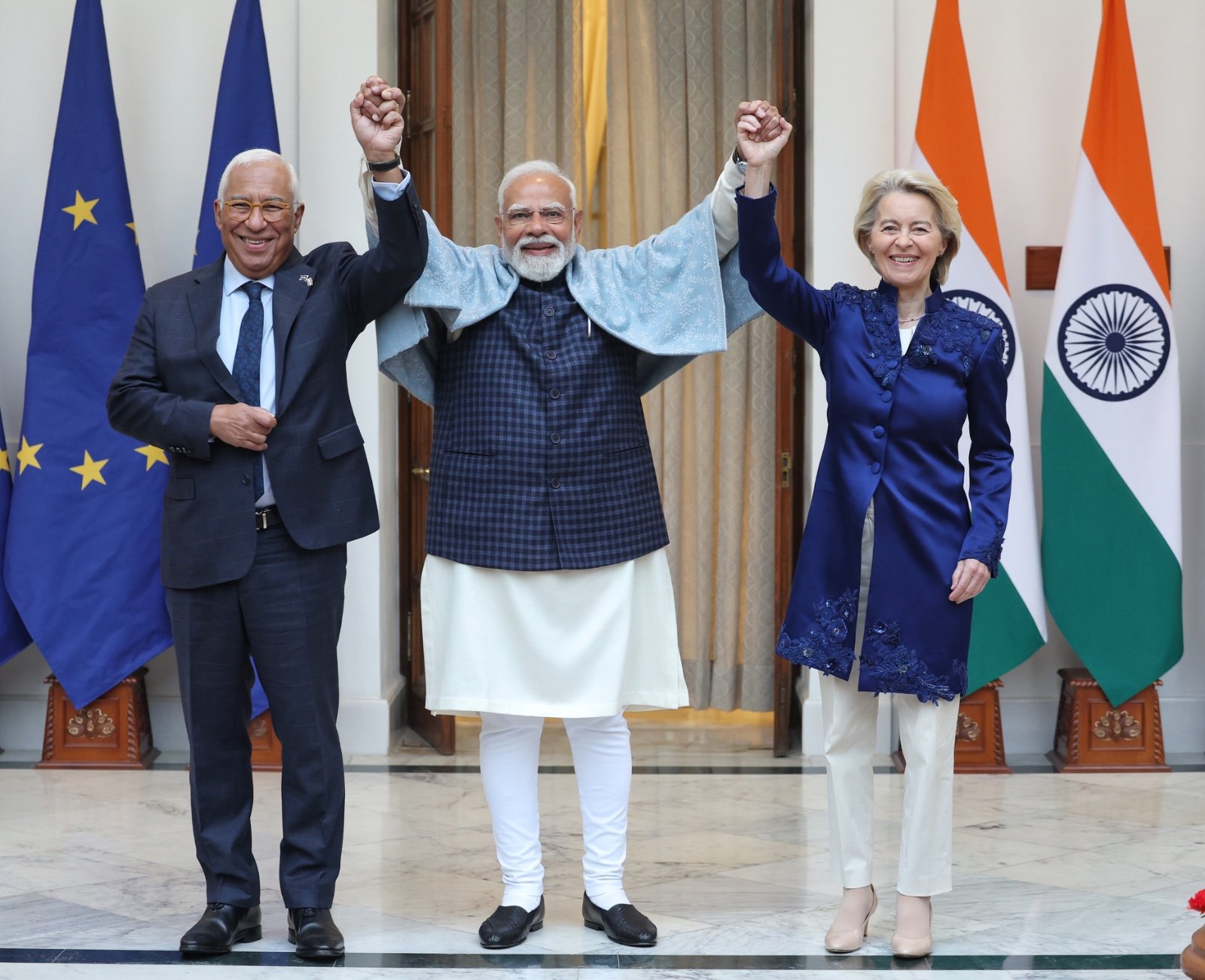
Concluded after nearly two decades of uneven negotiations, the agreement reflects the European Union’s pursuit of open strategic autonomy and India’s calibrated move from defensive protectionism towards global integration. KC analyses how the EU–India FTA strengthens India’s strategic positioning.
FAULTLINES IN THE REGIONS OF KASHMIR & JAMMU
Bashir Assad
Jammu and Kashmir’s present anxieties cannot be understood without confronting its violent birth. By revisiting invasion, communal violence and the unresolved regional compact of 1947, KC argues that today’s political realignments are the aftershocks of an unfinished postcolonial settlement.

The Decade of Connectivity How Roads, Railways and Digital Networks Are Reshaping Kashmir
Yawar Yousef/Yasir Lone
For much of its modern history, Kashmir has been discussed through the language of conflict, diplomacy, security, and constitutional politics. Governments changed, policies evolved, and public debates shifted, yet the dominant narratives surrounding the region remained remarkably consistent.
Waiting for a Vacancy Education, Aspiration and the Politics of Waiting in Kashmir
Suhail Bhat
At six o'clock on a cold winter morning, long before the markets of Srinagar begin to stir and before office-goers emerge onto the roads, hundreds of young men and women can already be seen standing outside examination centres.