politics
THE CONSTITUTION AS CONTINUUM
By Mian Tufail | Wed Feb 25 2026
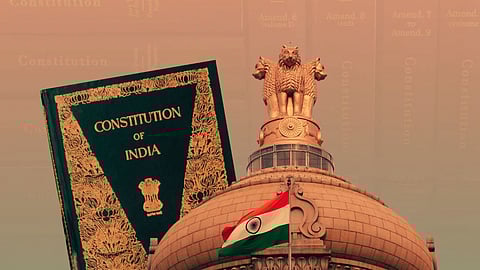
The Indian constitution is neither a static monument nor an ideological proclamation frozen in time. It is rather a living continuum, an evolving framework shaped by political necessity, historical contingency and democratic negotiation. Its durability lies in its capacity to absorb changes through accommodation, adaptation and gradual recalibration. From its very inception, the constitution of India has functioned less as a revolutionary text and more as a pragmatic instrument for managing diversity in a deeply plural Indian society.
Nowhere is this constitutional character more sharply illuminated than in the case of Jammu and Kashmir. The trajectory of Article 370, from its introduction as a constitutional necessity to its eventual abrogation in August 2019, reveals not a singular moment of ideological rupture but a long and complex process of constitutional evolution. Six years after the abrogation, the manner in which the decision has been received in Kashmir underscores a central lesson of Indian constitutionalism that’s the change imposed as ideology invites resistance while as the change embedded within continuity is more likely to endure.
To understand this, one must move beyond doctrine of constitutional law and examine the political, social and psychological contexts in which constitutional change unfolds.
Constitution making in Jammu and Kashmir
The story begins not with Article 370 but with the constitution-making process in Jammu and Kashmir itself. Unlike the Indian Constituent Assembly, which despite its limitations reflected a broad spectrum of ideological positions, the state Constituent Assembly of Jammu and Kashmir was dominated by a single political force, the National Conference under the leadership of Sheikh Abdullah.
The constitution of Jammu and Kashmir adopted in 1956 was largely an outcome of the ideas, aspirations and political philosophy of this dominant party. Sheikh Abdullah’s popularity and political legitimacy were immense and the National Conference had come to embody the aspirations of a large section of the population, particularly in the Kashmir valley. Yet, this dominance also produced exclusions. Diverse communities and political viewpoints, ranging from sections in Jammu, Kashmiri Pandits, alternative regional voices and dissenting ideological forces found limited representation in the constitutional imagination that emerged.
The process of constitution making was marked by what may be described as foundational violence laced with the systematic marginalisation of dissenting voices. Very little attention has historically been paid to the constitution as an exclusivist text, one that embedded a monopolistic discourse and foreclosed plural conceptions of politics by institutionalising the dominance of a single political narrative.
Over time, this constitution came to be celebrated as a successful experiment in Indian federal democracy. Yet, beneath this celebratory narrative lay a more complex reality, one in which constitutional authority was consolidated even as political diversity was narrowed. This context is crucial because Article 370 functioned within a political ecosystem already shaped by hegemony, accommodation and gradual erosion of dissent.
Article 370 was never conceived as an ideological aberration. It was born out of political realism and constitutional pragmatism. In October 1947, Jammu and Kashmir acceded to India under extraordinary circumstances amid invasion, displacement and uncertainty. The accession, while legally executed by the then ruler, required popular legitimacy in a muslim majority region joining a secular and newly independent India.
Article 370 emerged as the need of the hour. It was a confidence building mechanism designed to facilitate integration without coercion. It limited the application of the Indian constitution to specific subjects including, defence, foreign affairs and communications while allowing Jammu and Kashmir to retain its own constitution and autonomy over internal matters.
This arrangement was fully consistent with the spirit of the constitution of India. Indian federalism has never been symmetrical. From special provisions for Nagaland under Article 371(A) to later accommodations for Mizoram and Sikkim, the constitution has repeatedly recognised that unity in India requires differentiated arrangements. Article 370 was not an exception to constitutional logic it was one of its clearest expressions.
At that historical moment, Article 370 was constitutionally necessary. It enabled accession, reassured the population and provided the political space needed for integration to take root.
Gradual erosion of Article 370
Over time, however, Article 370 underwent a steady process of erosion. This erosion did not occur overnight nor did it begin in 2019. From the mid-1950s onwards, successive Presidential orders extended a wide range of central laws to Jammu and Kashmir. The dismissal of Sheikh Abdullah’s government in 1953 marked a critical turning point after which political arrangements increasingly favoured central integration.
By 1956, when the state Constituent Assembly dissolved, the institutional mechanism envisaged under Article 370(3) ceased to exist. Yet constitutional change continued unabated. Over the decades, as per official records, more than forty Presidential orders were issued, applying hundreds of central laws to the erstwhile state of Jammu and Kashmir. Fundamental rights, emergency provisions and fiscal arrangements were gradually extended.
Crucially, this process was not driven solely by New Delhi. Successive governments in Jammu and Kashmir actively participated in amending and adapting Article 370 to suit their governance needs. Autonomy was often invoked rhetorically, even as it was diluted in practice. Local political elites negotiated constitutional arrangements to consolidate power rather than deepen democratic accountability.
By the time of the 1975 Indira-Sheikh accord, the autonomy promised in the early years had already been significantly compromised. Over subsequent decades, Article 370 increasingly became a symbolic marker rather than a substantive shield. By 2019, much of its original content had been hollowed out. What remained was not constitutional autonomy in any meaningful sense but an emotionally charged symbol deeply embedded in Kashmiri political consciousness.
Fatigue and the changing political mood
Understanding the reception of the 2019 abrogation requires acknowledging the profound fatigue that had settled over Kashmiri society. Between 2008 and 2016, Jammu and Kashmir witnessed repeated cycles of unrest, each wave exacting a heavy toll on young lives and our economy. Protests, shutdowns, violence, arrests and economic disruption became recurring features of daily life.
The agitations of 2008, the unrest of 2010, the disturbances of 2013 and the intense violence following the events of 2016 left deep scars. By this point, the social and economic costs of continuous confrontation had become overwhelming. Education suffered, livelihoods collapsed and an entire generation grew up amid uncertainty.
By 2016, even the moral authority of separatist leadership had eroded significantly. Many ordinary Kashmiris began to view repeated calls for shutdowns as derailing everyday life rather than advancing political resolution. Separatists increasingly came to be seen as obstacles to development and stability. Their image suffered a substantial dent.
This fatigue is central to understanding why the abrogation of Article 370 in 2019 did not trigger a mass uprising. The absence of large scale protest was not evidence of enthusiastic endorsement. Rather, it reflected exhaustion, resignation and a desire for respite from perpetual turmoil.
The abrogation of Article 370 was carried out during a period when Jammu and Kashmir was under President’s rule, following the failure of constitutional machinery in 2018. The substitution of the Constituent Assembly with the Legislative Assembly through a Presidential order has been the subject of extensive legal debate in the revocation. Yet, focusing exclusively on legal doctrine risks missing the broader picture.
The decision was taken in what may be described as a state of exception, a moment shaped by long standing political tensions, democratic deficit and regional security anxieties. In such contexts, constitutional actions often derive legitimacy not only from formal legality but from political necessity and public order considerations.
The Indian constitutional experience itself offers precedents where extraordinary measures were taken during exceptional moments. Whether one views such measures through the lens of constitutional exceptionalism or pragmatic governance, the key issue remains the perception.
In Kashmir, perception carries extraordinary weight. Constitutional change, when framed as ideological conquest rather than procedural evolution, risks deepening mistrust. The abrogation of Article 370, instead of being presented as the culmination of a long constitutional process, was projected as a historic rupture, an ideological victory amplified through national media narratives.
Kashmir is a region where normalcy itself must be normalised. Governance, infrastructure development, tourism growth and connectivity are not extraordinary achievements; they are routine functions of the state. When such developments are portrayed as exceptional or out-of-the-box, they inadvertently create vulnerabilities.
History shows that exaggerated narratives place pressure on peace. Those vehemently opposed to stability perceive such moments as challenges to be disrupted. Mega projects, rising tourist numbers and infrastructural milestones, when framed as ideological triumphs, invite counter adventures aimed at derailing the process.
The same principle applies to the much talked statehood. Restoring statehood is not any concession or favour rather it is a constitutional norm. Prolonged delay and excessive political emphasis on this issue have generated disenchantment. While statehood primarily benefits the political class by restoring institutional authority, its absence feeds a broader perception of democratic deficit among the population. In Kashmir, delays are rarely interpreted as administrative. They are read politically.
Continuity over closure
At one point in history, Article 370 was constitutionally necessary. At another, it came to be viewed as an impediment. Both positions were articulated within the same constitutional framework. The paradox lies not in the change itself but in how that change was managed.
The same constitution that accommodated Article 370 also revoked it. There is no inherent contradiction in this. The contradiction arises when constitutional evolution is framed as ideological rupture rather than procedural continuity.
Six years after the abrogation, Kashmir exists in a space of watchful calm. The silence should not be mistaken for closure. It is a pause shaped by fatigue, caution and guarded expectation. Whether this pause evolves into trust depends not on grand declarations but on the restoration of ordinary democratic processes like, statehood, political participation and governance without spectacle.
The lesson
The experience of Jammu and Kashmir offers a broader lesson for constitutional governance in diverse societies. Stability is sustained through procedural legitimacy and quiet normalisation. Constitutions endure not because they triumph loudly but because they adapt carefully.
When constitutional change feels organic, it is absorbed. When it feels imposed, it provokes resistance. In Kashmir, where memory, symbolism and perception are deeply intertwined, the distinction matters profoundly.
The Indian constitution’s genius lies in its capacity for continuity. Preserving that continuity, especially in regions shaped by conflict, remains its greatest challenge and its greatest promise for tomorrow.
"Related Articles

HAIR BY HAIR: HOW A HOME WAS UNDONE
Bashir Assad
At the launch of the book, Kashmir: The Unfiltered Truth, the author chose allegory over accusation. Drawing from an old Kashmiri fairytale, this speech of the author reflects on possession, rivalry and exhaustion, offering a haunting meditation on how identities are lost to guardians who refuse to act together
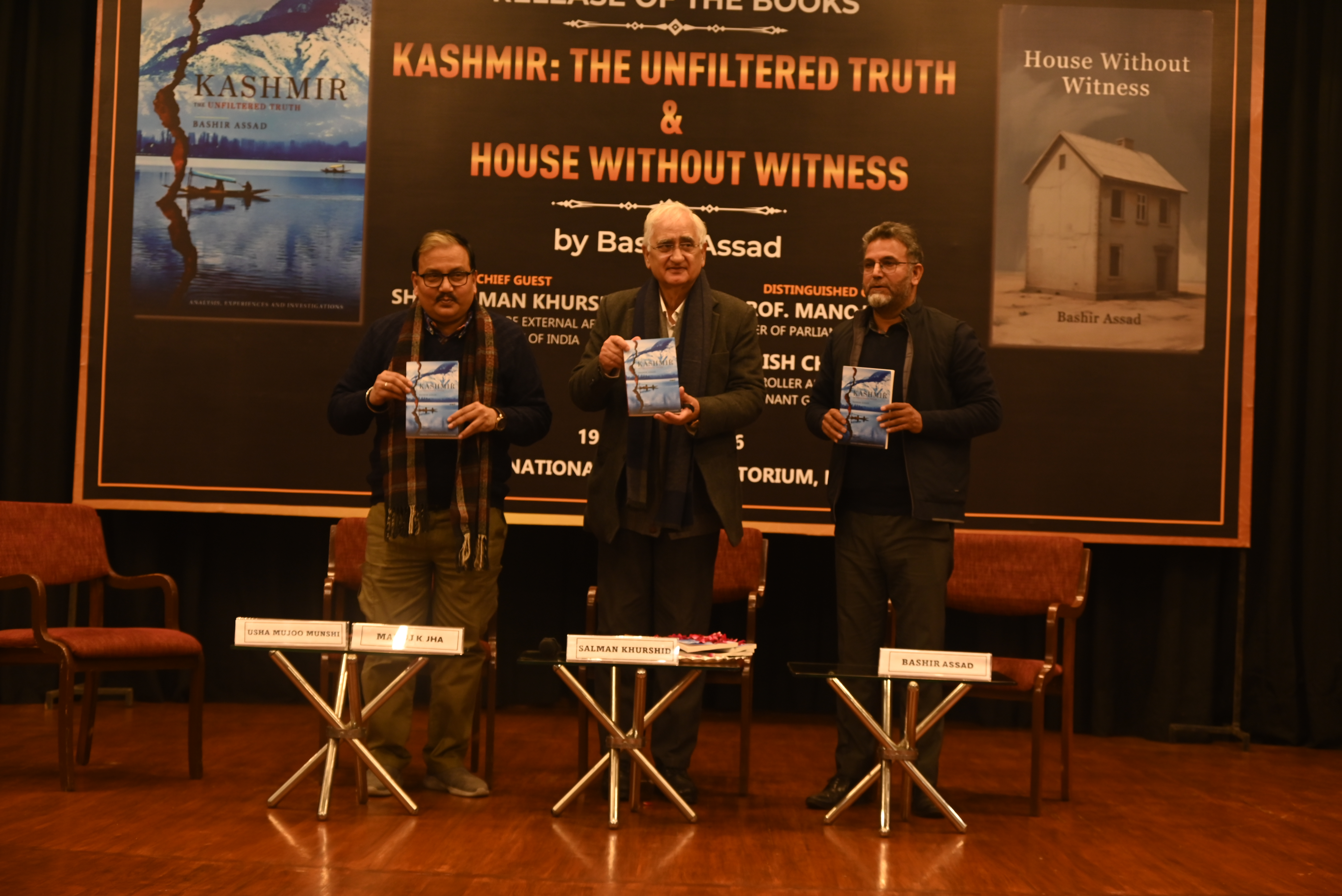
KASHMIR: THE UNFILTERED TRUTH
Waseem Hassan
The launch of Kashmir: The Unfiltered Truth at the India International Centre became more than a book release, as it was a quiet assertion that Kashmir’s future lies in patience, participation and institutional trust rather than ideological triumph.
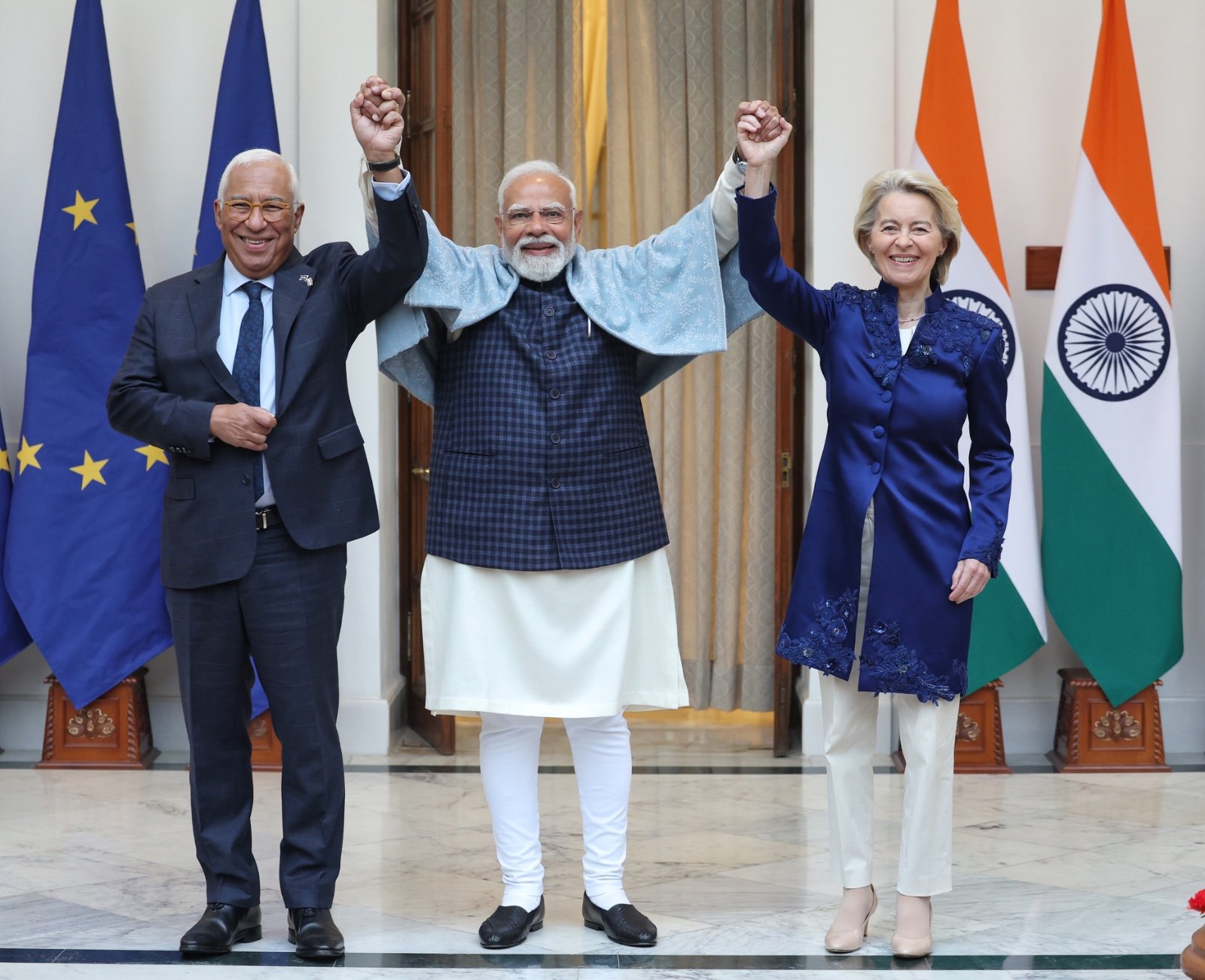
“THE MOTHER OF ALL DEALS” DECODING EU-INDIA FREE TRADE AGREEMENT
Dr. Mareaya Fayaz
Concluded after nearly two decades of uneven negotiations, the agreement reflects the European Union’s pursuit of open strategic autonomy and India’s calibrated move from defensive protectionism towards global integration. KC analyses how the EU–India FTA strengthens India’s strategic positioning.
FAULTLINES IN THE REGIONS OF KASHMIR & JAMMU
Bashir Assad
Jammu and Kashmir’s present anxieties cannot be understood without confronting its violent birth. By revisiting invasion, communal violence and the unresolved regional compact of 1947, KC argues that today’s political realignments are the aftershocks of an unfinished postcolonial settlement.
The Protest That Won’t Go Away
Rafi Ahmad Mir
Pakistan-administered Kashmir and the limits of political management
WHO OWNS KASHMIR’S WATER?
Sohail Bhat
The rivers of Kashmir have always been more than scenery. They have carried people, shaped settlements, fed fields, powered machines and remained at the centre of one of South Asia’s enduring conflicts. As the old arrangements around water enter uncertain territory, a more immediate question is emerging inside Kashmir itself: who benefits from the water that flows through it?