society
HAIR BY HAIR: HOW A HOME WAS UNDONE
By Bashir Assad | Wed Feb 25 2026
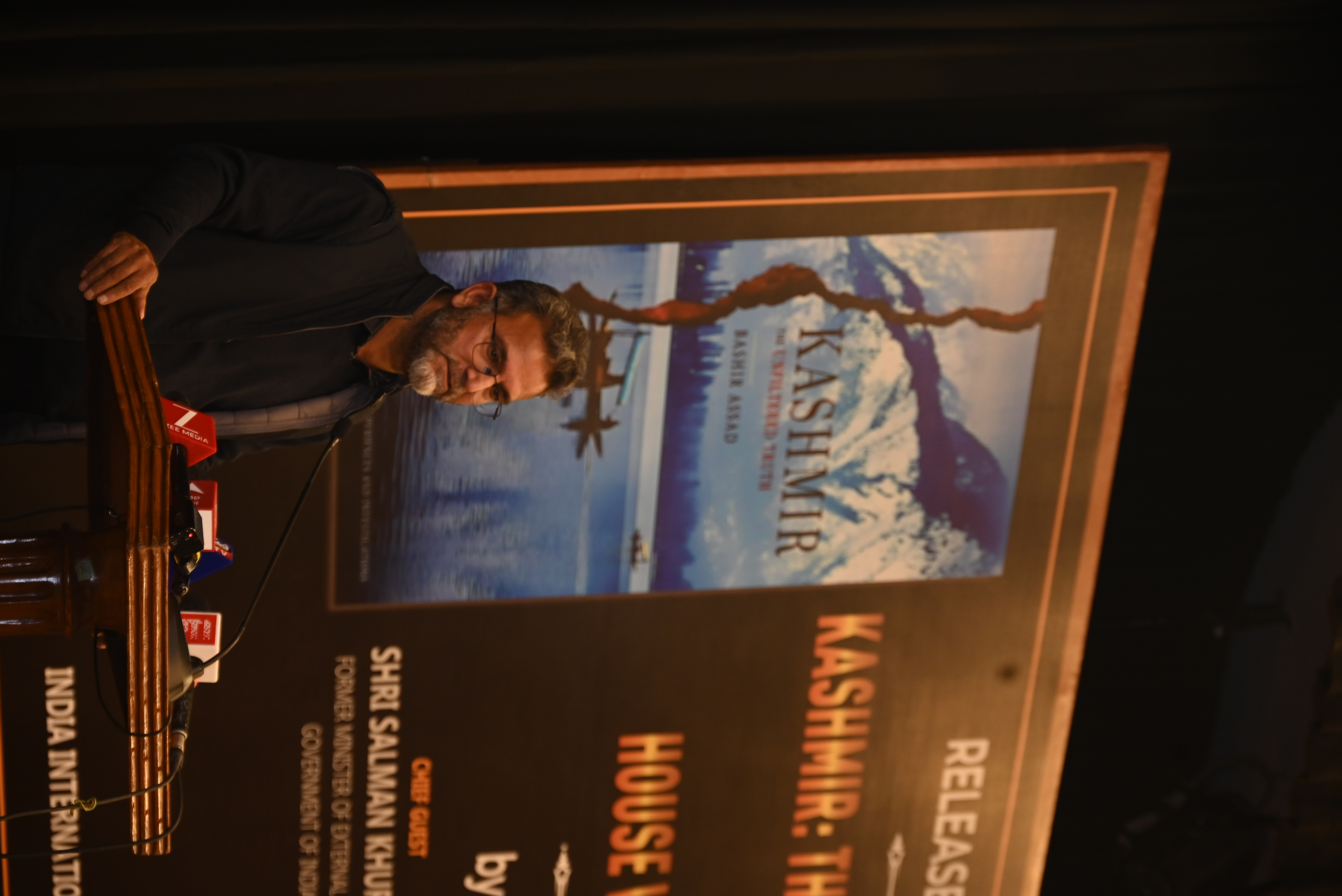
At the launch of the book, Kashmir: The Unfiltered Truth, the author chose allegory over accusation. Drawing from an old Kashmiri fairytale, this speech of the author reflects on possession, rivalry and exhaustion, offering a haunting meditation on how identities are lost to guardians who refuse to act together.
There is an old fairytale from Kashmir, simple in form, unsettling in meaning. It tells the story of a man who had two women in his life. One was older but patient, wise, shaped by time and experience. The other was young but beautiful, impulsive, intoxicating in her promise. When the moment of choice arrived, the man married the elder woman. Not because she dazzled him but because she understood him. She was compassionate, mature and capable of imagining a future beyond impulse. The younger one, though alluring, was raw driven more by appetite than responsibility, more by urgency than care. But rejection did not end the story. The younger woman refused to remain outside. She forced her way into the man’s house, illegally and unlaw fully, without consent and without legitimacy.
At first, the man resisted. He defended the threshold, the memory of order. But persistence seduces where force fails. Repetition erodes resolve. Slowly, through pressure and provoca tion, she secured a place she was never meant to occupy. Once inside, she did not remain silent. She stripped the man, not of gold or land but of inheritance. She took away his culture, his shared rhythms, his ethical grammar. What generations had preserved quietly was dis mantled noisily. Trust was converted into suspicion. Community into faction. Continuity into rupture.
The lawful wife watched this erosion with growing bitterness. Seeing her home violated and her partner diminished, she withdrew what she had once given freely as love, protection, compassion, commitment. Care hardened into control. Responsibility curdled into resentment. What had once been a partnership became a contest, conducted over the man’s body and soul.
Then came the cruelest moment. Each woman began pulling at the man’s hair, one plucking the grey to keep him young, the other plucking the black to make him resemble her age. Each believed she was asserting a rightful claim. Each believed the other was the true destroyer. Neither noticed that together they were undo ing him. Hair by hair, claim by claim, the man was stripped bare. When he finally stood bald, ex hausted, diminished, unrecognizable, both women turned to their children and taught them the same lie that it was the other who had ruined him. And so the inheritance passed on was not truth but grievance; not understanding but accusation.
This book (Kashmir: The unfiltered truth) is that man. It is also the house he lived in, the inheritance he lost and the silence that followed. It is about how identities are not always destroyed by enemies alone but exhausted by guardians who refuse to act together.
This is not a story of a single villain. It is a story of possession mis taken for love, of rivalry masquerading as care and of a subject reduced to an object by competing claims of ownership. Let me be clear about the struc ture of this book. Each chapter is a room in that house. Some examine how the un lawful entry occurred. Others trace what was taken, what was surren dered and what was weaponised. Some confront the man’s own fail ures, his hesitations, his compromis es, his silences. Others interrogate the lawful partner’s retreat into control and withdrawal. Together, they map how a shared home became a con tested ruin.
Kashmir: The Unfiltered Truth begins from a recognition that cannot be undone: the choice is locked. The lawful bond exists. History has settled it. The future does not lie in reopening decisions but in whether the legitimate partners can remain together and act together. Because the uncomfortable truth is this: The illegitimate presence did not endure merely because it was forceful. It endured because division created vacancy. As long as rivalry replaced reconciliation, the unlawful intruder thrived. Removal was never possible through accusation alone; it required unity, trust and a shared reclaiming of responsibility. If the house is to be restored, the lawful partners must first recognise that survival does not come from defeating each other but from standing together, to reclaim the home, the inheritance and the future that was slowly taken from them.
"Related Articles
THE CONSTITUTION AS CONTINUUM
Mian Tufail
The debate over Article 370 has been dominated by legal arguments and political slogans. This article examines constitutional history, local politics and the exhaustion of conflict in Kashmir; it explains why the manner of constitutional change matters as much as the change itself and what the future depends on.
KASHMIR: THE UNFILTERED TRUTH
Waseem Hassan
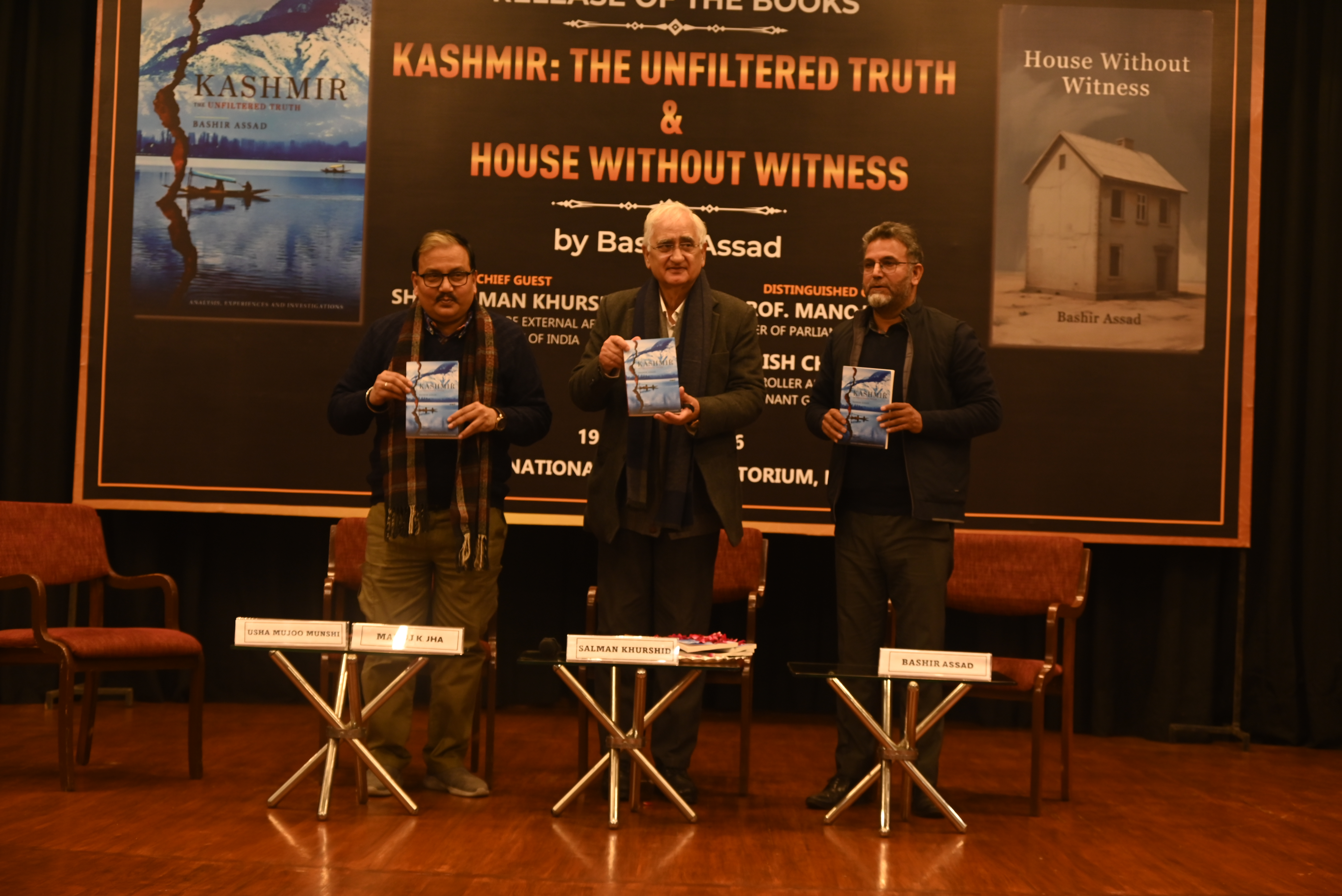
The launch of Kashmir: The Unfiltered Truth at the India International Centre became more than a book release, as it was a quiet assertion that Kashmir’s future lies in patience, participation and institutional trust rather than ideological triumph.
“THE MOTHER OF ALL DEALS” DECODING EU-INDIA FREE TRADE AGREEMENT
Dr. Mareaya Fayaz
Concluded after nearly two decades of uneven negotiations, the agreement reflects the European Union’s pursuit of open strategic autonomy and India’s calibrated move from defensive protectionism towards global integration. KC analyses how the EU–India FTA strengthens India’s strategic positioning.
FAULTLINES IN THE REGIONS OF KASHMIR & JAMMU
Bashir Assad
Jammu and Kashmir’s present anxieties cannot be understood without confronting its violent birth. By revisiting invasion, communal violence and the unresolved regional compact of 1947, KC argues that today’s political realignments are the aftershocks of an unfinished postcolonial settlement.

The Decade of Connectivity How Roads, Railways and Digital Networks Are Reshaping Kashmir
Yawar Yousef/Yasir Lone
For much of its modern history, Kashmir has been discussed through the language of conflict, diplomacy, security, and constitutional politics. Governments changed, policies evolved, and public debates shifted, yet the dominant narratives surrounding the region remained remarkably consistent.
Waiting for a Vacancy Education, Aspiration and the Politics of Waiting in Kashmir
Suhail Bhat
At six o'clock on a cold winter morning, long before the markets of Srinagar begin to stir and before office-goers emerge onto the roads, hundreds of young men and women can already be seen standing outside examination centres.