politics
How Internal Dissent is Eroding NC’s Credibility?
By Mian Tufail | Fri May 01 2026
In a functioning democracy, three pillars legitimacy, authority and accountability are expected to operate in synchrony. Legitimacy, derived from the ballot, empowers a government with moral and political authority. Authority, in turn, enables governance. Accountability ensures that such authority is exercised responsibly and remains answerable to the people. When aligned, these elements reinforce democratic health. When fractured, they produce dysfunction.
Nowhere is this dislocation more visible than in contemporary Jammu & Kashmir, where the post-2019 political architecture has redefined governance into a hybrid arrangement that’s a part electoral, part administrative. Within this framework, the 2024 electoral victory of the Jammu & Kashmir National Conference was expected to mark a return to political normalcy. Instead, it has exposed the deep contradictions embedded in the region’s altered political landscape.
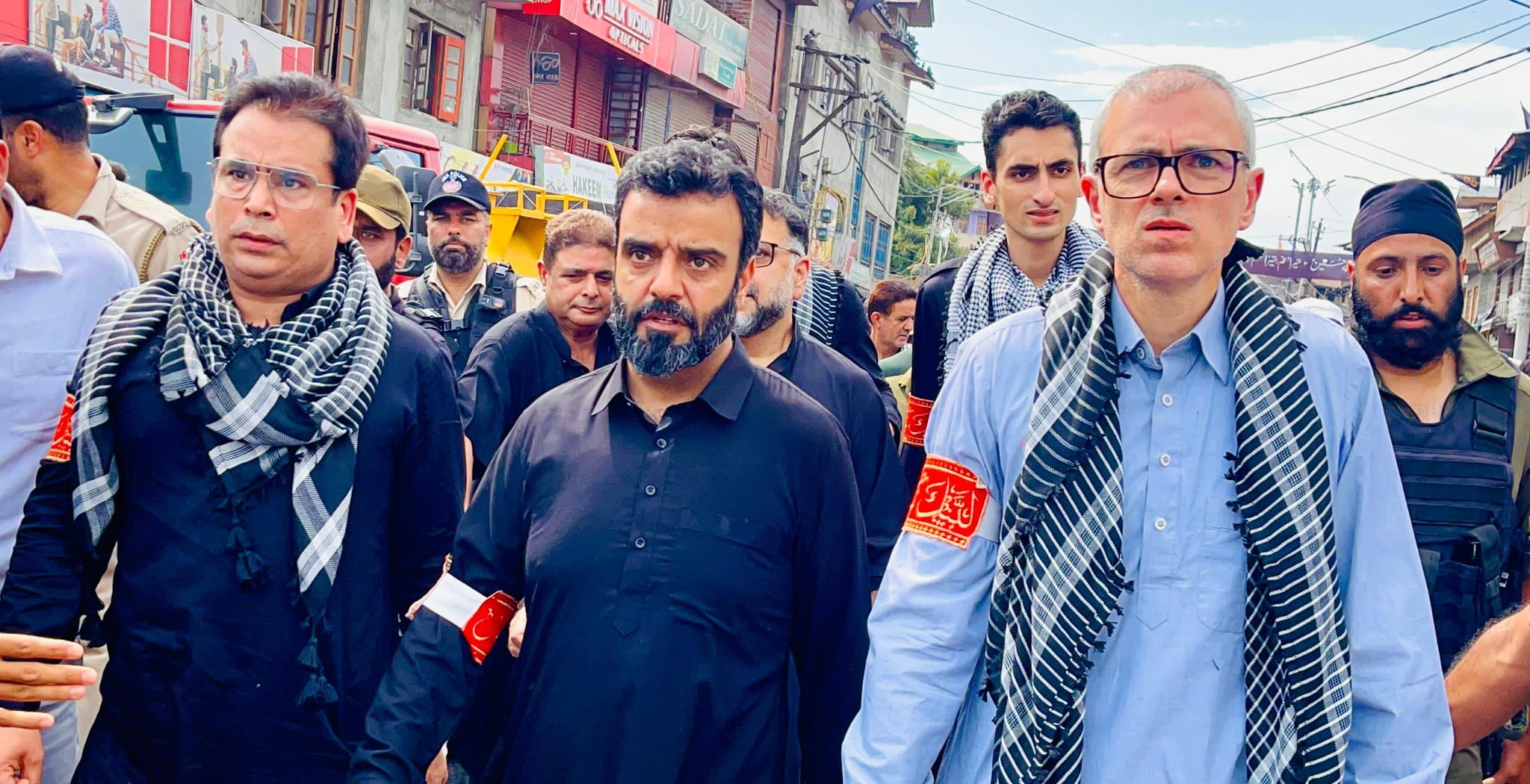
Nineteen months into power, the government led by Omar Abdullah is confronting not merely an opposition challenge but an increasingly vocal dissent from within its own ranks. The unfolding tensions particularly involving Bashir Ahmad Veeri, MLA Srigufwara-Bijbehara and Agha Syed Ruhullah Mehdi, MP Srinagar, point toward a deeper crisis: a government struggling to reconcile its electoral legitimacy with constrained authority and diminishing accountability.
The NC’s sweeping victory in the 2024 Assembly elections granted it undeniable legitimacy. Voters, fatigued by years of political uncertainty, placed their trust in a party historically associated with regional aspirations and governance experience. Yet, this mandate came with structural limitations. As a Union Territory with a legislature, Jammu & Kashmir operates under a governance model where significant powers remain vested with the central administration.
This has created a legitimacy authority gap. While the NC possesses the electoral mandate, its capacity to exercise authority, particularly on core political issues such as restoration of full statehood remains constrained. The result is a governance paradox: a government expected to deliver transformative outcomes without possessing the full institutional tools to do so.
In such a scenario, accountability becomes the first casualty. With limited authority to enact sweeping policy changes, the government increasingly relies on political messaging rather than tangible governance outcomes. Narrative replaces delivery; rhetoric substitutes reform.
Disillusionment of Bashir Ahmad Veeri
The rupture between the NC leadership and its own legislator Bashir Ahmad Veeri exemplifies this crisis. Veeri’s electoral victory in Bijbehara was not insignificant. Defeating Iltija Mufti, daughter of former Chief Minister Mehbooba Mufti, he emerged as a representative of a younger, aspirational electorate. A substantial portion of his support came from first time voters, youth who expected structural reforms, particularly in employment and reservation policies.
Central to Veeri’s campaign was his promise to address what he described as anomalies in Jammu & Kashmir’s reservation framework. True to his word, he introduced a Private Member’s Bill aimed at rationalising reservations and increasing the Open Merit quota.
What followed, however, revealed the fault lines within the ruling party.
Despite being listed on the Assembly agenda for nearly a year, the Bill was repeatedly deferred. When it was finally introduced, it faced resistance not from the opposition but from within the NC itself. Reports indicate that during internal party discussions, several legislators warned that the Bill could trigger social divisions and disrupt political equilibrium.
Chief Minister Omar Abdullah reportedly allowed the Bill to be introduced, only to make it clear that the party would oppose it during voting. When the moment arrived, Veeri found himself isolated, his own party voting against his proposal.
His emotional appeal on the Assembly floor was “for Allah’s sake, allow the Bill for my children” was not merely a legislative plea; it was a reflection of the widening gap between electoral promises and political realities.
The rejection of the Bill marked more than a legislative defeat. It symbolised the erosion of internal democratic space within the party. Veeri’s subsequent silence, his withdrawal from public engagement and the absence of outreach from party leadership point to a relationship that has moved from disagreement to estrangement.
Rebellion by Ruhullah Mehdi If Veeri’s dissent is rooted in legislative frustration, the critique from Agha Syed Ruhullah Mehdi is ideological and far more expansive.
Ruhullah, a prominent voice within the NC, has increasingly positioned himself as a conscience keeper of the party’s original commitments. His recent remarks particularly in response to Chief Minister Omar Abdullah’s comments about “political suicide” during the Budgam bypoll underscore a deepening ideological rift.
Rejecting the notion that politics is merely about electoral positioning; Ruhullah asserted that his struggle is not for Assembly seats or power but for the political, social and religious rights of the people of Jammu & Kashmir. His criticism of the party’s conduct during the bypoll campaign accusing NC legislators of relying on money power and arrogance is unusually blunt for intra-party discourse.
More significantly, Ruhullah has accused the party leadership of betraying the promises made during the 2024 elections. This accusation strikes at the heart of democratic accountability. If electoral commitments are abandoned once power is secured, legitimacy itself begins to erode.
Ruhullah’s strategy is not one of outright rebellion but of calibrated distancing. He remains within the party, yet consistently challenges its direction. This quiet rebellion is perhaps more destabilising than open dissent, as it signals ideological fragmentation without triggering formal disciplinary action.
Politics of Constraint and Convenience
The tensions involving Veeri and Ruhullah are not isolated incidents. They are symptomatic of a broader structural dilemma.
For the NC, constrained authority has necessitated political adaptation. Unable to deliver on larger constitutional or structural promises as promised, the party has increasingly reverted to narrative politics, emphasising historical grievances and positioning itself as a victim of central overreach.
While this strategy helps consolidate its core voter base, it does little to address immediate governance concerns. Developmental outcomes remain limited, administrative responsiveness is questioned and policy innovation appears constrained.
At the same time, the Bharatiya Janata Party, despite not being the ruling party in the Assembly, exercises significant authority through central oversight. Yet, its accountability to the local electorate remains indirect.
The Jammu and Kashmir Peoples Democratic Party (PDP), led by Mehbooba Mufti, operates with limited authority but seeks to leverage residual legitimacy through confrontational and religious politics.
Patronage, Perception and Political Fatigue
One of the most significant consequences of this fractured structure is the persistence of patronage driven politics. With limited capacity for structural reform, political actors increasingly rely on symbolic gestures, selective interventions and constituency level patronage to maintain relevance.
This, in turn, reinforces public cynicism. Voters who participated enthusiastically in the 2024 elections now find themselves disconnected from governance outcomes. The perception that mandates do not translate into meaningful change weakens democratic engagement.
The cases of Veeri and Ruhullah amplify this perception. When elected representatives themselves appear marginalised within their own party, it raises fundamental questions about internal democracy and decision making processes.
For Omar Abdullah, the challenge is both structural and personal. As a leader navigating a constrained political framework, he must balance administrative pragmatism with political expectations.
However, his handling of internal dissent, particularly the public snub of Veeri in the Assembly and the dismissive tone toward Ruhullah’s criticism has contributed to perceptions of centralised decision making and limited tolerance for divergent views.
Leadership in such a context requires not only governance acumen but also political accommodation. The absence of effective conflict resolution mechanisms within the party risks turning episodic dissent into sustained fragmentation.
The emerging question is whether the NC can recalibrate its internal dynamics and restore coherence to its political strategy. For this to happen, three shifts are essential. Firstly, Allowing space for dissent, encouraging policy debate and integrating diverse viewpoints can strengthen the party’s institutional resilience. Second, while structural constraints cannot be eliminated overnight, transparent communication about governance limitations can help manage public expectations. Third, even within a constrained framework, incremental governance improvementsparticularly in areas such as employment, education and public services can rebuild credibility.
The story of the NC government in Jammu & Kashmir is not merely about political competition; it is about the viability of democratic governance in a structurally altered landscape.
The dissent of leaders like Bashir Ahmad Veeri and Agha Syed Ruhullah Mehdi is a warning signal, an indication that the gap between promise and performance is widening.
If unaddressed, this internal churn could evolve into a broader credibility crisis not just for the NC but for the democratic process itself in the region.
For now, the silence between Veeri and the party leadership and the measured defiance of Ruhullah, speak louder than any formal rebellion. Whether this moment leads to introspection or further fragmentation will determine the trajectory of politics in Jammu & Kashmir in the years to come. The mandate remains intact but its meaning is increasingly contested.
Related Articles
Reimagining Tourism Beyond Gondola
Waseem Hassan
For decades, the idea of tourism in Kashmir has been inseparable from a familiar visual vocabulary. The image of the gondola ride at Gulmarg Gondola, the houseboats resting quietly on Dal Lake and the lush green gardens of Pahalgam have long defined the region’s tourist imagination.
Kashmir at crossroads after West Asian conflict
Mareaya Fayaz
The escalating conflict between the United States, Israel and Iran has caused repercussions that extend well beyond the immediate battlefield. While the world’s headlines are dominated by the geopolitical concerns, areas like Jammu and Kashmir are discreetly preparing for economic repercussions.
Vanishing Waters of Kashmir
Yawar Yousef
Jammu and Kashmir has for centuries been known as a land of extraordinary natural beauty, where snow-fed rivers, crystal springs, wetlands and lakes shaped not only the landscape but also the identity of its people. From the celebrated Dal Lake and Wular Lake to the countless lesser known alpine lakes,
Islam Beyond Arab Identity and Symbolism
Mohammad Zaid Malik
There are moments in history when a message emerges from a particular land yet refuses to belong to that land alone. Islam was one such message. It rose in the sands of seventh century Arabia but from its very inception, it spoke in a language meant for all of humanity.

TRANSITION FROM SECURITY GRID TO GOVERNANCE GRID
Bashir Assad
For much of the past three decades, the experience of the state in Kashmir has been defined by its visibility in security terms. Checkpoints, patrols and the pervasive architecture of surveillance constituted not merely an administrative arrangement but a lived reality that shaped how governance itself was perceived.
The Protest That Won’t Go Away
Rafi Ahmad Mir
Pakistan-administered Kashmir and the limits of political management