culture
Vanishing Waters of Kashmir
By Yawar Yousef | Mon May 04 2026
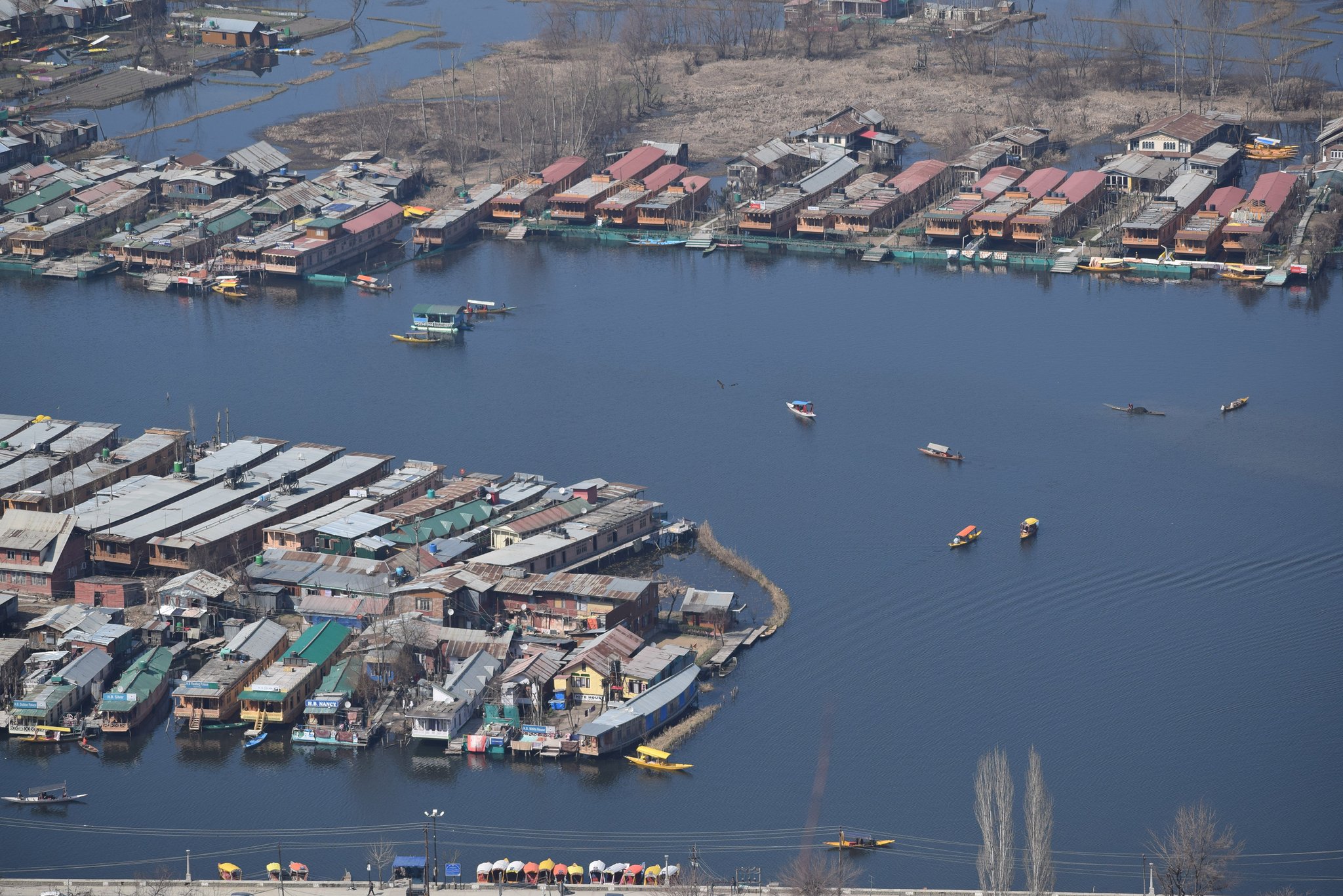
Jammu and Kashmir has for centuries been known as a land of extraordinary natural beauty, where snow-fed rivers, crystal springs, wetlands and lakes shaped not only the landscape but also the identity of its people. From the celebrated Dal Lake and Wular Lake to the countless lesser known alpine lakes, marshes and village water bodies scattered across mountains and plains, these waters have long sustained agriculture, moderated climate, supported biodiversity, attracted tourism and nourished livelihoods. Yet behind this image of paradise lies one of the gravest environmental crises facing the region today: the disappearance and degradation of hundreds of lakes.
Recent findings by the Comptroller and Auditor General exposed a deeply troubling reality. Out of 697 lakes officially recorded in Jammu and Kashmir in 1967, around 315 have disappeared entirely while many others have drastically shrunk or become ecologically dead. When degraded and functionally destroyed lakes are included, the broader public discourse now refers to the loss of nearly 365 lakes. Whether measured by strict statistics or wider ecological collapse, the message is unmistakable that the Jammu and Kashmir is witnessing a silent water tragedy of historic proportions.
This is not merely a matter of lost scenery. It is a story of administrative neglect, careless urbanisation, weak enforcement, public indifference and a dangerous failure to understand that lakes are not decorative assets but living systems essential to human survival. In a Himalayan region already threatened by climate change, erratic rainfall and growing water stress, the destruction of lakes is not just unfortunate, it is reckless.
For generations, lakes in Jammu and Kashmir performed functions far beyond their visible beauty. They acted as natural reservoirs, storing water during wet months and releasing it gradually during dry seasons. They recharged groundwater, supported fisheries, sustained lotus cultivation, provided fodder, moderated summer temperatures and hosted migratory birds. Wetlands absorbed excess rainfall and reduced flood risks. Wular Lake, one of Asia’s great freshwater lakes, historically functioned as a vast sponge for the Jhelum basin. Dal Lake became the face of Kashmir’s tourism economy. Hokersar wetland provided a haven for birdlife. Manasbal, Mansar and Surinsar held ecological and cultural significance. Yet alongside these famous lakes existed hundreds of smaller, less glamorous water bodies whose value was no less vital. Their tragedy was that they were largely invisible to policymakers.
For decades, official attention remained concentrated on a handful of iconic lakes that held tourism value or political symbolism. Restoration schemes, beautification drives, media events and selective interventions focused repeatedly on Dal, Wular or a few other recognised names. Meanwhile, hundreds of smaller lakes, ponds, marshes and seasonal wetlands across districts received little mapping, no protection plans, weak monitoring and almost no legal defence against encroachment. This selective environmentalism reflected a dangerous mindset: preserve what is visible, neglect what is essential.
As towns expanded and land values rose, wetlands and lake margins increasingly came to be seen as vacant land waiting for conversion. Marshes were filled for colonies, roads and commercial complexes. Natural drainage channels feeding lakes were narrowed, blocked or built over. In some areas, construction debris was casually dumped into water bodies. In others, agricultural expansion gradually ate into lake boundaries. The damage was often incremental rather than dramatic, which made it easier to ignore. A few truckloads of earth one season, a wall extension the next, a road alignment later and over time a lake disappeared from maps and memory.
What makes the crisis even more disturbing is that state agencies were not always passive observers. In several instances, government departments themselves approved or undertook projects in ecologically sensitive zones while publicly speaking of conservation. Regulations existed on paper but enforcement was selective and inconsistent. Powerful encroachers often faced little consequence while weaker offenders became symbolic targets. Such uneven governance eroded public confidence and normalised illegality.
The floods of 2014 should have marked a decisive turning point. That disaster demonstrated with brutal clarity what happens when wetlands shrink, floodplains are occupied and natural drainage systems are obstructed. Lakes and marshes that once stored excess water had already been reduced. Urban expansion had hardened surfaces and narrowed water escape routes. Yet although the floods triggered temporary awareness, the deeper structural lessons were only partially absorbed. Encroachment pressures continued, land conversion remained attractive and ecological planning never became central to development policy.
Government failure, however, is only part of the story. Society too must confront its share of responsibility.
Across many areas, environmental degradation has been normalised in everyday behaviour. Household waste is dumped into streams and lake edges. Plastic bottles and food packaging accumulate near tourist waters. Sewage flows untreated into connected drains. Construction material is stored on wetlands. Boundaries are quietly extended into common ecological spaces. Communities that passionately celebrate Kashmir’s beauty often remain silent when that beauty is damaged in practical life. Public outrage that can quickly mobilise around political or social controversies rarely sustains itself around disappearing lakes.
This silence has consequences. Ecological theft flourishes where civic resistance is weak.
Tourism adds another layer of irony. Jammu and Kashmir markets its lakes as symbols of paradise. Visitors arrive for shikara rides, houseboats, birdwatching, mountain treks and scenic escapes. Yet unmanaged tourism can intensify pollution, crowding and construction pressure. Fragile alpine lakes increasingly face litter and disturbance. Popular waterfronts struggle with waste disposal. Commercial expansion near scenic zones often prioritises short term revenue over long term sustainability. The economy depends on nature even as it undermines it.
Climate change now makes this neglect far more dangerous than in previous decades. Himalayan systems are undergoing rapid stress through glacier retreat, changing snowfall patterns, sudden rainfall bursts and altered seasonal water availability. In such conditions, every lake becomes strategically important. Natural water bodies store runoff, stabilise local climates, sustain biodiversity and buffer drought or flood extremes. Destroying them during a climate crisis is equivalent to dismantling safety infrastructure before a storm.
The loss of smaller lakes may prove especially damaging. Public attention naturally gravitates toward Dal or Wular but hundreds of modest wetlands and village lakes collectively perform enormous ecological work. They recharge aquifers, maintain soil moisture and support local agriculture, cool surrounding areas and preserve biodiversity corridors. Their disappearance rarely makes headlines, yet in aggregate it can be more destructive than the decline of one famous lake. They were sacrificed precisely because they lacked visibility.
Reversing this crisis requires more than symbolic clean-up drives or occasional announcements. Jammu and Kashmir needs a comprehensive water body restoration mission grounded in science, law and public participation. Every lake, pond, marsh and feeder channel must be accurately mapped using satellite imagery and field surveys. Boundaries must be legally notified and physically demarcated. Encroachments should be removed without fear or favour. No lake can survive if sewage continues to flow untreated into it, making modern waste and drainage infrastructure essential. Each district should have restoration plans tailored to its own geography rather than relying on Srinagar centric policymaking.
Equally important is community stewardship. Local residents are often the first to witness illegal filling, dumping or boundary changes. If empowered through village committees, citizen monitoring platforms and transparent grievance systems, communities can become defenders of nearby water bodies rather than spectators to their decline. Schools and universities should treat lakes not as background scenery but as living classrooms of ecology, climate and citizenship.
The disappearance of 365 lakes in Jammu and Kashmir is not just an environmental statistic. It is a measure of how institutions failed to plan, how development was poorly imagined and how society tolerated the erosion of common assets. Future generations may ask how a region famous across the world for its natural beauty allowed so much of its water heritage to vanish in plain sight.
That question will be difficult to answer unless action begins now.
Jammu and Kashmir cannot continue selling paradise in brochures while losing it on the ground. Lakes are not ornamental features for photographs; they are the circulatory system of the landscape. They sustain farms, towns, tourism and wildlife and climate resilience. If they continue to disappear, the consequences will extend far beyond ecology into economy, health and security.
The choice is stark. Either the region undertakes serious restoration led by accountable governance and active citizens or paradise will survive only in memory while its waters disappear forever.
Related Articles
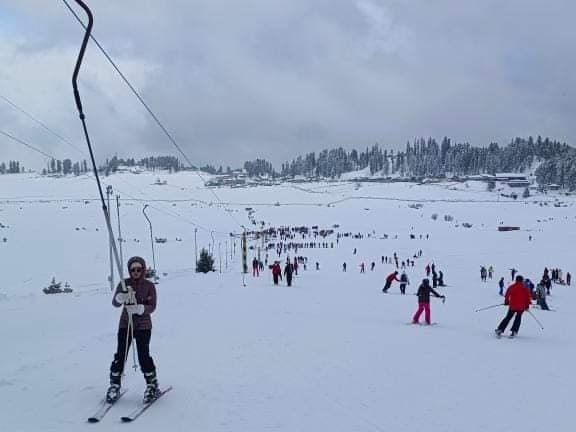
Reimagining Tourism Beyond Gondola
Waseem Hassan
For decades, the idea of tourism in Kashmir has been inseparable from a familiar visual vocabulary. The image of the gondola ride at Gulmarg Gondola, the houseboats resting quietly on Dal Lake and the lush green gardens of Pahalgam have long defined the region’s tourist imagination.
Kashmir at crossroads after West Asian conflict
Mareaya Fayaz
The escalating conflict between the United States, Israel and Iran has caused repercussions that extend well beyond the immediate battlefield. While the world’s headlines are dominated by the geopolitical concerns, areas like Jammu and Kashmir are discreetly preparing for economic repercussions.

How Internal Dissent is Eroding NC’s Credibility?
Mian Tufail
In a functioning democracy, three pillars legitimacy, authority and accountability are expected to operate in synchrony. Legitimacy, derived from the ballot, empowers a government with moral and political authority. Authority, in turn, enables governance.

Islam Beyond Arab Identity and Symbolism
Mohammad Zaid Malik
There are moments in history when a message emerges from a particular land yet refuses to belong to that land alone. Islam was one such message. It rose in the sands of seventh century Arabia but from its very inception, it spoke in a language meant for all of humanity.
TRANSITION FROM SECURITY GRID TO GOVERNANCE GRID
Bashir Assad
For much of the past three decades, the experience of the state in Kashmir has been defined by its visibility in security terms. Checkpoints, patrols and the pervasive architecture of surveillance constituted not merely an administrative arrangement but a lived reality that shaped how governance itself was perceived.

Economics of Jobless Growth in India
Dr Mehraj Ud din Shah
India's economic growth has been impressive, but growth alone is insufficient if it fails to create productive employment.