politics
WEST ASIA’S WAR AND A QUIET REASSESSMENT OF PAKISTAN IN KASHMIR
By Bashir Assad | Fri Apr 03 2026
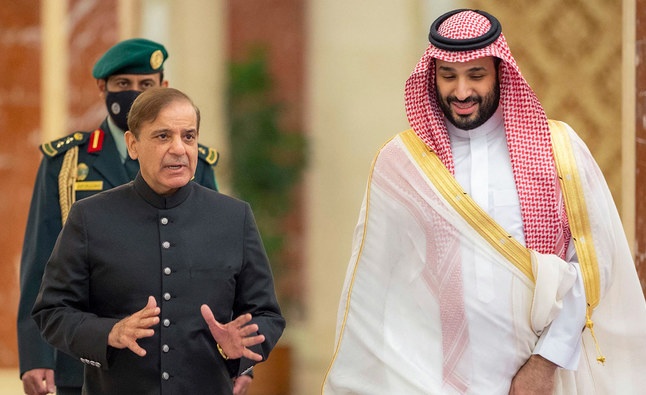
The ongoing war involving Iran, Israel and the United States has stirred strong reactions across large parts of the Muslim world. From North Africa to South Asia, demonstrations, online campaigns and intense political discussions have emerged as communities react emotionally to the conflict and its wider implications. Across many Muslim societies the conflict is being interpreted not merely as a geopolitical confrontation but as a moment that touches a deeper sense of political and religious identity.
But far from the battlefields of West Asia, another development is quietly unfolding in Kashmir. It is not visible in official statements or organised rallies. Instead, it exists in conversations among young people, in university hostels, in late night debates in cafes, iftar parties and increasingly across social media platforms where global political discussions travel instantly across borders.
As the Iran-Israel conflict reshapes conversations across the Muslim world, young Kashmiris are increasingly reassessing Pakistan’s perceived role as a voice of Muslim political solidarity, reflecting a quiet generational shift in political imagination.
For decades the political imagination of Kashmir was shaped by certain familiar reference points. Among them the image of Pakistan as a central voice of Muslim political solidarity held a powerful place in public discourse. Generations grew up hearing a narrative in which Pakistan’s identity as an Islamic republic automatically positioned it at the forefront of Muslim causes across the world. Within that narrative Pakistan was often viewed not merely as a neighbouring state but as a symbol of Islamic political assertion. Yet global events sometimes begin to test old assumptions.
The war surrounding Iran has triggered a wave of emotional reaction among Muslims across the world. For many observers the conflict has become a symbolic moment in which the broader question of Muslim unity is being discussed again with unusual intensity. One striking feature of the current discourse is that the long-standing Sunni-Shia divide appears far less visible in public debate than it once was. Across digital spaces many discussions now speak in the language of a broader Muslim sentiment rather than sectarian affiliation.
In Kashmir these global reactions are followed closely, particularly by the generation that has grown up in an era of instant information. International events unfold on their phone screens in real time through live updates commentary and competing political narratives from across the world. Young people scroll through statements by political leaders, reactions from scholars and activists and emotional responses from Muslim communities scattered across continents. Within this environment the positions adopted by different Muslim states are being watched carefully. And it is here that a subtle but increasingly visible shift begins to appear. The expectation that a country founded on an Islamic identity would occupy a visibly assertive position during moments of crisis affecting the Muslim world has long been embedded in popular imagination. When global events appear to challenge that expectation, reactions inevitably follow.
When reality appears to diverge from those long held expectations the reaction among many young observers in Kashmir is not merely confusion or quiet reflection. In several discussions the sentiment has been far more direct. A visible sense of anger has surfaced in online conversations and private debates where Pakistan’s response to the crisis is being openly criticised. Among sections of the younger generation the feeling expressed is that a country which has historically projected itself as a defender of Muslim causes has remained unexpectedly restrained at a moment many Muslims view as deeply consequential. This perception has triggered unusually blunt commentary in Kashmiri social media spaces where frustration rather than hesitation now defines the tone of the discussion.
This anger is not always expressed through formal political language. Instead it emerges through everyday conversations where young Kashmiris compare the rhetoric of Muslim solidarity with the realities of global alliances and diplomatic caution. The discussions are often emotional, sometimes critical and frequently shaped by the intense imagery and narratives circulating online from the conflict zones of West Asia.
For many young Kashmiris the Iran war has therefore produced an unexpected psychological effect. Instead of simply reinforcing traditional political loyalties, it has encouraged a generation to look at global politics with greater scrutiny. Questions are being asked about how Muslim states position themselves in international conflicts and whether the idea of Muslim political solidarity still carries the same meaning it once did.
What distinguishes this generation is the environment in which it has grown up. Earlier political narratives in Kashmir were shaped largely through local discourse and limited media channels. Today, the information landscape is radically different. A student sitting in a hostel room in Srinagar or elsewhere can follow a speech in Tehran, a military update from Tel Aviv and a policy debate in Washington within minutes. This constant exposure inevitably produces comparison.
Political actions taken by governments are immediately measured against their rhetoric. Statements are analysed, contrasted and debated across online platforms where thousands of voices participate simultaneously. In such an environment political image that once appeared stable can change quickly. In Kashmir, this transformation remains largely informal. It rarely appears in speeches or official commentary. Yet the conversations unfolding among young people suggest that the symbolic image of Pakistan that once existed almost unquestioned in parts of Kashmiri political imagination is now being examined more critically. This does not necessarily translate into a uniform shift in political alignment. Public opinion in Kashmir has always been layered and complex, shaped by history identity and lived experience. But what appears to be changing is the tone of the conversation itself.
The younger generation is increasingly willing to evaluate political actors not only through inherited narratives but through their responses to contemporary global events. The Iran war has accelerated that process.
Across hostels, classrooms and online discussions, the questions being asked are different from those heard a decade ago. They revolve around credibility, consistency and the gap that sometimes appears between political rhetoric and geopolitical reality. For many observers this represents a generational transition rather than a sudden political transformation. The Kashmir that once consumed political narratives largely through regional media now interacts directly with global information streams. This interaction inevitably reshapes how political actors are perceived.
History often records political change through dramatic events, elections revolutions or treaties but sometimes the more significant transformation begins much more quietly. It begins in conversations that take place away from microphones and headlines. It begins when a generation raised in an interconnected world begins comparing political claims with the behaviour of states on the global stage. And it begins when familiar political symbols start to be viewed through a new and more questioning lens. In Kashmir that conversation has already begun.
Related Articles
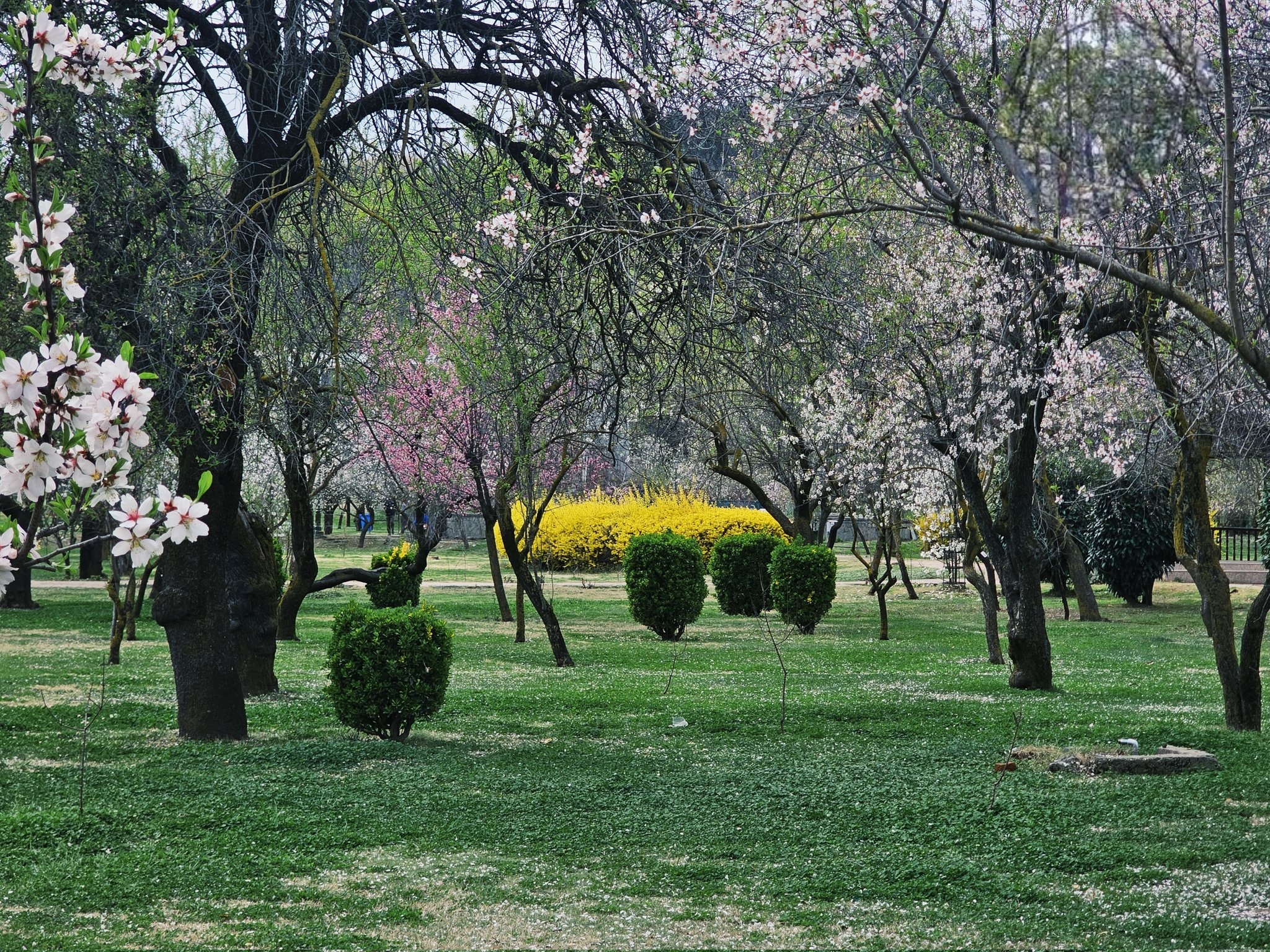
BADAMWARI IN BLOOM
Sohail Bashir
There is a moment in Kashmir that cannot be marked on a calendar. It arrives quietly, almost gently, when the bare branches of almond trees in Srinagar’s old city soften into pale pink and white and the long winter finally begins to loosen its hold. That moment lives in Badamwari.
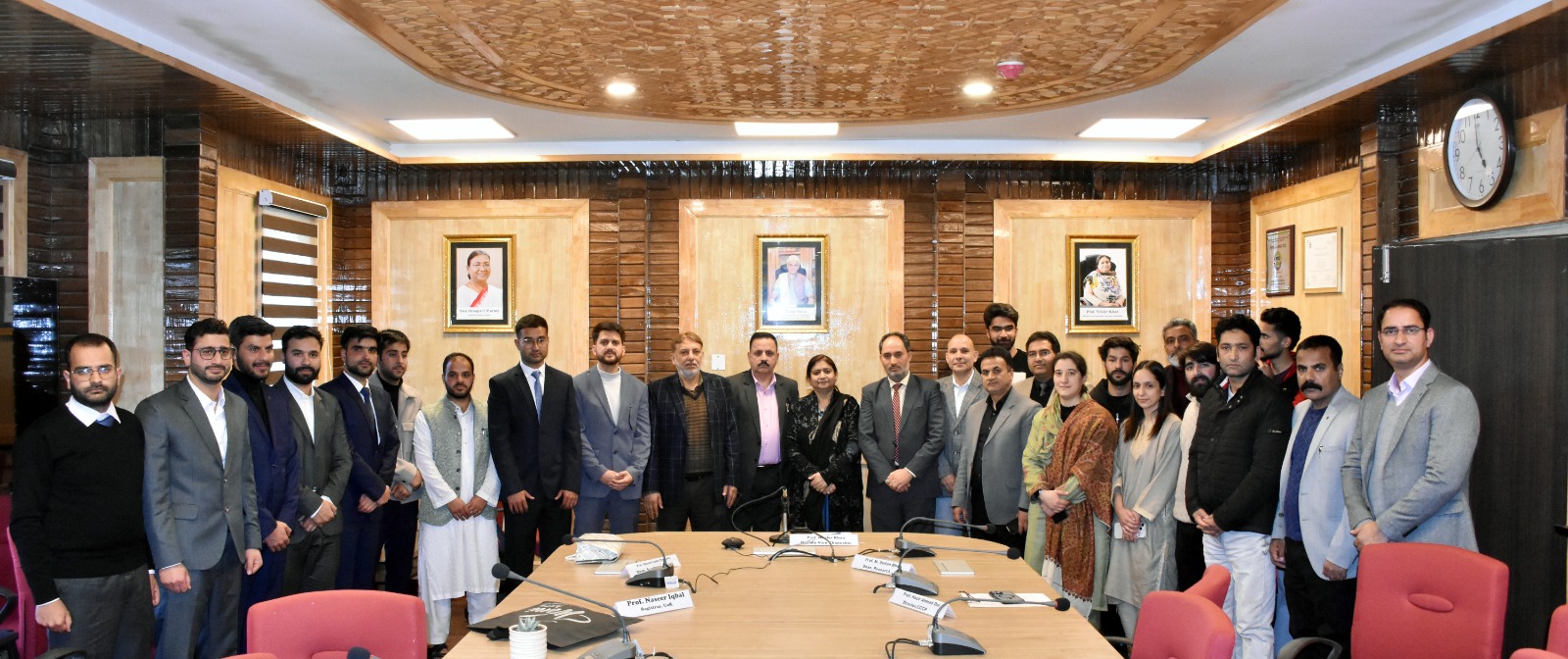
THE COACHING CAPITAL
Mian Tufail
On winter mornings in Srinagar before the markets awaken and traffic gathers around the city centre, the narrow staircases above coaching centres, bookstores and stationery shops are already crowded. Young men and women climb these steps with backpacks, full of notebooks and borrowed hope.
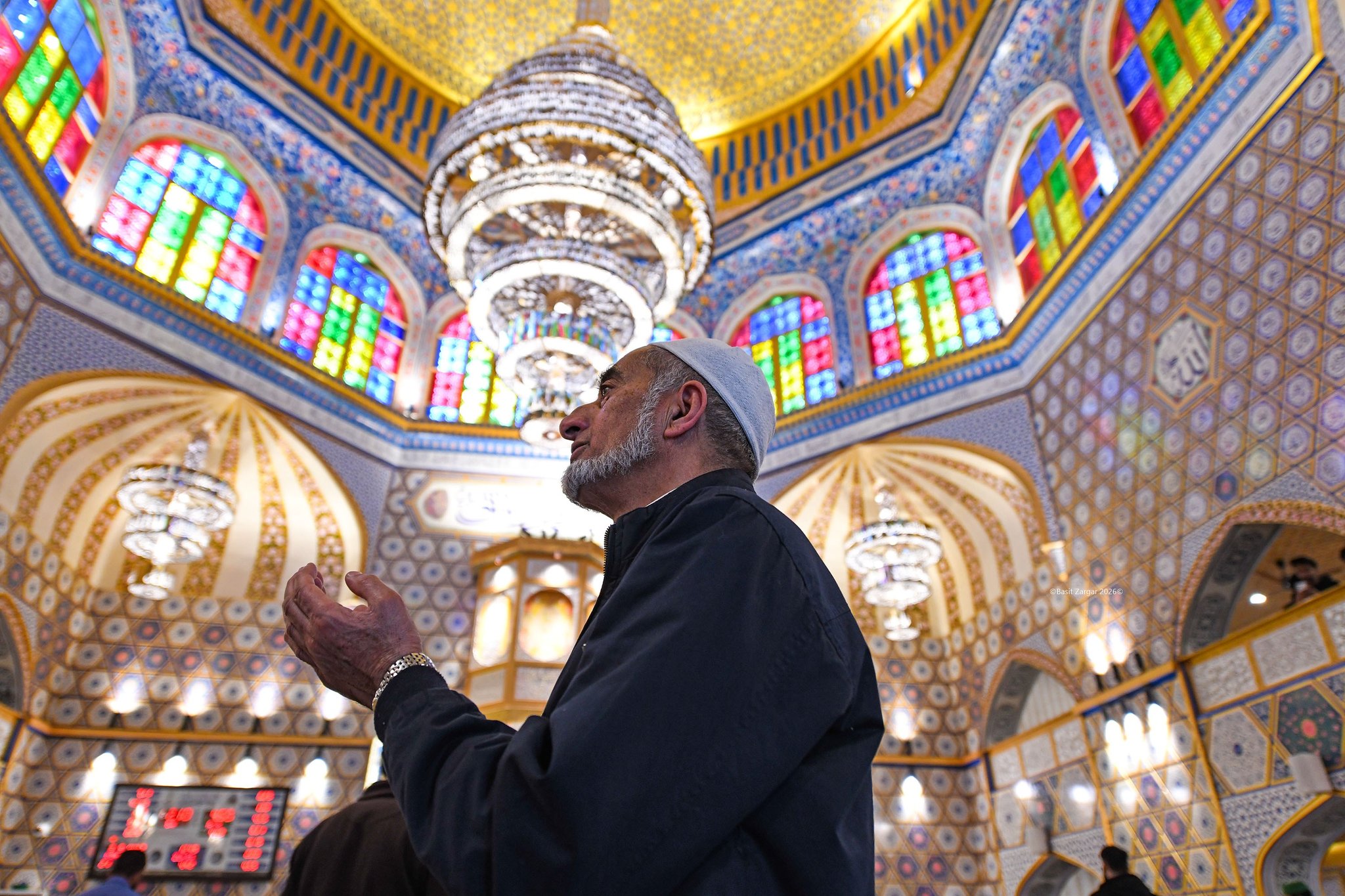
WHEN FAITH BECOMES PERFORMANCE
Mohammad Zaid Malik
Mosques (Masaajid) have always occupied a sacred and central place in Islamic civilization. From the earliest days of Islam, they served not merely as spaces for prayer but as the living heart of Muslim society. The first mosque established in Islamic history, Masjid-e-Quba and later the Prophet’s Mosque in Madinah, were vibrant centres where faith intertwined with education, governance, social welfare and intellectual exchange.
THE POLITICS OF NORMALCY
Yawar Yousef
On a quiet evening, along the banks of the Jhelum river, the rhythm of life in Srinagar appears almost ordinary. Shops close at their usual hour. Families walk along the boulevard. Traffic moves through the intersections around Lal Chowk with the familiar impatience of any bustling city.
THE PAUSE IN JAMMU & KASHMIR’S DEMOCRATIC EXPERIMENT
Waseem Assad
As the term of Jammu and Kashmir’s District Development Councils quietly came to an end last month, the moment passed without spectacle but not without consequence. For the first time in recent years, the Jammu & Kashmir stands bereft of its entire three-tier Panchayati Raj structure.
GUREZ FROM ISOLATION TO INSPIRATION
Mareaya Fayaz
In the high mountains of North Kashmir, where winter once dictated silence and separation, the sound of machines cutting through walls of snow now carries a different meaning. It signals return of roads, of movement, of life itself.