culture
GUREZ FROM ISOLATION TO INSPIRATION
By Mareaya Fayaz | Fri Apr 03 2026
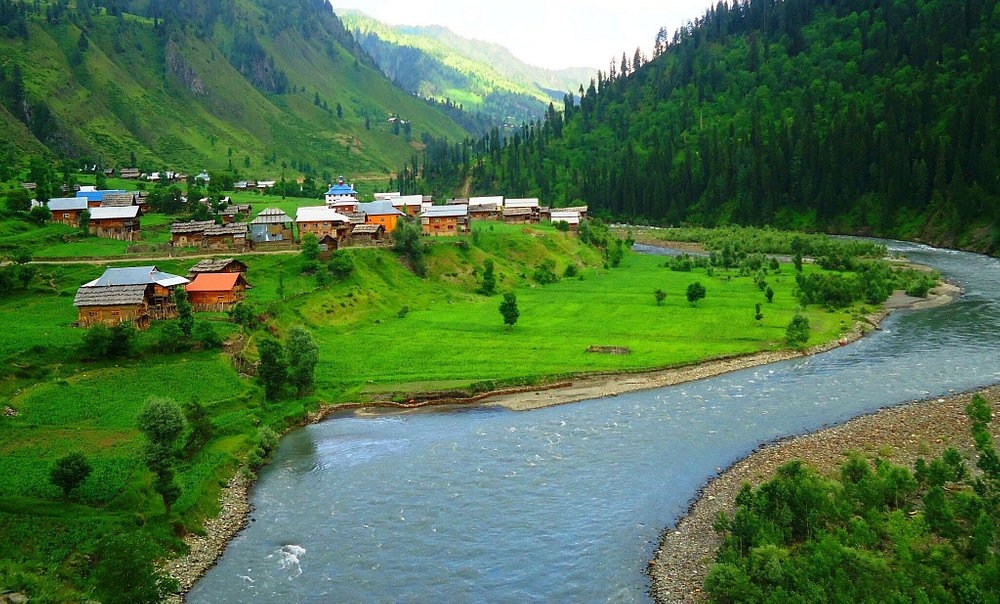
In the high mountains of North Kashmir, where winter once dictated silence and separation, the sound of machines cutting through walls of snow now carries a different meaning. It signals return of roads, of movement, of life itself.
When the Border Roads Organisation reopened the Bandipora-Gurez road in early 2026 in record time, it did more than restore connectivity. It quietly altered the rhythm of a valley that has long lived at the mercy of weather and geography. For decades, the road over Razdan Top, perched at over 3,300 metres, remained buried under snow for nearly half the year, sealing Gurez off from the rest of Jammu and Kashmir. Families prepared for isolation as a seasonal certainty, stocking supplies before the first snowfall closed the only gateway to the outside world.
Once defined by months of isolation, Gurez is steadily rewriting its story. With record-time road reopening, growing tourism and a quiet blend of resilience and development, this remote valley is emerging as one of Kashmir’s most compelling destinations where nature and culture converge.
This year, however, the story unfolded differently. Through sub-zero temperatures, icy stretches and relentless winds, teams worked with unusual urgency and coordination. The effort was not merely about reopening a road, it was about extending time itself, reducing the months of disconnection that have defined life in Gurez for generations.
As the snow recedes, another transformation becomes visible. The valley that once lay at the edge of accessibility is steadily moving towards the centre of attention.
Gurez, nestled along the Line of Control in Bandipora district at an altitude of around 8,000 feet, has begun to shed its long-standing image as a remote and restricted frontier. In its place, a new identity is emerging, one defined by pristine landscapes, cultural richness and an experience that feels untouched by the hurried rhythms of mainstream tourism.
The numbers reflect this shift but they tell only part of the story. What truly marks Gurez’s rise is the nature of its appeal. Visitors are no longer drawn solely by scenery but by the promise of immersion into a place where rivers still define routes, where pine forests frame everyday life and where the mountains feel less like a backdrop and more like a presence.
The Kishanganga river flows quietly through this transformation, its waters now carrying not just the echoes of history but the stirrings of a new economy. Camp sites line its banks in summer, trekkers chart paths through alpine meadows and rafting introduced only recently adds a new dimension to the valley’s growing portfolio of experiences.
Yet, beneath this visible transformation lies a quieter, deeper story one that has unfolded over years and often away from public gaze.
The Indian Army, stationed across the region due to its proximity to the Line of Control, has played a crucial role in shaping the conditions that make this transformation possible. In a landscape where geography is unforgiving and infrastructure fragile, their presence has extended beyond security into the realm of everyday survival.
Through harsh winters, when snow isolates entire settlements, it is often the Army that ensures continuity, facilitating movement, supporting emergency evacuations and providing essential aid. In coordination with agencies like the BRO, it has helped maintain critical routes and opened access to areas that would otherwise remain cut off.
Over time, this role has evolved. Stability has created space for development and development has, in turn, made room for tourism. What visitors experience today as accessibility and safety is, in many ways, the outcome of years of sustained effort in one of the most sensitive border regions in the country.
Within the valley, the change is perhaps most visible in the lives of its people.
In Dawar, the administrative heart of Gurez and in smaller villages scattered along the valley, tourism has begun to reshape aspirations. Homes are opening their doors as home stays, log huts are being adapted to host travellers and fields that once sustained families are now also supporting a growing local economy.
Recognition has followed effort. Gurez has been celebrated as an offbeat destination while Dawar has earned national acclaim as a model tourism village. But beyond awards, what matters more is the shift in confidence, a sense among residents that their homeland is no longer on the margins.
Local produce, once consumed within the valley, is now gaining identity beyond it. Gurezi rajma, potatoes and high-altitude herbs are emerging not just as commodities but as markers of place distinct, valued and increasingly sought after.
Growth, however, brings its own challenges and in a region as ecologically fragile as Gurez, the stakes are particularly high.
Efforts are underway to ensure that the valley’s transformation does not come at the cost of its environment. Systems for waste collection and segregation are being strengthened, composting infrastructure is being developed and strict measures are in place to prevent pollution of the Kishanganga river. Awareness campaigns now accompany tourism, reminding both residents and visitors that preservation is not optional, it is essential.
In this, Gurez is attempting something delicate: to grow without losing the very qualities that make it unique.
Perhaps the most defining moment in this journey came in the summer of 2025, when the valley hosted its first National Tribal Festival in the remote village of Choorwan, near the Line of Control.
What unfolded there was not a typical government event. Officials arrived not to observe from a distance but to participate, to stay in traditional homes, to share meals and to listen. The Dard-Shin community, whose culture has long remained confined to the margins, found itself at the centre of a national conversation.
Around bonfires and under open skies, stories were exchanged, music filled the air and boundaries both physical and psychological seemed to soften. Tribal groups from across India joined in, creating a rare space of cultural dialogue in one of the country’s most sensitive regions.
For Gurez, the festival marked a shift in identity. It was no longer just a destination of landscapes but a place of lived heritage inviting not just tourists but travellers willing to engage more deeply.
Beyond the present lies an ambitious future. Plans are underway to establish a dedicated tourism development authority, to improve infrastructure and to explore all-weather connectivity through tunnels and expanded road networks linking Gurez with Kargil and beyond. The vision is clear that’s to transform the valley from a seasonal retreat into a year-round destination.
And yet, even as these plans take shape, the essence of Gurez remains rooted in something more enduring.
It lies in the reopening of a road after months of silence. In the resilience of communities that have learned to endure and adapt. In the quiet partnership between institutions that build, protect and sustain. And in the growing realisation that even the most remote corners can find their place in a larger story.
Gurez today stands at a rare intersection where geography, history and aspiration converge. It is no longer defined solely by its distance from the centre but by its journey towards it.
In that journey, the road over Razdan Top is no longer just a passage through snow. It is a passage into possibility.
Related Articles
BADAMWARI IN BLOOM
Sohail Bashir
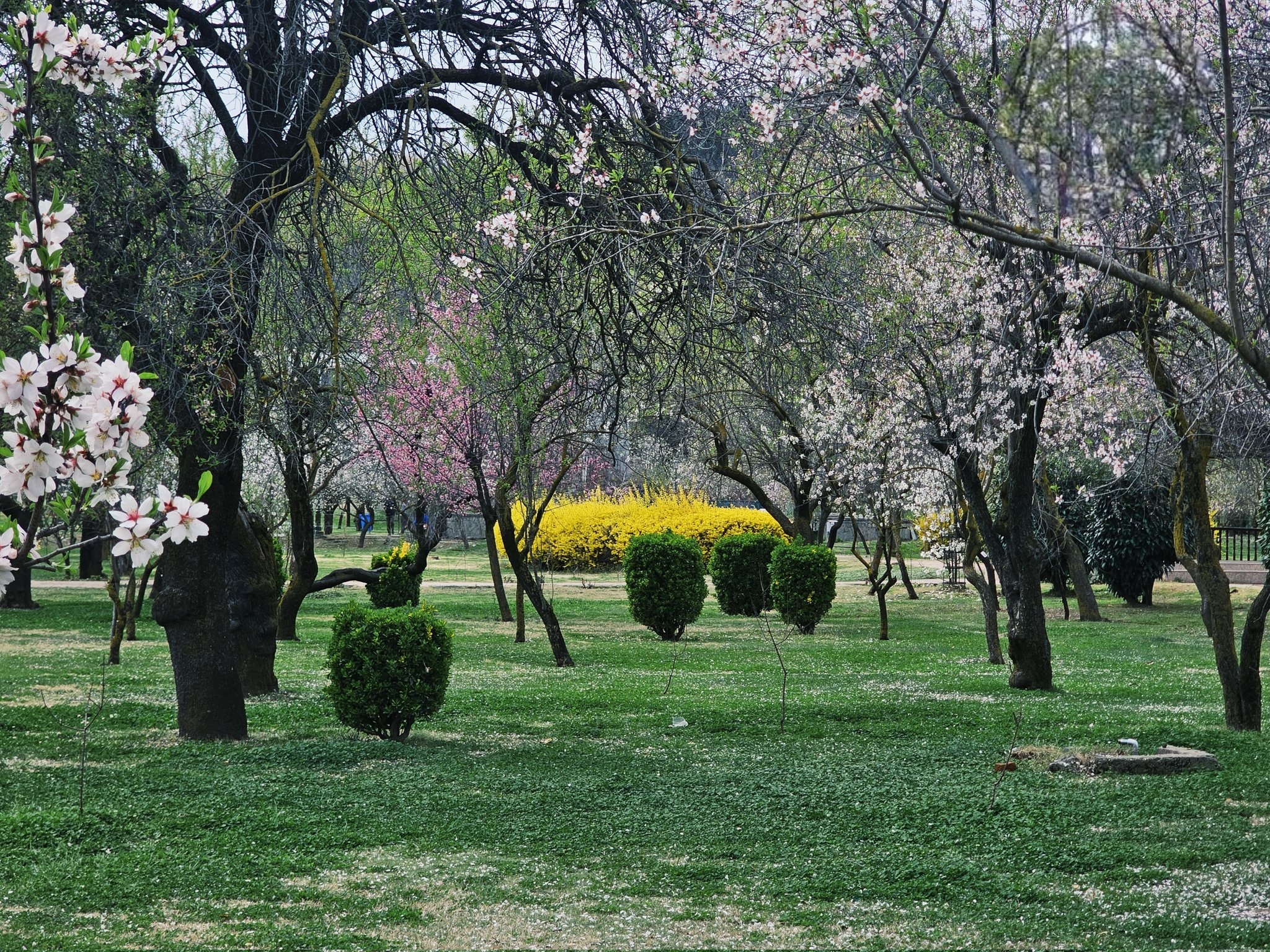
There is a moment in Kashmir that cannot be marked on a calendar. It arrives quietly, almost gently, when the bare branches of almond trees in Srinagar’s old city soften into pale pink and white and the long winter finally begins to loosen its hold. That moment lives in Badamwari.
THE COACHING CAPITAL
Mian Tufail
On winter mornings in Srinagar before the markets awaken and traffic gathers around the city centre, the narrow staircases above coaching centres, bookstores and stationery shops are already crowded. Young men and women climb these steps with backpacks, full of notebooks and borrowed hope.
WHEN FAITH BECOMES PERFORMANCE
Mohammad Zaid Malik
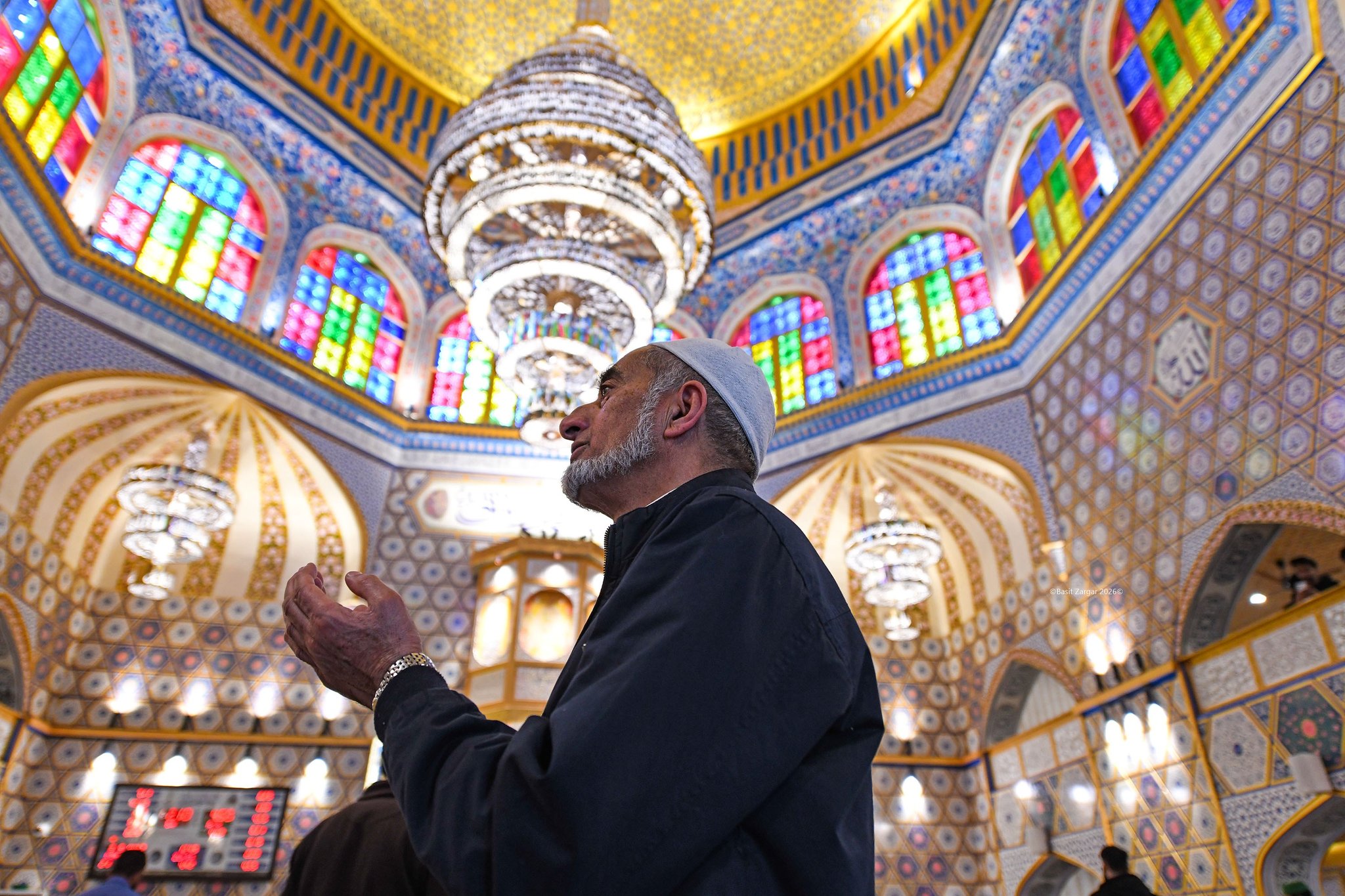
Mosques (Masaajid) have always occupied a sacred and central place in Islamic civilization. From the earliest days of Islam, they served not merely as spaces for prayer but as the living heart of Muslim society. The first mosque established in Islamic history, Masjid-e-Quba and later the Prophet’s Mosque in Madinah, were vibrant centres where faith intertwined with education, governance, social welfare and intellectual exchange.
THE POLITICS OF NORMALCY
Yawar Yousef
On a quiet evening, along the banks of the Jhelum river, the rhythm of life in Srinagar appears almost ordinary. Shops close at their usual hour. Families walk along the boulevard. Traffic moves through the intersections around Lal Chowk with the familiar impatience of any bustling city.
THE PAUSE IN JAMMU & KASHMIR’S DEMOCRATIC EXPERIMENT
Waseem Assad
As the term of Jammu and Kashmir’s District Development Councils quietly came to an end last month, the moment passed without spectacle but not without consequence. For the first time in recent years, the Jammu & Kashmir stands bereft of its entire three-tier Panchayati Raj structure.
WEST ASIA’S WAR AND A QUIET REASSESSMENT OF PAKISTAN IN KASHMIR
Bashir Assad
The ongoing war involving Iran, Israel and the United States has stirred strong reactions across large parts of the Muslim world. From North Africa to South Asia, demonstrations, online campaigns and intense political discussions have emerged as communities react emotionally to the conflict and its wider implications.