politics
THE PAUSE IN JAMMU & KASHMIR’S DEMOCRATIC EXPERIMENT
By Waseem Assad | Fri Apr 03 2026
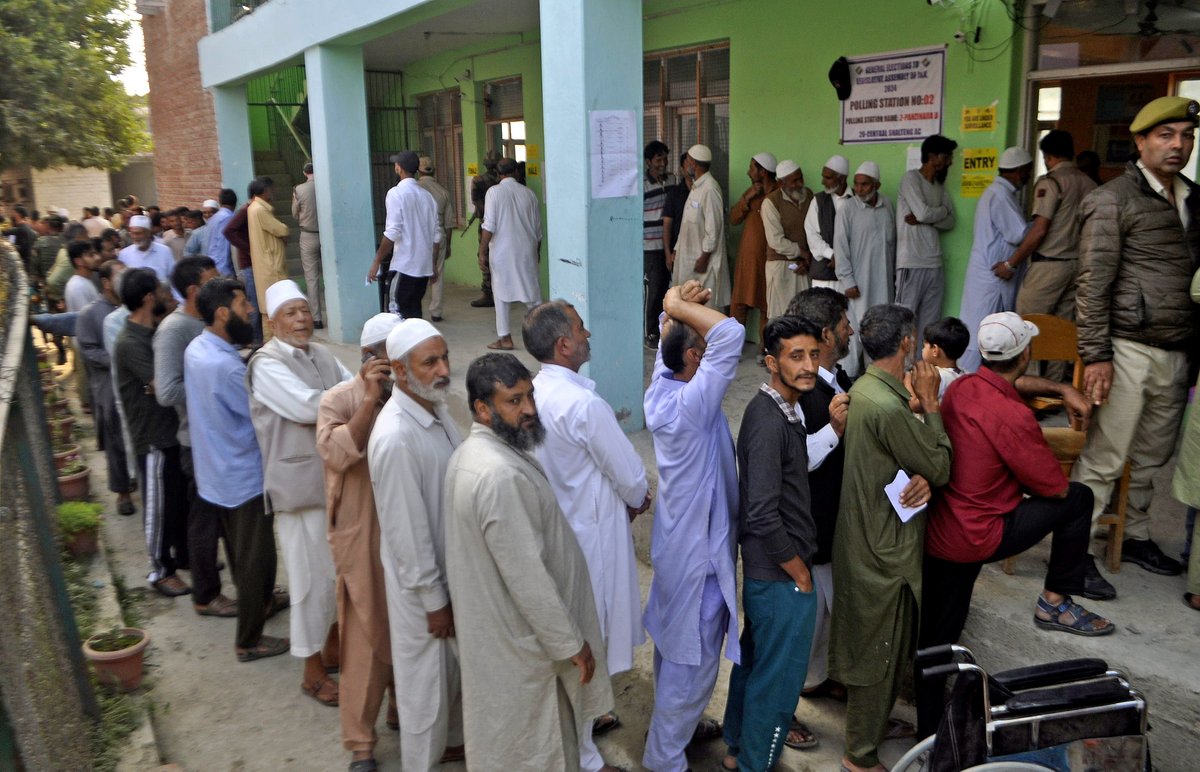
As the term of Jammu and Kashmir’s District Development Councils quietly came to an end last month, the moment passed without spectacle but not without consequence. For the first time in recent years, the Jammu & Kashmir stands bereft of its entire three-tier Panchayati Raj structure. Panchayats had already fallen vacant, Block Development Councils had completed their tenure earlier and now with the expiry of the DDCs, the last elected link between the people and governance at the grassroots has dissolved.
What remains is not merely an administrative gap but a deeper democratic pause, one that compels reflection on what these institutions came to represent in post-2019 Jammu and Kashmir and what their absence signifies today.
With the expiry of District Development Councils, Jammu & Kashmir today stands without an elected grassroots framework for the first time in years. What began as a post-2019 push toward decentralised governance now faces a moment of uncertainty. The KC examines the rise of Panchayati Raj Institutions as engines of development, the gaps that persist within them and what their sudden absence reveals about the deeper trajectory of democracy in the J&K.
The idea of grassroots democracy in Jammu and Kashmir is not new. The Jammu and Kashmir Panchayati Raj Act of 1989 had already laid the foundation for decentralized governance. Yet for decades, this framework functioned unevenly, often overshadowed by a highly centralized political structure and interrupted electoral cycles. Local bodies existed but they rarely emerged as the primary engines of governance or development.
The events of August 2019 altered that trajectory fundamentally. The abrogation of Article 370 and the reorganization of the former state into two Union Territories triggered a sweeping administrative recalibration. In its aftermath, the emphasis on decentralization grew sharper, more deliberate and politically consequential. It was in this context that the three-tier Panchayati Raj system was not just revived but completed with the introduction of District Development Councils in 2020.
These councils were not merely an addition to an existing structure; they were conceived as its apex at the district level. For the first time, rural constituencies would directly elect representatives to a body responsible for planning, prioritizing and overseeing development at a scale that had previously been mediated through bureaucratic channels. Each district, with its fourteen elected members, acquired what many described as a “mini assembly”, a localized deliberative forum in the absence of a functioning Legislative Assembly at the time.
The timing of the 2020 DDC elections made them particularly significant. Conducted in the shadow of political uncertainty and heightened security sensitivities, they tested both administrative resolve and public willingness to engage in democratic processes. That participation did occur and across party lines, suggested a continuing faith in electoral mechanisms even amidst structural upheaval.
In the years that followed, the functioning of these councils revealed both the promise and the limitations of grassroots governance in a Union Territory framework. On one hand, the DDCs became visible nodes of local engagement. They provided a platform where citizens could directly approach elected representatives, often with immediate concerns relating to infrastructure, welfare schemes or administrative grievances. In districts like Kupwara, leaders such as Irfan Panditpuri articulated a model of accessibility that resonated with constituents. His farewell remarks, reflecting an effort to serve beyond party lines, captured an aspiration that these institutions had begun to embody, a politics closer to the people.
At the same time, the structural constraints within which the DDCs operated were never entirely absent. The Union Territory’s governance model ensured that bureaucratic oversight remained strong and the extent of financial and administrative autonomy available to elected councils often came into question. For many members, the experience was one of negotiating space within a system where ultimate authority lay elsewhere.
Security concerns added another layer of complexity, particularly in the initial years. Several representatives functioned under protection, limiting their mobility and by extension, their ability to engage freely with constituents. Internal dynamics within councils also reflected the evolving nature of these institutions. Leadership challenges and factional differences surfaced in multiple districts, pointing to the growing pains of a system still finding its equilibrium.
Yet, despite these constraints, it would be reductive to dismiss the impact of the DDCs. By most accounts, they did contribute to the acceleration of development work at the district level. Road connectivity projects, local infrastructure improvements and the implementation of centrally sponsored schemes found a more grounded execution mechanism. Perhaps more importantly, they reintroduced the idea that governance could be participatory at the most immediate level of people’s lives.
The gradual unraveling of this structure began not with the DDCs but earlier. The terms of Urban Local Bodies expired in late 2023, followed by the conclusion of tenures for Panchayats and Block Development Councils in January 2024. For over a year, therefore, the lower tiers of the system had already ceased to function as elected entities. The DDCs remained the last operational layer, carrying the weight of grassroots representation until their own term concluded on February 24 this year.
With their expiration, Jammu and Kashmir now finds itself in a situation where all three tiers of Panchayati Raj Institutions stand vacant. The implications of this are both immediate and long-term. In the absence of elected representatives, administrative machinery assumes greater responsibility but without the same degree of localized accountability or participatory input.
This transition has unfolded alongside political acknowledgments of the need to restore electoral processes. During a recent Assembly session, Chief Minister Omar Abdullah spoke of the intention to conduct local body elections, while also pointing to a critical institutional gap, the absence, until recently, of a State Election Commissioner. That gap has now been addressed with the appointment of Shantmanu, administered oath by Lieutenant Governor Manoj Sinha in presence of Chief Minister and Cabinet Ministers. The appointment is more than procedural; it signals the reactivation of an electoral mechanism that had remained dormant for months.
What has followed is the beginning of a methodical, if cautious, process. Meetings involving senior administrative officials have laid out a roadmap for the revision of electoral rolls, a prerequisite for conducting Panchayat elections. The timeline, stretching from the integration of existing voter data to the publication of final electoral rolls expected by May, next month, suggests that the groundwork is being laid with a degree of seriousness.
And yet, the process is not without its uncertainties. The question of reservations, particularly following the recommendations of the OBC Commission, remains unresolved. The conduct of elections to Urban Local Bodies is tied to a separate exercise of electoral roll revision. These variables introduce an element of unpredictability into what might otherwise appear as a linear progression toward elections.
In this interregnum, the larger question is not merely when elections will be held but what role Panchayati Raj Institutions will continue to play in the evolving governance framework of Jammu and Kashmir. Since 2019, these institutions have been positioned as central to the narrative of development and democratization. They have been presented as mechanisms through which power is devolved, accountability is strengthened and development is localised.
There is substance to this claim. In many parts of rural Jammu and Kashmir, panchayats and DDCs became the most accessible points of governance. They reduced the distance, both literal and institutional, between the citizen and the state. They enabled a form of decision-making that was more responsive to local needs, whether in the prioritisation of projects or the identification of beneficiaries.
At the same time, the experience of the past few years also underscores the limits of institutional design without corresponding autonomy. The effectiveness of PRIs is ultimately tied not just to their existence but to the extent of authority they are allowed to exercise. This tension between decentralization as policy and centralization as practice continues to shape their trajectory.
The current vacuum, therefore, is not simply a pause in electoral activity; it is a moment that brings into focus the broader question of how deeply rooted grassroots democracy has become in Jammu and Kashmir. If PRIs are indeed the backbone of development, as they are often described, then their absence raises concerns about the sustainability of that development model in the interim.
And yet, there is also reason to view this moment as transitional rather than terminal. The administrative steps underway, the political statements expressing commitment to elections and the institutional reactivation through the appointment of the State Election Commissioner all point toward an eventual restoration of the system.
The story of Panchayati Raj Institutions in Jammu and Kashmir remains unfinished. It is a story that began long before 2019, acquired new momentum in its aftermath and now stands at a point of temporary suspension. Whether the next phase strengthens these institutions further or exposes their vulnerabilities more starkly will depend on the choices made in the months ahead.
For now, the silence at the grassroots is palpable. The offices that once hosted elected representatives stand without them. The channels through which citizens engaged with governance have narrowed. And the promise of decentralized democracy, while not abandoned, waits to be renewed.
In that waiting lies both a challenge and an opportunity, the challenge of sustaining faith in democratic processes during periods of absence and the opportunity to rebuild these institutions with greater clarity, autonomy and purpose. Because in Jammu and Kashmir, perhaps more than anywhere else, the strength of democracy is ultimately measured not at the top but at the grassroots.
Related Articles
BADAMWARI IN BLOOM
Sohail Bashir
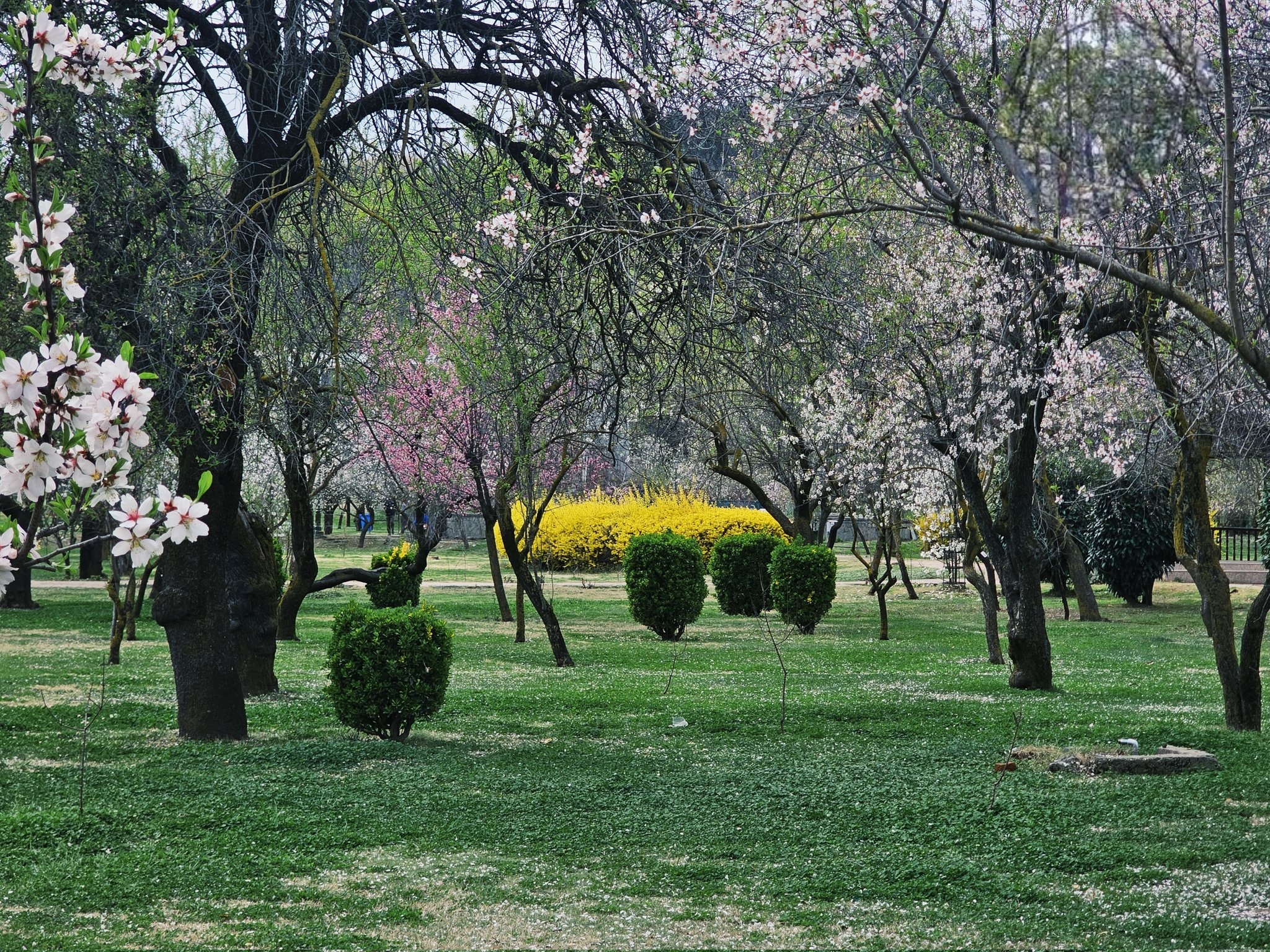
There is a moment in Kashmir that cannot be marked on a calendar. It arrives quietly, almost gently, when the bare branches of almond trees in Srinagar’s old city soften into pale pink and white and the long winter finally begins to loosen its hold. That moment lives in Badamwari.
THE COACHING CAPITAL
Mian Tufail
On winter mornings in Srinagar before the markets awaken and traffic gathers around the city centre, the narrow staircases above coaching centres, bookstores and stationery shops are already crowded. Young men and women climb these steps with backpacks, full of notebooks and borrowed hope.
WHEN FAITH BECOMES PERFORMANCE
Mohammad Zaid Malik
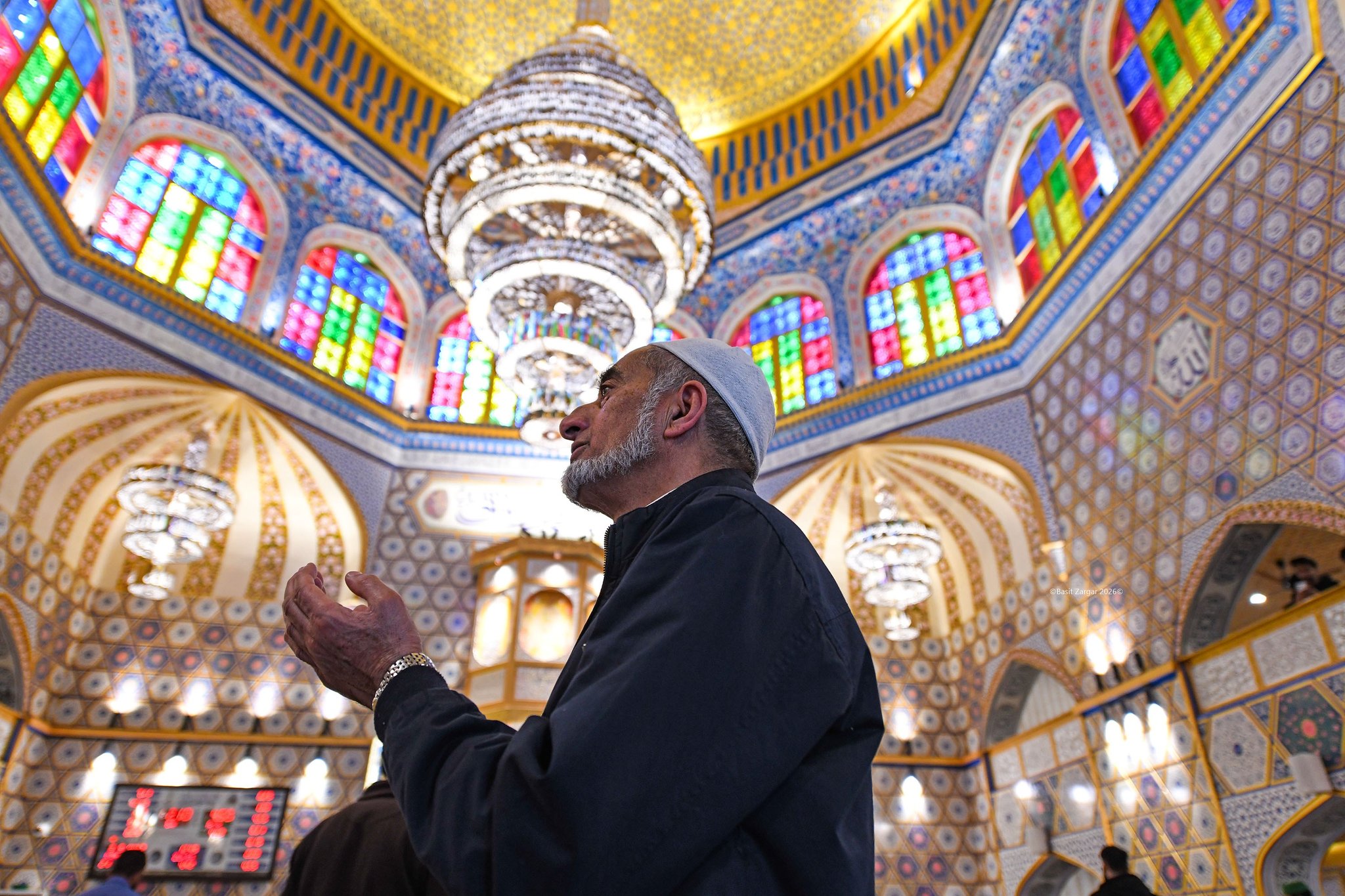
Mosques (Masaajid) have always occupied a sacred and central place in Islamic civilization. From the earliest days of Islam, they served not merely as spaces for prayer but as the living heart of Muslim society. The first mosque established in Islamic history, Masjid-e-Quba and later the Prophet’s Mosque in Madinah, were vibrant centres where faith intertwined with education, governance, social welfare and intellectual exchange.
THE POLITICS OF NORMALCY
Yawar Yousef
On a quiet evening, along the banks of the Jhelum river, the rhythm of life in Srinagar appears almost ordinary. Shops close at their usual hour. Families walk along the boulevard. Traffic moves through the intersections around Lal Chowk with the familiar impatience of any bustling city.
GUREZ FROM ISOLATION TO INSPIRATION
Mareaya Fayaz
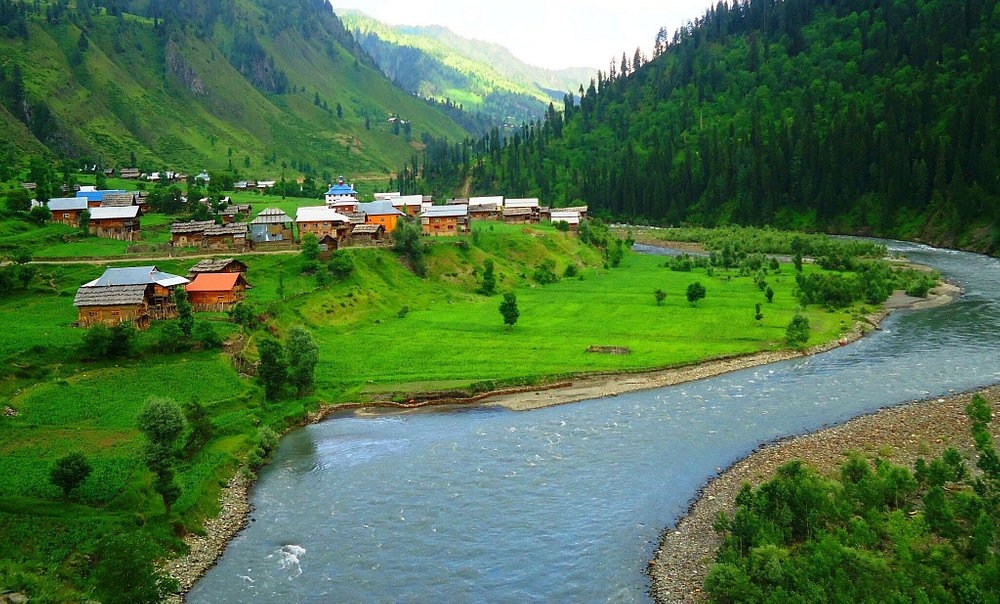
In the high mountains of North Kashmir, where winter once dictated silence and separation, the sound of machines cutting through walls of snow now carries a different meaning. It signals return of roads, of movement, of life itself.
WEST ASIA’S WAR AND A QUIET REASSESSMENT OF PAKISTAN IN KASHMIR
Bashir Assad
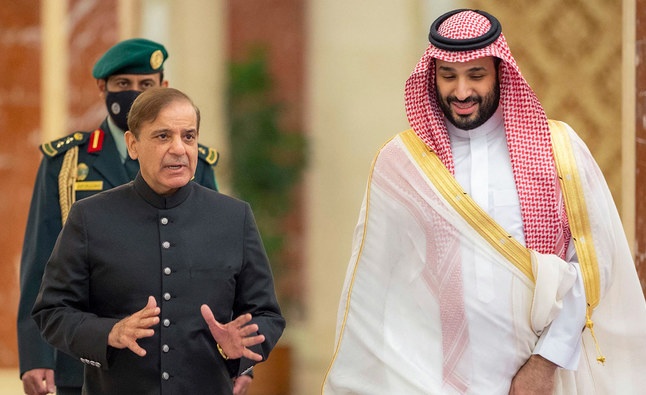
The ongoing war involving Iran, Israel and the United States has stirred strong reactions across large parts of the Muslim world. From North Africa to South Asia, demonstrations, online campaigns and intense political discussions have emerged as communities react emotionally to the conflict and its wider implications.