society
Srinagar Airport's ₹1,677-Crore Expansion: Building for the Next Decade
By Kashmir Central Desk | Wed Oct 07 2026
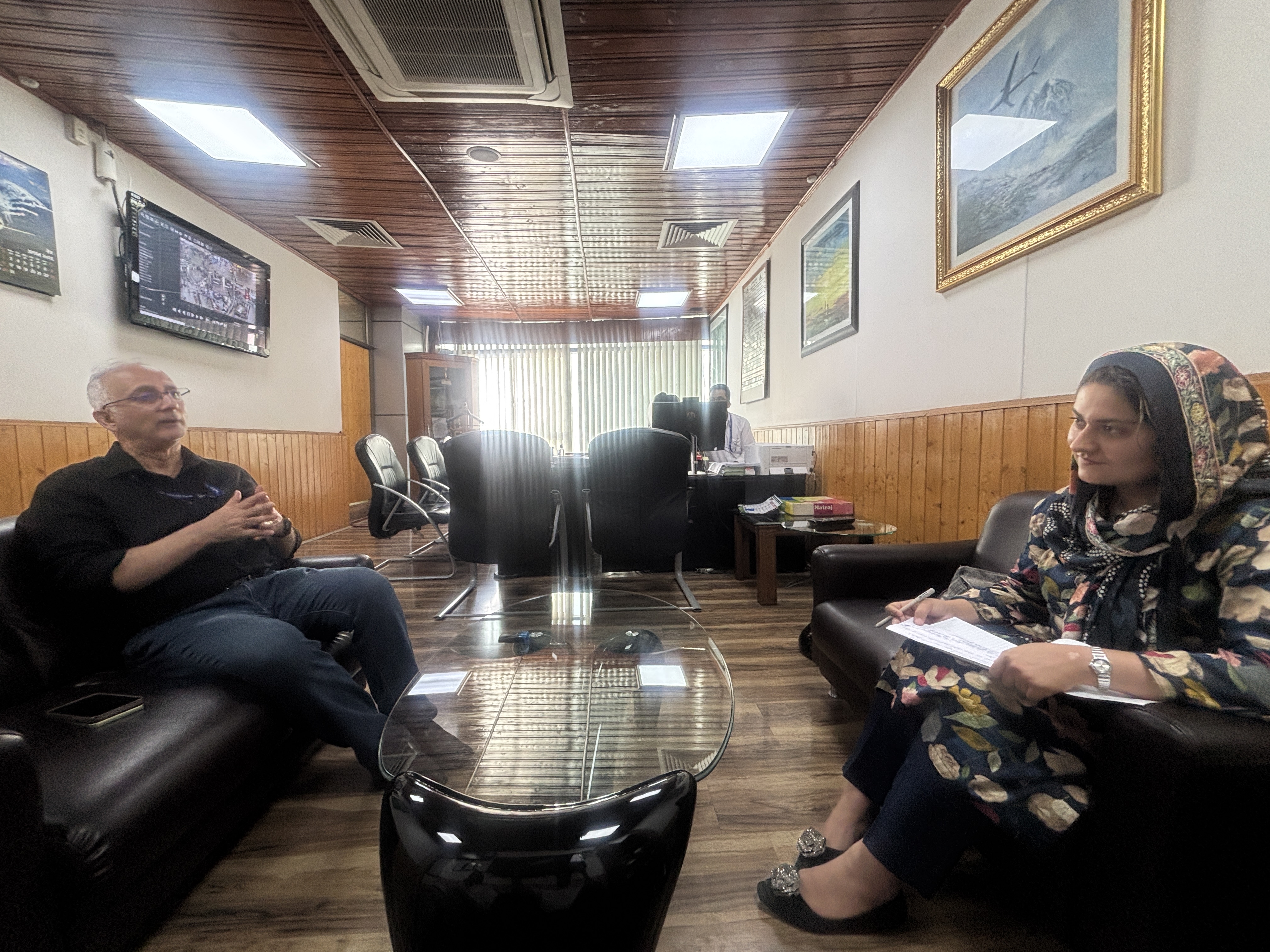
In an interaction with Insha Sofi for Kashmir Central, the Director of Srinagar International Airport, Mr. Javed Anjum discusses the four-year expansion programme, the new terminal, increased passenger capacity, apron expansion, city connectivity and the challenge of transforming the airport while keeping it fully operational.
Kashmir Central: The expansion of Srinagar International Airport has now received formal approval. What is the status of the project and what is the timeline ahead?
Director: The Civil Enclave expansion project has been approved by the Cabinet Committee on Economic Affairs at an estimated cost of ₹1,677 crore. The project has been planned over a four-year period, with July 31, 2029, as the targeted completion date.
The implementation is essentially structured around three broad stages: documentation and statutory formalities, tendering and procurement, and finally physical execution. The first stage involves completing the necessary documentation, approvals and technical preparations. This is followed by the tendering process, after which the project enters the main construction and execution phase.
The sequencing is important because a project of this magnitude involves several interconnected components, and each stage has to be completed properly before the next can progress.
Kashmir Central: Is land availability a constraint for the expansion?
Director: No. The land required for the expansion is already available. The focus, therefore, is not on acquiring additional land but on completing the documentation, approvals and other formal requirements necessary to move the project into execution.
Kashmir Central: What will be the most visible change once the project is completed?
Director: The terminal building will undergo a major transformation. The existing terminal, which covers approximately 20,659 square metres, is planned to expand to around 71,500 square metres. The number of Skybrarys will go up from existing 5 to 11 on the completion of the project.
The new facility is being designed as a modern airport terminal with a Himalayan cultural theme, so the building will combine contemporary aviation requirements with an architectural identity appropriate to Kashmir and its wider geographical setting.
But the project is much more than an expansion of the terminal building. It involves increasing aircraft parking capacity, improving passenger movement, strengthening road access and creating infrastructure capable of handling the growth expected in the coming years.
Kashmir Central: The passenger capacity is expected to increase substantially. What will the new airport be able to handle?
Director: The annual passenger-handling capacity is planned to increase from the present level of approximately 2.5 million passengers to around 10 million passengers. The peak-hour handling capacity will rise to approximately 2,900 passengers.
The purpose is to create adequate capacity for future demand rather than continue expanding in small increments every few years. Aviation infrastructure requires considerable time to plan and construct, so capacity has to be created with a longer horizon in mind.
Kashmir Central: What changes are planned on the airside?
Director: The apron will be expanded significantly. At present, the airport has nine aircraft parking bays. This will increase to 15 bays, including a dedicated bay for a widebody aircraft.
The apron expansion is an important part of the overall capacity enhancement because passenger-terminal capacity and aircraft-handling capacity have to grow together. A larger terminal alone cannot resolve operational constraints if aircraft parking and movement remain limited.
Kashmir Central: Will passengers also see improvements before the major expansion is completed?
Director: Yes. The airport has continued to introduce smaller operational and passenger-convenience improvements alongside the larger expansion programme. DigiYatra access, the Flybrary initiative and an expanded Security Hold Area are among the recent additions.
These interventions are intended to improve the passenger experience in the immediate term while the larger infrastructure project moves through its various stages.
Kashmir Central: What about the runway and other airside maintenance currently taking place?
Director: Runway maintenance and airside optimisation are continuing as part of the airport's ongoing operational requirements. The nighttime runway maintenance being undertaken by the Indian Air Force is scheduled to continue through October 2026.
Such work is being managed in a manner that allows essential maintenance to take place while regular airport operations continue.
Kashmir Central: Once the main physical execution begins, how difficult will it be to construct such a large facility while Srinagar Airport remains operational?
Director: That will certainly be one of the most important aspects of project management. Srinagar Airport has to remain operational throughout the construction period, so the execution has to be carefully phased.
Construction activity, passenger movement, aircraft operations, security arrangements and other airport functions will have to be coordinated continuously. The objective is to ensure that the expansion progresses without compromising the safety and efficiency of existing operations.
Kashmir Central: What is the broad execution schedule between now and July 2029?
Director: The immediate period is focused on documentation and the completion of the required formalities, followed by tendering and procurement. Once those stages are completed, physical execution will progress through the subsequent years.
The major civil works and terminal expansion are expected to constitute the principal construction phase through 2028. The final period will involve completion of the associated infrastructure, access arrangements, integration and operational readiness, leading towards the targeted completion date of July 31, 2029.
Kashmir Central: Parking and access to the airport have often been concerns for passengers. How does the expansion address the issue?
Director: The project includes a new multi-level car parking facility with a capacity of approximately 1,000 vehicles. There is also provision for a dedicated access corridor connecting the airport with the city's Ring Road.
This is important because airport infrastructure cannot be considered only within the terminal boundary. As passenger numbers increase, the road network and vehicle-handling arrangements around the airport must also be capable of absorbing that growth.
Kashmir Central: Does that mean the project is also an exercise in integrating the airport more closely with Srinagar's wider transport network?
Director: Yes. Better airport connectivity is an important part of the expansion. The dedicated access corridor and parking infrastructure are intended to improve the movement of passengers and vehicles and provide a more efficient interface between the airport and the city's road network.
As the airport grows, its relationship with the city becomes increasingly important.
Kashmir Central: The new terminal is expected to have a distinctly Himalayan architectural character. Why was that considered important?
Director: Srinagar is not simply another aviation destination. The airport is a gateway to Kashmir, and for many visitors it provides their first physical encounter with the region.
The Himalayan cultural theme allows the terminal to have a distinctive identity while incorporating the functionality and standards expected of a modern international airport. The intention is to combine efficiency with a sense of place.
Kashmir Central: With the capacity increasing fourfold, is the expansion primarily a response to current passenger pressure or an attempt to anticipate Kashmir's future growth?
Director: It is principally a long-term capacity exercise. The airport has to be prepared for the demand that Kashmir is likely to generate in the future.
Tourism is an important component, but the airport serves a much wider purpose. It supports residents, businesses, government institutions, students, patients and visitors. Improved aviation capacity therefore has implications for the wider economy and connectivity of the region.
Kashmir Central: A project of this scale involves multiple agencies and a number of parallel processes. What will be the biggest challenge in meeting the July 2029 deadline?
Director: Coordination will be critical. The project involves documentation, statutory requirements, tendering, construction, airside operations, security, passenger movement and integration with external road infrastructure.
The fact that the airport must continue functioning throughout the construction period adds another layer of complexity. The various components therefore have to be sequenced carefully so that one does not unnecessarily delay another.
Kashmir Central: Finally, what should Srinagar Airport look like when the project is completed in July 2029?
Director: The objective is to have an airport that is substantially larger, more capable and better equipped to handle the next phase of passenger growth. The terminal, apron, parking and access infrastructure will all have been expanded, giving Srinagar a much stronger aviation platform.
The larger purpose is to ensure that the airport is not merely responding to today's requirements but is prepared for the Kashmir of tomorrow.
Kashmir Central: So the significance of the project goes beyond adding terminal space?
Director: Certainly. It is about creating an integrated aviation facility with the capacity, infrastructure and operational efficiency required for the years ahead. The expansion is intended to give Srinagar the ability to grow without repeatedly running into the limitations of its existing infrastructure.
— Interviewed by Insha Sofi, Kashmir Central
Related Articles
Jammu and Kashmir Police: From a Force Under Siege to the Frontline of Counter-Terrorism
Muhammad Zaid Malik (KPS)
The history of the Jammu and Kashmir Police since the outbreak of terrorism is, in many ways, the history of an institution that was forced to reinvent itself while operating under fire. In the late 1980s, the force was essentially a conventional civil police organisation.

Detailed Concept Note
Dr Mehraj Ud Din Shah
Industry 5.0 Adoption: Strategic Transformation and Critical Challenges
The Government Has a Mandate. Does It Have the State to Deliver?
Rukhsana Waheed
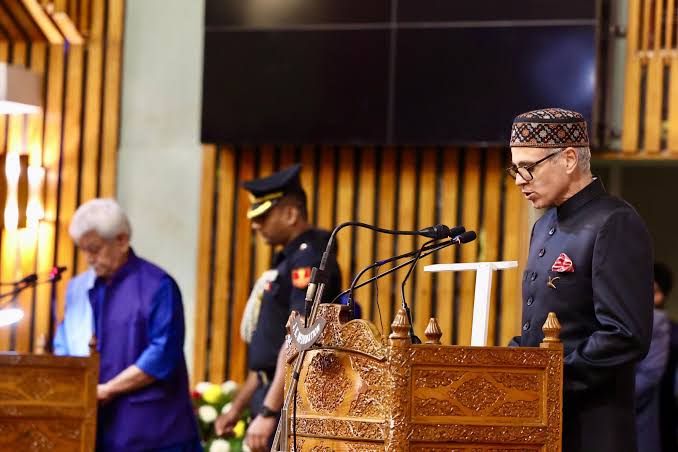
For the first time in many years, Jammu and Kashmir has a government that derives its authority from a directly elected Legislative Assembly and is expected to answer, at least politically, to the people who elected it. That change is important.
Jamaat’s Old Problem: The Politics of Compromise and Denial
Bashir Assad
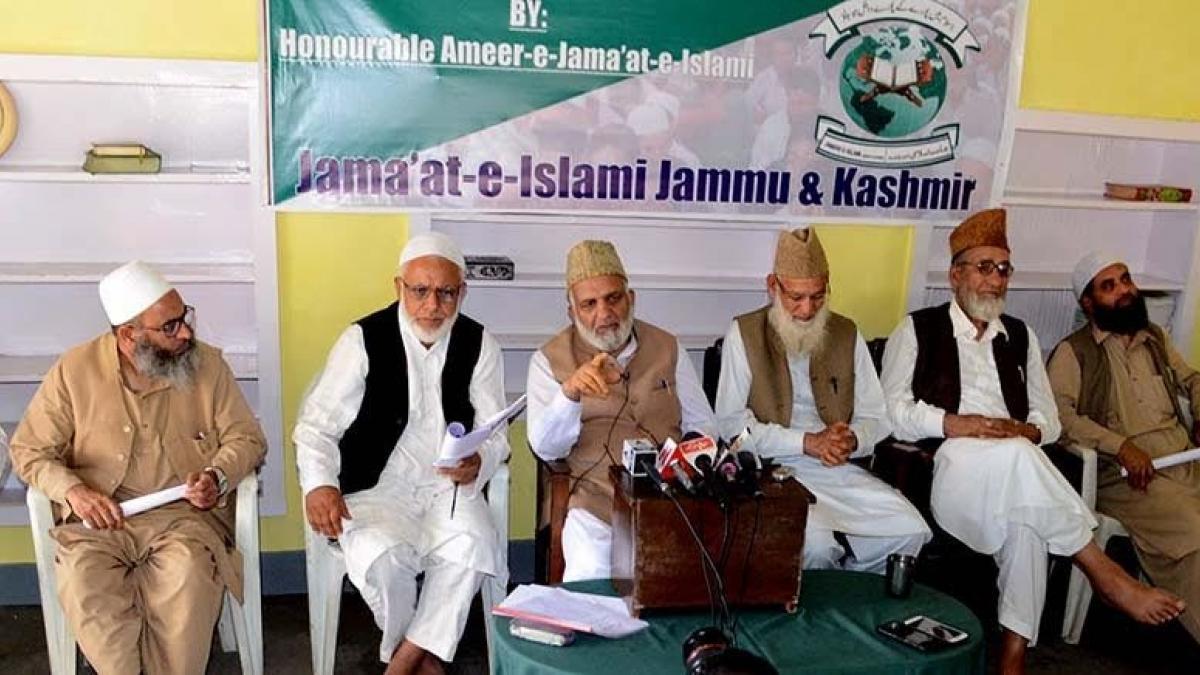
The latest rupture within the banned Jamaat-e-Islami Jammu and Kashmir is being presented, understandably, as a dispute between the organization’s old guard and the group of its former functionaries who moved into electoral politics through the Justice and Development Front.
The Silicon Ravine: Global Capital, Remote Tech, and Kashmir’s Sovereign Digital Frontier
Sohail Bhat
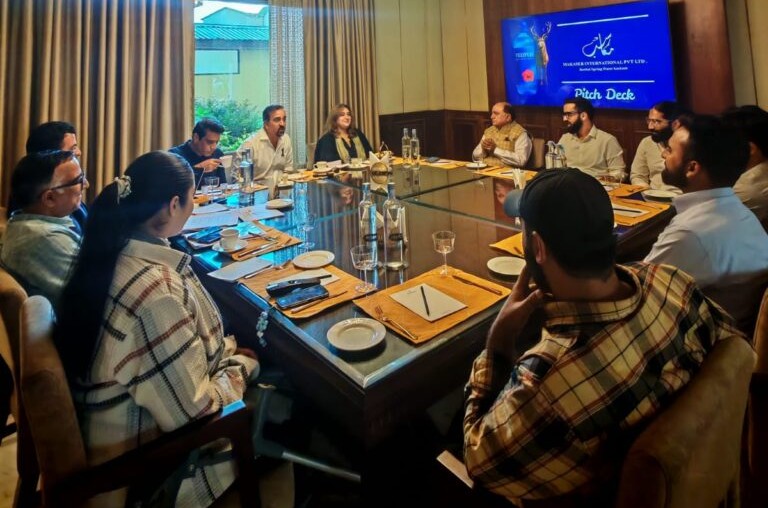
In the quiet, low-lit cafes lining the Bund in Srinagar and within the minimalist co-working spaces cropping up across Srinagar and Jammu, a quiet macro-economic transformation is unfolding.
The Durbar Move Dilution and the Winter Secretariat Model
Kashmir Central Desk
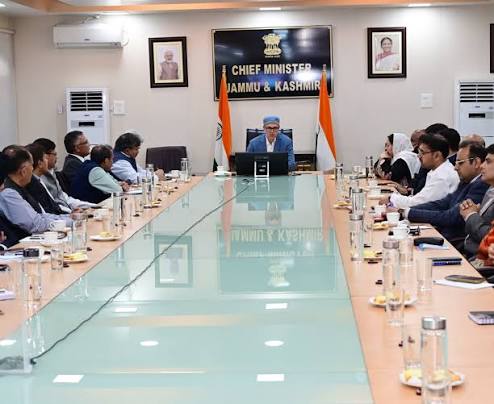
For nearly a century and a half, the seasonal rhythm of governance in Jammu and Kashmir was dictated by a monumental administrative migration. Introduced in 1872 by Maharaja Gulab Singh, the bi-annual Darbar Move saw the entire government machinery-complete with thousands of employees, ministers, and truckloads of official files-pack up and travel across the treacherous Jammu–Srinagar National Highway.