security
Jammu and Kashmir Police: From a Force Under Siege to the Frontline of Counter-Terrorism
By Muhammad Zaid Malik (KPS) | Thu Oct 08 2026
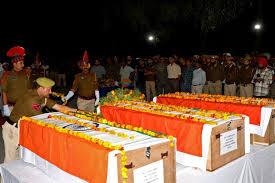
The history of the Jammu and Kashmir Police since the outbreak of terrorism is, in many ways, the history of an institution that was forced to reinvent itself while operating under fire. In the late 1980s, the force was essentially a conventional civil police organisation. Its principal responsibilities were crime prevention, investigation, traffic management and maintenance of public order. It was suddenly confronted with an armed insurgency for which it had neither the equipment nor the institutional preparation.
The transformation that followed was neither quick nor orderly. It was built over decades of casualties, operational experience, organisational improvisation and adaptation. Thousands of policemen served through circumstances in which the distinction between professional duty and personal vulnerability often disappeared. Unlike forces deployed from outside the region, the local policeman lived among the people he was policing and fighting. His home, family and social connections were known, making him vulnerable even after leaving his uniform behind.
Official figures cited in January 2024 put the number of security personnel who had lost their lives in the Jammu and Kashmir conflict at around 6,000, with more than 1,600 belonging to the Jammu and Kashmir Police.
The price was extraordinary. Official figures cited in January 2024 put the number of security personnel who had lost their lives in the Jammu and Kashmir conflict at around 6,000, with more than 1,600 belonging to the Jammu and Kashmir Police. The available figures do not permit a reliable division of these fatalities between counter-terrorist operations, targeted killings, law-and-order duties and other assignments. What they do establish is the magnitude of the burden carried by the local police.
Learning to survive
The first years of the insurgency were marked by institutional shock. Police stations were poorly fortified, communications were limited, mobility was inadequate and protective equipment was scarce. Terrorist organisations possessed automatic weapons, explosives, underground networks and external support. Their strategy was not confined to attacking the security forces. By eliminating policemen and attacking police establishments, they sought to weaken the machinery of local administration itself.
The fact that the police remained functional was therefore significant. It gradually began learning the operational realities of the new conflict and, between 1992 and 1995, moved from survival towards organised resistance.
The creation of the Special Task Force, later known as the Special Operations Group, represented the decisive institutional change. For the first time, a specialised component of the local police was built specifically for counter-terrorism. Its advantage was not simply the possession of greater firepower. Its personnel knew the terrain, families, neighbourhoods, dialects and social relationships in which terrorist networks operated. That local knowledge became one of the force's most valuable operational assets.
Between 1995 and 2002, this capability expanded. Specialised units appeared across districts, while coordination with the Army and Central Armed Police Forces became more systematic. The police increasingly moved beyond participation in armed operations to intelligence gathering, identification of terrorists, investigation of support networks and the construction of cases that could survive in a court of law.
This was an important evolution. Counter-terrorism could not end with an encounter. Weapons had to be recovered and documented, evidence preserved, associates identified and financial and logistical networks investigated. The Jammu and Kashmir Police gradually acquired the capacity to connect intelligence and armed operations with criminal investigation and prosecution.
When the political environment changed
The political opening of the early 2000s created a different challenge. The years between 2002 and 2005 brought greater emphasis on democratic participation, civil liberties and public accountability. The specialised counter-terrorist structure itself became the subject of political debate, and its formal organisational position was altered.
Yet terrorism had not disappeared. The personnel and expertise developed during the previous decade continued to be required, even as the police had to operate within a political environment that demanded greater restraint and accountability.
This was one of the first major tests of the institution's adaptability. Counter-terrorism required firmness, while the changing political climate demanded greater sensitivity. The police had to learn that operational effectiveness and public legitimacy could not be treated as competing objectives indefinitely. The specialised structure changed, but much of its experience and expertise was absorbed into the wider police organisation.
The relatively calmer period between 2005 and 2008 gave the force an opportunity to rediscover another dimension of policing. Community engagement became more prominent through public meetings, youth programmes, sports activities and civic initiatives. After years of conflict, the distance between the police and sections of society had become substantial. Such engagement offered an opportunity to rebuild contact outside the atmosphere of security operations.
That period was important for another reason. It demonstrated that the Jammu and Kashmir Police did not have to remain permanently defined by counter-terrorism. Beneath the combat role remained a civil police institution whose responsibilities extended to ordinary crime, public service and community relations.
The difficult years of street unrest
The relative calm was interrupted by the Amarnath land controversy in 2008, followed by the Shopian agitation in 2009 and the prolonged unrest of 2010. The nature of the challenge changed dramatically.
An encounter with an armed group presents one kind of operational problem. A street demonstration involving thousands of people presents another. Within a crowd there may be peaceful protesters, bystanders, political activists, stone pelters and organized instigators. Distinguishing between them in real time is exceptionally difficult.
The police consequently found itself caught between competing demands. It had to protect public institutions and personnel while attempting to prevent the use of excessive force from creating further alienation. The events exposed shortcomings in crowd-control equipment, communication, intelligence and graduated responses. Police personnel themselves came under attack, with stations, vehicles and other installations targeted during periods of unrest.
The experience forced another adjustment in policing doctrine. Managing public disorder required skills different from those developed for counter-terrorism. Better protective equipment, improved communication, advance intelligence and more differentiated crowd-control methods gradually became part of the response.
When the street and the gun converged
The period after 2014 created perhaps the most complicated security environment the force had encountered. Local recruitment into militancy became more visible, while social media gave terrorist organizations new means of propaganda and mobilization. Encounter sites increasingly attracted large crowds, sometimes creating an additional security problem for forces engaged with armed militants.
The killing of a prominent militant commander in 2016 brought these elements together. Terrorism, street mobilisation, social media, funerals, stone pelting and attacks on police establishments began feeding into one another. Police stations were attacked and weapons looted, while personnel and their families became vulnerable even away from duty.
The response increasingly depended upon intelligence rather than numbers alone. Technical intelligence, social-media monitoring, local networks and better coordination between agencies became more important. The objective was not simply to locate terrorists but to understand the networks around them and prevent crowds from interfering with operations.
This period altered the nature of the conflict. Terrorism was no longer confined to the gunman operating underground. It had acquired a digital, social and psychological dimension.
From encounters to the wider ecosystem
After 2020, the threat began assuming another form. Larger and more visible militant structures increasingly gave way to smaller modules, loosely connected cells and individuals who could maintain the appearance of ordinary life while participating in terrorist activity.
The emergence of the so-called hybrid terrorist created a particularly difficult policing problem. A person could remain embedded in society, perform a specific task and disappear back into ordinary life. Around such individuals could exist a much wider network involving recruiters, couriers, financiers, harbourers, propagandists, weapons suppliers and other facilitators?
The police consequently had to move beyond an encounter-centric approach. Digital forensics, mobile-phone analysis, social-media monitoring, financial investigation and the examination of communications became increasingly important. The task was no longer simply to neutralize an armed militant but to dismantle the infrastructure that enabled him to operate.
The geographical character of the threat also changed. Terrorist activity increasingly appeared in parts of the Jammu region, including Rajouri, Poonch, Reasi, Kathua and Doda. The shift demanded renewed attention to forested and mountainous terrain, village-level intelligence and the protection of vulnerable communities.
This change demonstrated a lesson that the police had learned repeatedly over three decades: terrorism rarely disappears in a straight line. When pressure is increased in one area, it searches for another opening.
The institution today
By 2025, the Jammu and Kashmir Police had developed an understanding of terrorism as an ecosystem rather than simply a collection of armed individuals. The focus increasingly extended to hybrid operatives, radicalisers, recruiters, financiers, couriers, propagandists and cross-border handlers.
That evolution represents perhaps the most significant institutional transformation of the force. The policeman of 1989 confronted an enemy that could be identified through a weapon and an encounter. The policeman of today faces a threat that can travel through a mobile phone, a financial transaction, a social-media account, a drone or an apparently ordinary individual.
The response therefore requires a very different combination of skills. Intelligence, technology, investigation, community knowledge, forensic capability and inter-agency coordination have become as important as physical strength.
None of this diminishes the contribution of the Army or the Central Armed Police Forces. The counter-terrorism architecture in Jammu and Kashmir has always depended upon cooperation among different institutions. The Army has brought military capability and area domination, the central forces have provided manpower and reinforcement, while the local police have contributed intelligence, investigation, identification and knowledge of the social terrain.
The larger story, therefore, is not simply one of a police force becoming better at fighting terrorism. It is the story of an institution repeatedly compelled to change its character without losing its core function as a civil police organisation.
From the vulnerable stations of 1989 to intelligence-led counter-terrorism today, the Jammu and Kashmir Police has travelled a difficult distance. Its history contains sacrifice, institutional learning, controversy, adaptation and professional evolution. Much of that history has been written by personnel whose names never entered the public narrative.
That may be the most important point to remember. Institutions such as the Jammu and Kashmir Police are not transformed by a single commander or a particular generation. They are built gradually by thousands of people who continue to perform their duties while the nature of the threat keeps changing.
The force that emerged from the violence of the early 1990s is not the force that confronts the security environment today. Its weapons, intelligence systems, training, investigative methods and understanding of terrorism have changed substantially. What has remained constant is the difficult obligation of policing a society in which the security challenge has repeatedly changed form. That ability to adapt may ultimately be the institution's most consequential achievement.
Related Articles

Detailed Concept Note
Dr Mehraj Ud Din Shah
Industry 5.0 Adoption: Strategic Transformation and Critical Challenges
The Government Has a Mandate. Does It Have the State to Deliver?
Rukhsana Waheed
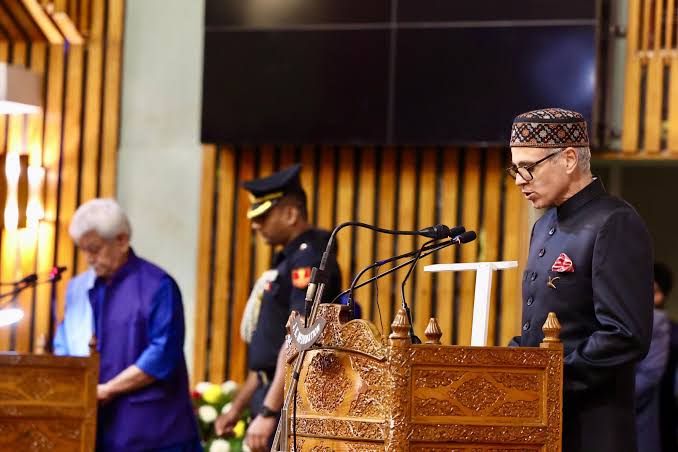
For the first time in many years, Jammu and Kashmir has a government that derives its authority from a directly elected Legislative Assembly and is expected to answer, at least politically, to the people who elected it. That change is important.
Srinagar Airport's ₹1,677-Crore Expansion: Building for the Next Decade
Kashmir Central Desk
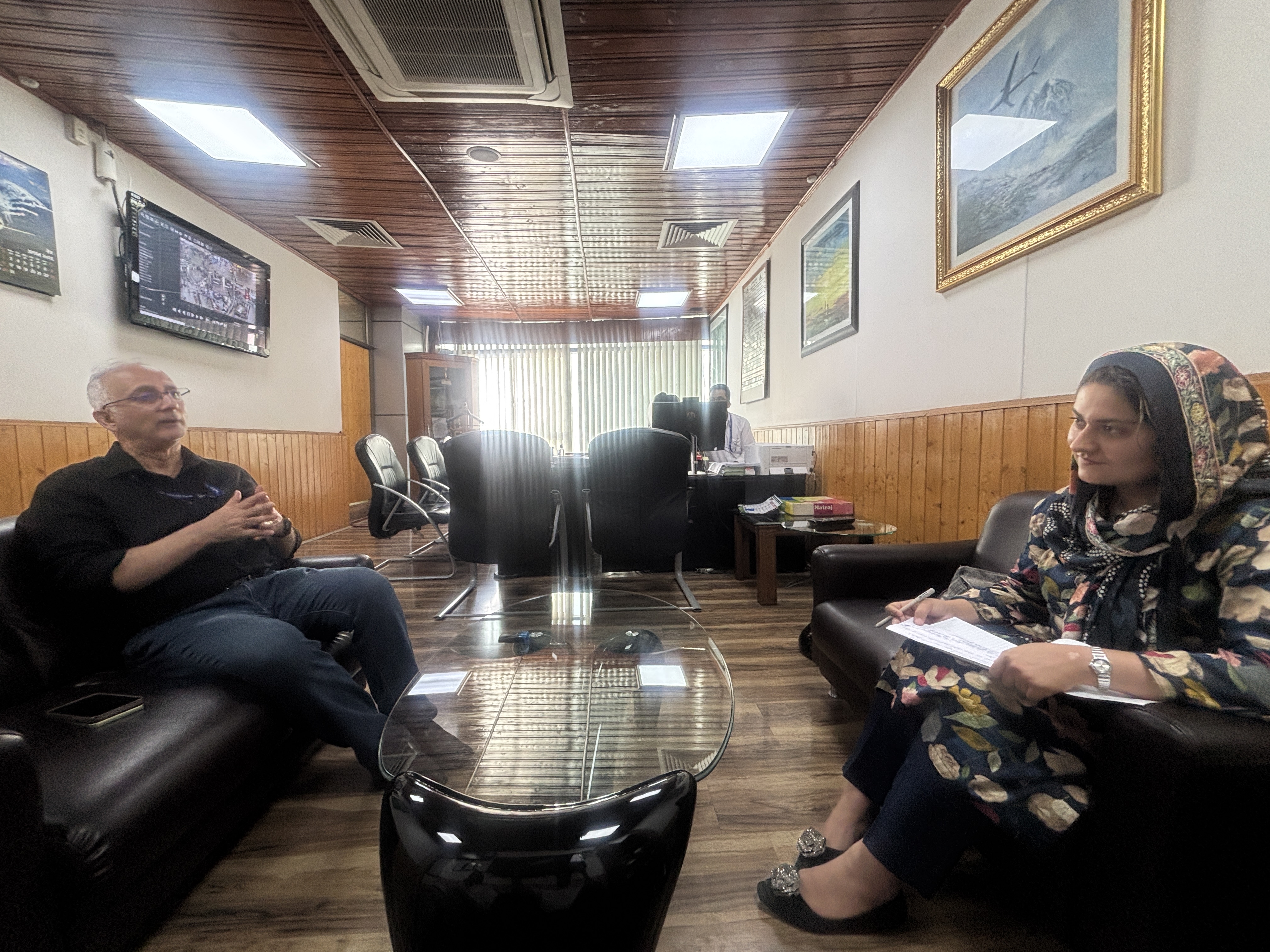
In an interaction with Insha Sofi for Kashmir Central, the Director of Srinagar International Airport, Mr. Javed Anjum discusses the four-year expansion programme, the new terminal, increased passenger capacity, apron expansion, city connectivity and the challenge of transforming the airport while keeping it fully operational.
Jamaat’s Old Problem: The Politics of Compromise and Denial
Bashir Assad
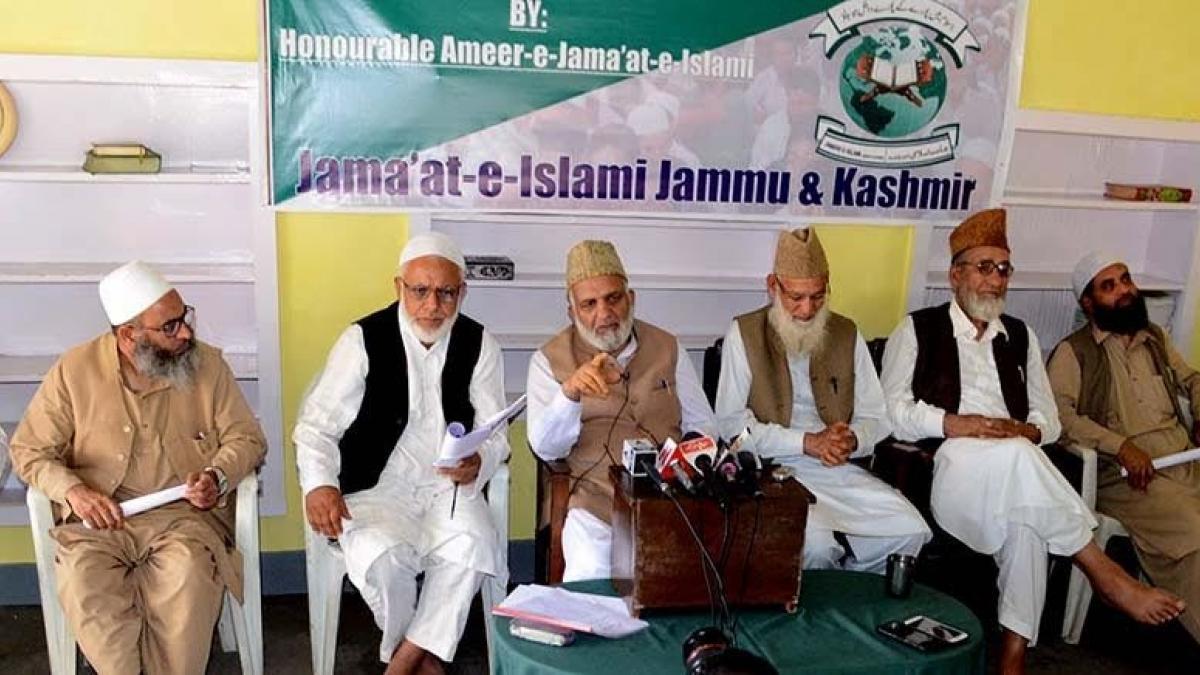
The latest rupture within the banned Jamaat-e-Islami Jammu and Kashmir is being presented, understandably, as a dispute between the organization’s old guard and the group of its former functionaries who moved into electoral politics through the Justice and Development Front.

The Indus Waters Treaty in Abeyance: Separating Facts from Rhetoric
Devendra Kumar Sharma
The Indus Water Treaty (IWT), signed in Karachi on September 19, 1960, by the Indian Prime Minister Jawaharlal Nehru and Pakistani President Ayub Khan, was a historic water-sharing Agreement.

The Connectivity Conundrum: Hybrid Vulnerabilities in the Trans-Regional Grid
Insha Sofi
For generations, the primary objective of the security architecture in Jammu and Kashmir was defined by predictable paradigms. The state apparatus focused on securing urban population centers against street agitation, while simultaneously reinforcing the multi-layered counter-infiltration grids along the Line of Control.