society
The Durbar Move Dilution and the Winter Secretariat Model
By Kashmir Central Desk | Thu Nov 05 2026
For nearly a century and a half, the seasonal rhythm of governance in Jammu and Kashmir was dictated by a monumental administrative migration. Introduced in 1872 by Maharaja Gulab Singh, the bi-annual Darbar Move saw the entire government machinery-complete with thousands of employees, ministers, and truckloads of official files-pack up and travel across the treacherous Jammu–Srinagar National Highway. For six months, the state engine hummed in the summer capital of Srinagar, before transitioning to the winter warmth of Jammu.
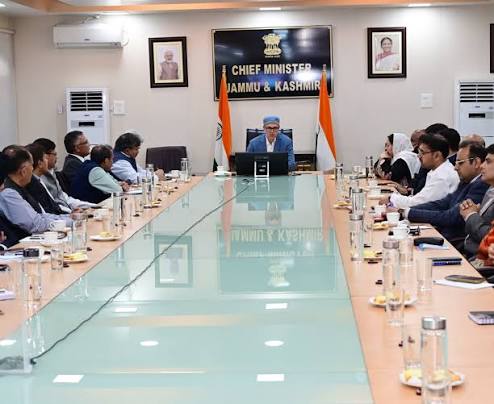
This historic practice was abruptly halted by the Raj Bhawan administration in 2021 under the guise of digital transformation and cost reduction. However, following the high-stakes Assembly elections, the restoration of the Darbar Move became a focal point of regional identity and democratic representation. The newly elected cabinet, led by Chief Minister Omar Abdullah, moved swiftly to fulfill its core manifesto promise by restoring the age-old tradition for the 2026–27 winter session.
Yet, as the official convoys prepare to move downward on October 31 and November 1, the structural framework of the shift looks fundamentally different. Rather than a complete uprooting of the state apparatus, the administration is executing a hybrid model: the main administrative engine will reopen in Jammu on November 2, while a permanent, fixed Winter Secretariat remains behind in Srinagar to handle the needs of the Valley. While presented as a modern compromise between administrative efficiency and regional inclusion, the model faces significant logistical challenges. It remains an open question whether this split arrangement will genuinely preserve public access during the harsh winter months or worsen bureaucratic delays for ordinary citizens.
┌────────────────────────────────────────────────────────────────────────┐
│ THE HYBRID WINTER GOVERNANCE ARCHITECTURE │
├───────────────────────────────┬────────────────────────────────────────┤
│ JAMMU CIVIL SECRETARIAT │ SRINAGAR WINTER SECRETARIAT │
│ (The Main Engine) │ (The Local Outpost) │
├───────────────────────────────┼────────────────────────────────────────┤
│ Full Legislative Authority │ Roster-Based Ministerial Presence │
│ Primary Executive Cabinet │ Minimal Core Staff Structure │
│ Central Head of Departments │ Citizen Grievance Redressal Only │
│ Digital Data Warehousing │ Limited Financial File Clearance │
└───────────────────────────────┴────────────────────────────────────────┘
The Logistical Friction of a Divided Engine
At the heart of the new model lies a complex logistical puzzle for the Chief Minister’s office. Operating a government across two distinct geographical zones separated by unpredictable mountain passes requires seamless technical and administrative coordination. The General Administration Department has been tasked with drafting strict monthly rosters for cabinet ministers and administrative secretaries who must rotate shifts at the Srinagar outpost starting in November.
This rotation is intended to ensure that a high-ranking government authority is always physically present in the Valley to oversee emergency winter public works, food distribution, and power shortages. However, the practical application of this model introduces immediate executive friction. When a citizen approaches the Winter Secretariat in Srinagar with a critical grievance regarding electricity disruption or localized health infrastructure, the minister in attendance can rarely provide an immediate resolution. Because the central data files, budget controllers, and senior department heads are located hundreds of kilometers away in the Jammu Civil Secretariat, the local outpost often acts as little more than a post office. Petitions are digitized and sent south, re-entering the very bureaucratic loop the system was designed to bypass.
The physical strain on the moving workforce also complicates the transition. The J&K Road Transport Corporation has deployed fleets of buses to ferry employees across the highway, accompanied by extensive security escorts and en-route medical camps to mitigate the risks of early winter landslides. To ease the transition, the state has sanctioned special casual leaves and a Special Move Travelling Allowance of twenty-five thousand rupees per employee.
Yet, split offices mean split resources. Departments operating on a camp basis are left understaffed in both capitals. The Estates Department faces the continuous challenge of managing dual official accommodations, while the Power Development Department must ensure the Srinagar Secretariat remains structurally functional during peak winter blackouts without drawing power away from nearby residential grids.
Accessibility vs. Bureaucratic Drift
For the ordinary resident of Kashmir, the dilution of the traditional Darbar Move represents a double-edged sword. Proponents of the fixed Winter Secretariat argue that it shields citizens from the complete administrative desertion that used to define the valley from November to April. In the past, if a local vendor needed a dynamic departmental clearance or a rural delegation sought an audience with a policymaker, they were forced to endure a costly, hazardous journey down the national highway to Jammu. Under the current framework, the physical structure in Srinagar remains open, providing a sense of psychological continuity and public access.
[ CITIZEN GRIEVANCE IN SRINAGAR ] ──► [ WINTER SECRETARIAT OUTPOST ]
│ (Staff Constraints)
▼
[ DIGITAL FILE TRANSIT TO JAMMU ] ──► [ CENTRAL ADMINISTRATIVE CABINET ]
│ (Executive Authorization)
▼
[ LOCALIZED IMPLEMENTATION ORDER ] ◄── [ DELAYED REGIONAL BACKLOG ]
However, the counter-narrative from civil society and opposition blocks points toward a worsening bureaucratic drift. By capping the staff strength of camp offices at a fraction of their normal size, the speed of executive decision-making has slowed significantly. Financial authorizations, structural sanctions for rural infrastructure projects, and policy clearances for essential services must wait for the main engine in Jammu to process them.
During severe winter weather, when the valley is frequently isolated by heavy snowfall and highway closures, the nominal presence of a roster-bound minister cannot compensate for the lack of a fully staffed, autonomous administrative center. Instead of bringing the government closer to the people, critics argue the model has created a tiered hierarchy of governance, where the Valley is managed by an outsourced skeleton crew while the real power center operates in the south.
The Political Balancing Act
Beyond the logistical challenges, the dilution of the Darbar Move touches upon deeply rooted issues of regional representation and political balance. The century-old migration was never merely a logistical exercise; it functioned as a vital sociocultural bridge between two distinct demographics. The annual influx of thousands of Kashmiri families into Jammu during the winter, and the subsequent return of Jammu officials to Srinagar in the summer, fostered a unique economic interdependence and cross-cultural dialogue that helped unify a fractured territory.
By scaling down this migration and restricting it to a digital-heavy hybrid model, the current administration satisfies the political demands of the Jammu business community, which had suffered severe economic losses when the move was suspended in 2021. At the same time, the government attempts to reassure the Valley by maintaining the Srinagar outpost.
This political compromise, however, leaves both regions somewhat dissatisfied. The business circles in Jammu argue that a partial or camp-based move dilutes the economic boost their markets historically anticipated each November. Meanwhile, political commentators in the Valley view the arrangement as a permanent concession that diminishes Srinagar’s status as a co-equal capital, reinforcing the perception that true administrative authority has drifted away from the region.
The Path Forward
The evolution of the Darbar Move highlights the ongoing struggle to balance administrative efficiency with genuine regional representation. The hybrid Winter Secretariat model is a pragmatic attempt to navigate the complex geography and politics of the territory, but its current execution remains flawed. If the Srinagar outpost is to serve as a meaningful democratic institution rather than a performative bureaucratic facade, it must be granted greater operational autonomy.
The Chief Minister’s office must empower the rostered ministers with independent financial and administrative powers, enabling them to execute emergency winter decisions without needing constant approval from the Jammu secretariat. Furthermore, the digital infrastructure connecting the two capitals must be upgraded to ensure that split files do not lead to prolonged bureaucratic delays. Until these structural adjustments are made, the dilution of the Darbar Move risks transforming a celebrated tradition of administrative accessibility into a disjointed system, leaving ordinary citizens caught in the friction between two distant capitals.
Related Articles
Economic Potential in Jammu and Kashmir- Part-I
Dr Mehraj Ud Din Shah
This anecdote attempts to uncover the economic potential of Jammu and Kashmir through a multidimensional analysis of its primary, secondary and tertiary sectors. It explores the prospects of agriculture, horticulture, tourism, handicrafts, food processing, renewable energy,
The Indus Waters Treaty in Abeyance: Separating Facts from Rhetoric
Devendra Kumar Sharma
The Indus Water Treaty (IWT), signed in Karachi on September 19, 1960, by the Indian Prime Minister Jawaharlal Nehru and Pakistani President Ayub Khan, was a historic water-sharing Agreement.

The Connectivity Conundrum: Hybrid Vulnerabilities in the Trans-Regional Grid
Insha Sofi
For generations, the primary objective of the security architecture in Jammu and Kashmir was defined by predictable paradigms. The state apparatus focused on securing urban population centers against street agitation, while simultaneously reinforcing the multi-layered counter-infiltration grids along the Line of Control.
The Silicon Ravine: Global Capital, Remote Tech, and Kashmir’s Sovereign Digital Frontier
Sohail Bhat
In the quiet, low-lit cafes lining the Bund in Srinagar and within the minimalist co-working spaces cropping up across Srinagar and Jammu, a quiet macro-economic transformation is unfolding.
The Pulpit vs. The State: The Waqf Board Backlash
Intikhab Alam
For generations, the Friday congregational prayer across the Kashmir Valley has served as a profound spiritual anchor and a mirror to contemporary society. The Mimbar, or pulpit, has stood as a sacred yet highly contested space where the religious, social, and political currents of the territory converge.
Beyond the Pomp: The Logistical Strain of the 3-Tier Local Governance Promise
Bashir Assad
For twenty-eight thousand former Panchayat members across the fractured valleys and rugged highlands of Jammu and Kashmir, democracy has long been an exercise in prolonged anticipation. Following the highly publicized Assembly elections that finally restored a regional legislative assembly, the focus has abruptly shifted from the grand statecraft of the civil secretariat to the unpaved alleys of rural development.