politics
PAKISTAN’S VANISHING DEMOCRATIC SPACE ECHOES OF ZIA IN ASIM MUNIR’S ERA
By Bashir Assad | Tue Mar 17 2026
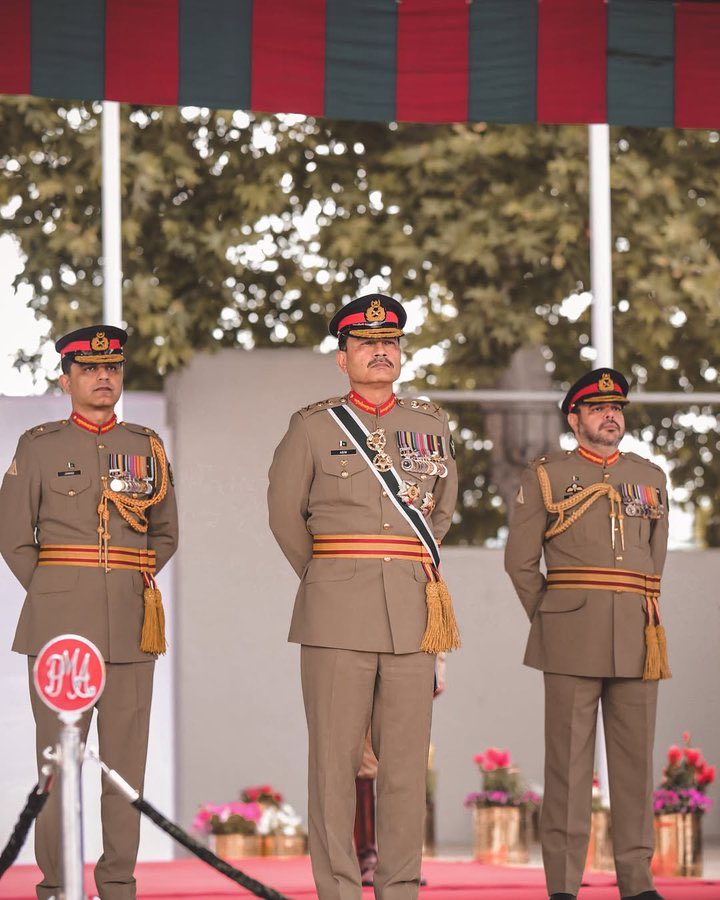
Watching General Asim Munir steadily undermine Pakistan’s political system, consistently shrinking the space for elected leadership and leaving almost no room for civilian voices in domestic governance or diplomatic decision-making, I chose to write on the legacy of General Zia-ul-Haq. The parallels between past and present have become too stark to ignore and the recurring imprint of military decree over democratic debate compelled me to revisit how Pakistan arrived at this moment and why its political and intellectual space continues to contract under familiar patterns of control.
The legacy of General Zia-ul-Haq continues to animate debate across Pakistan’s public sphere and recent discussions on Urdu social media in early 2026 reveal how profoundly his era still shapes the country’s political memory and contemporary anxieties. Nearly four decades after the plane crash that ended his rule, the arguments surrounding his influence remain emotionally charged, ideologically divided and socially consequential. This persistence itself is a testament to how deeply his policies penetrated Pakistan’s institutions, public life and national psyche. In the most common thread running through these discussions, Pakistanis revisit what is widely termed the “dark legacy” of the Zia era, the belief that the late 1970s and 1980s marked a turning point that reconfigured society at its foundations. Social media commentary repeatedly points to the radicalisation that emerged from the transformation of seminaries into recruitment and training grounds for militant groups, a development inseparable from the geopolitics of the time. The rise of sectarianism is frequently cited as another enduring outcome of his state led Islamisation project, which, according to critics, generated long lasting communal divides and deepened fault lines that subsequently became entrenched in everyday life. The notion that the social fabric itself was damaged beyond repair through polarisation, intolerance and an entrenched ideological rigidity features prominently in the analyses shared across platforms.
Nearly four decades after Zia-ul-Haq’s rule ended, Pakistan’s political conversation remains trapped in arguments born during his martial law years. Drawing on contemporary social media debates, cultural memory and political commentary, this story examines how Zia’s Islamisation, repression and militarisation of governance still echo in today’s hybrid order.
Alongside these societal shifts, political repression under Zia remains a core theme in ongoing commentary. His 11-year martial law is remembered as a period in which democratic life was suspended and dissent was crushed with systematic force. Posts and essays circulating throughout 2025 and 2026 describe widespread suppression of rights, the curtailment of civil liberties and the harassment of protestors and political opponents. This was also, according to contemporary critics, the moment when the military fully transitioned from a professional defence institution into a political actor whose influence over civilian authority would persist long after Zia’s death. Whether described as the birth of hybrid rule or the point of no return for civilian supremacy, the political consequences of his regime still feature heavily in conversations about Pakistan’s current governance model. Crucially, many commentators point out that Zia’s rule replaced debate with decree; argument, dissent and public reasoning were rendered subversive and the state’s word became the only acceptable truth. This shift did not merely silence voices in his own time, it set the precedent for a Pakistan where conversation gradually lost value and decree became the default instrument of governance. The institutional lesson learned during the Zia era that authority flows downward, unquestioned became embedded in the political culture of the state of Pakistan.
The question of Islamisation remains one of the most divisive areas where opinions sharply diverge. Supporters often from older generations or specific ideological circles particularly Jamaat-e-Islami Pakistan and its progeny in Jammu and Kashmir continue to remember Zia as a “Mujahid,” a leader who introduced Shariat courts, strengthened religious identity and sought to align the country with Islamic principles. They view his project as an attempt to restore moral clarity and cultural authenticity in the face of what they saw as Westernising trends. Yet contemporary social media critiques portray his Islamisation drive as selective, instrumental and deeply cynical, arguing that religion was deployed primarily to legitimise personal rule rather than to uplift society. Viral posts accuse him of institutionalising extremism, normalising the misuse of blasphemy laws and embedding discriminatory structures especially gender inequality through the 1979 Hudood Ordinances into the legal and cultural framework. Some writers mockingly credit him for today’s cycles of mob violence and for what they describe as a socially sanctioned intolerance born of a state sponsored moral order.
Zia’s geopolitical choices also play a significant role in recent analyses, especially his decision to turn Pakistan into a “frontline state” during the Soviet-Afghan war. While this alignment brought extensive American aid and elevated Pakistan’s strategic position, many social media commentators argue that it also inundated the country with weapons, militants and a proxy war mindset whose repercussions the nation still battles. The argument that Pakistan was dragged into an externally sponsored conflict, with lasting costs to its internal security, appears repeatedly in Facebook threads, Urdu political commentaries and Diasporas discussions.
What makes the 2026 discourse particularly revealing is the increasing tendency to compare Zia’s political manoeuvring with contemporary developments in Pakistan. Commentators frequently suggest that the hybrid governance model, where civilian authority is overshadowed by military influence, echoes structures first consolidated under Zia. In this historical mirroring, many writers locate the roots of today’s political instability, institutional fragility and recurring democratic breakdowns. A significant portion of this commentary directly references the current posture of Pakistan’s military establishment under Asim Munir, arguing that he is following in Zia’s institutional footprints by shrinking democratic and intellectual space.
Critics claim that under his command, dissent is once again treated as sedition, political restructuring is carried out through coercive means and the media operates under intensified pressure. Academics, journalists, activists and even non-political citizens increasingly express concern that the boundaries of permissible speech are narrowing rapidly, much like they did during Zia’s regime. The comparison is often drawn sharply that if Zia replaced debate with decree, contemporary Pakistan is witnessing a revival of that same ethos silencing disagreement not through argument but through administrative force and institutional intimidation. Where Zia used ideology as the instrument of control, critics argue that Asim Munir’s establishment uses national security, morality and state stability as the new language of decree.
This perspective also finds resonance in the analyses of Urdu newspapers and international media, including a widely discussed BBC News Urdu article from November 2025 that explored how Zia’s vision has seeped into political and military institutions for nearly half a century. That long institutional memory, critics argue, now shapes not only the state’s political behavior but its intellectual temperament: questioning, critique and open debate are treated as threats to national coherence. Pakistan, in this sense, appears to have fully transformed into Zia’s imagined order, not an Islamic republic guided by moral clarity, as his proponents would say but a controlled republic governed by decree, suspicion and institutional guardianship.
The commemorative dimension also remains visible each August, when anniversaries of his death reignite old debates. Right wing publications such as Nawai waqt continue to portray him as a “Memaar” (builder) of Pakistan, celebrating his efforts to shape an Islamic system and position the country as a leader in the Muslim world. Columns like those of Mujeeb-ur-Rehman Shami in Roznama Dunya revisit the mystery of the Bahawalpur plane crash, sometimes framing his death as martyrdom and a national tragedy. In contrast, social media responses to these commemorations are often harsh, with users recalling what they describe as the destruction of the social fabric, the proliferation of jihadi networks and the embedding of extremism in state policy. Posts widely shared on Facebook and X lampoon the period as one that legalised inequality and institutionalised sectarian discrimination under the guise of religious reform.
The literary and cultural reflections from the Zia period also continue to inform today’s evaluations. Urdu literature, as highlighted in analyses published by newspapers like Dawn, remembers the era as one marked by unprecedented censorship and state-sponsored moral policing. Writers such as Mushtaq Ahmed Yousufi are frequently cited in online discussions for their sharp critiques of the intellectuals who defended Zia’s repressive policies. These cultural memories reinforce the view that authoritarianism under Zia extended far beyond political control, it attempted to control expression, imagination and artistic freedom.
Together, the strands of debate visible in 2025–2026, whether laudatory or condemnatory, illustrate how Zia-ul-Haq’s legacy continues to sit uneasily at the centre of Pakistan’s ideological contestations. For supporters, he remains a leader who sought to fortify Islamic identity and resist external pressures; for critics, he is the architect of extremism, institutional decay and political authoritarianism. But the most telling feature of the current discourse is not simply the polarisation, it is the recognition that Pakistan’s present cannot be understood without revisiting the deep imprints of his rule. In the recurring invocation of his memory, Pakistanis are not merely arguing about their past; they are struggling to make sense of a present that still bears the fingerprints of decisions made decades ago and a future that continues to grapple with the structures he left behind.
Related Articles
As the tide shifts…
Dr. Mareaya Fayaz
JAMMU & KASHMIR. Here, a complex tapestry of political, social, and historical threads, weaves the narrative of a place long marred by conflict. The recent years, however, have witnessed a subtle but significant transformation in the security environment, offering a glimmer of hope for peace, progress and a renewed sense of ambition in the valley.
BRINGING KASHMIR’S BORDER AREAS ONTO THE TOURISM MAP
Dr. Mareaya Fayaz
For decades, Kashmir’s tourism narrative revolved around its iconic destinations like, Gulmarg’s snowy slopes, Pahalgam’s pastoral charm and Srinagar’s shimmering Dal Lake. Yet beyond these celebrated landscapes lies another Kashmir, tucked along the Line of Control where valleys unfold in silence, rivers cut through rugged terrain and villages stand as living testimonies of resilience.
SNOWLESS WINTERS, SCORCHED ORCHARDS
Mian Tufail
In Kashmir, winter has always been more than a season. It is the valley’s silent architect, shaping rivers, nourishing springs and preparing orchards for the bloom of spring. Snow resting on the Pir Panjal and the higher Himalayas has traditionally functioned as a natural reservoir, melting slowly to sustain agriculture and drinking water systems through summer.
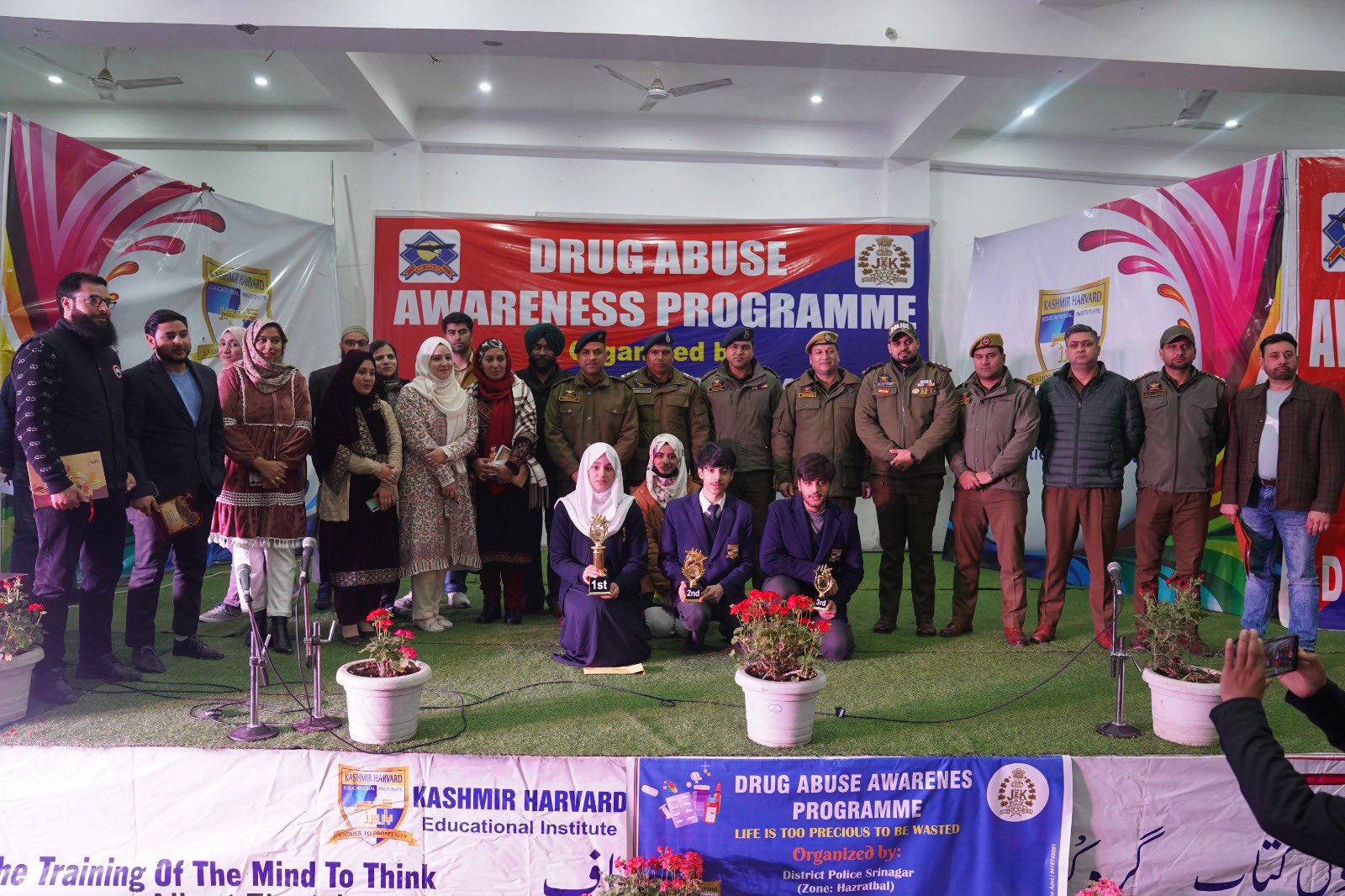
NARCO-TERRORISM AS HYBRID WARFARE AND THE CENTRALITY OF J&K POLICE
Mohammad Zaid Malik
Hybrid warfare does not announce itself with tanks or troop movements. It advances silently, exploiting social fractures, psychological vulnerabilities and illicit economies. In Kashmir, narcotics have become one of the most effective non-kinetic weapons deployed against internal stability. The response to this threat has not been led from distant command rooms or border posts but from within society itself.
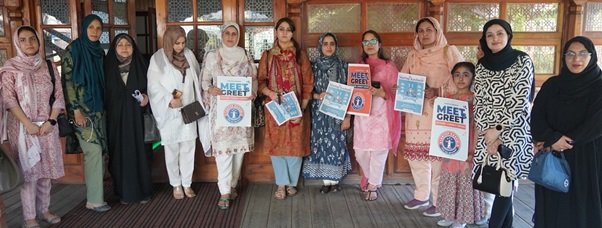
WHY EDUCATED KASHMIRI YOUTH ARE CHOOSING TO COME BACK?
Sohail Ahmad
On a pale winter morning, as mist rises gently above the waters of the Dal Lake and shopkeepers lift their shutters in civil lines area in Srinagar, 29-year-old Aamir opens his laptop in a quiet cafe overlooking the boulevard. His screen flickers to life with dashboards, data streams and code repositories connected to a fintech firm headquartered in Pune.
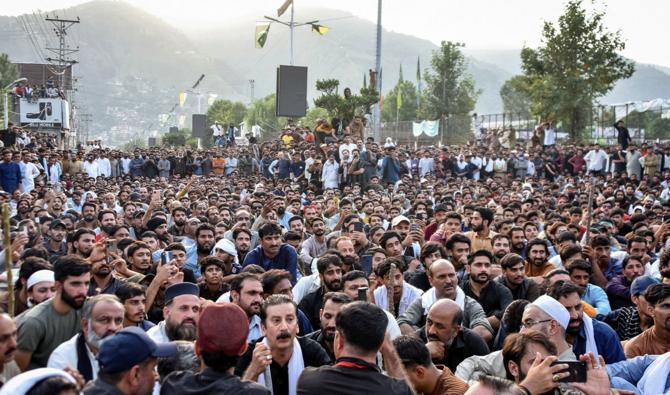
The Protest That Won’t Go Away
Rafi Ahmad Mir
Pakistan-administered Kashmir and the limits of political management