politics
The Protest That Won’t Go Away
By Rafi Ahmad Mir | Tue Sep 08 2026
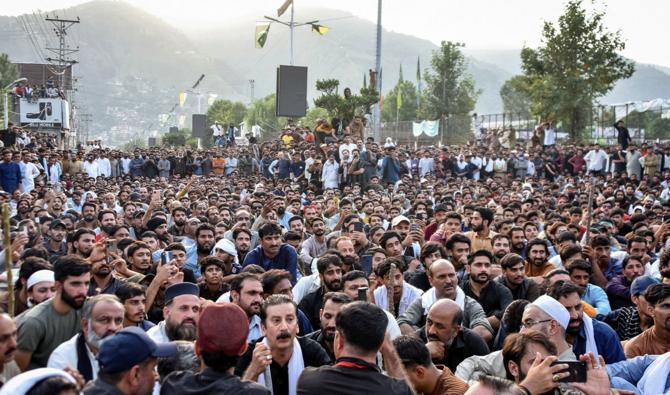
The resurgence of protests in Pakistan-administered Kashmir has become a recurring, almost permanent feature of its political landscape. Demonstrations may subside after negotiations, government concessions, arrests or changes in political leadership, but they have repeatedly returned, often around new grievances and with wider demands. What began as sporadic agitation over prices and basic services has gradually evolved into a sustained expression of public dissatisfaction with governance itself, making the unrest increasingly difficult for Islamabad to treat as a temporary law-and-order problem.
That transformation is important. A government can negotiate over the price of electricity; it is considerably harder to negotiate over who should exercise political authority.
The latest phase of unrest has coincided with elections to the territory's legislative assembly, producing an irony that is difficult to ignore. An election that should have provided an institutional outlet for discontent instead became part of the dispute itself. The JAAC called for a boycott, while the Pakistan Tehreek-e-Insaf also stayed out of the contest, citing concerns over the electoral process. Violence and protests forced polling to be conducted in stages, while communications restrictions remained in place for an extended period. The result is a territory in which the ballot box and the street have, at least temporarily, become competing arenas of political expression.
The roots of the movement lie in issues that are remarkably ordinary. In 2023, the cost of electricity and subsidized flour brought people into the streets because these were grievances felt directly in households and markets. The protests gathered sufficient momentum that, after violent confrontations in 2024, the government agreed to a package of concessions.
That settlement should have brought the agitation to an end. Instead, it taught the movement something important: collective pressure could force Islamabad and the regional government to respond. The demands subsequently widened.
This is where the protest ceased to be merely an economic campaign. The question of the 12 refugee seats became especially contentious because it goes to the heart of representation in a territory whose constitutional position is already unusual. Supporters of the existing arrangement argue that the seats reflect the unresolved Kashmir dispute and represent people displaced from their homes. The protesters argue that a legislature governing Pakistan-administered Kashmir should principally reflect those who actually live there.
Behind the argument over seats is a larger sentiment: that decisions concerning the territory are too often shaped elsewhere, while the people living there bear the consequences.
The electricity dispute exposed dissatisfaction with economic governance. The representation dispute has exposed dissatisfaction with political governance. Together, they have given the movement a considerably longer life than a conventional protest over prices would ordinarily have had.
When a civil protest becomes a security problem
The government's response has become progressively harder as the movement has expanded. In June 2026, the regional authorities banned the JAAC and accused elements associated with the agitation of threatening public order. Officials have also alleged that armed elements became involved in some of the later confrontations, while the movement has rejected attempts to portray its campaign as anything other than a political and economic struggle. But there is a danger in allowing a political dispute to acquire the vocabulary of an internal security operation. Once protesters are viewed primarily through the prism of public order, the space for negotiation narrows. Leaders become suspects, demonstrations become threats and political grievances are increasingly addressed through policing rather than politics. That may restore order temporarily. It does not necessarily remove the reason people came into the streets.
The distinction is particularly important in a place where political alienation can have consequences beyond the immediate dispute. A government may succeed in dispersing a demonstration while simultaneously deepening the conviction among sections of the population that their complaints can be heard only when they become disruptive.
The prolonged communications shutdown has become another part of the confrontation. Governments routinely justify internet restrictions during periods of serious unrest on grounds of preventing mobilization, rumors and violence. Those concerns cannot simply be dismissed. But a shutdown that continues for weeks also changes the political environment in which the dispute is taking place.
Families find it harder to communicate. Businesses suffer. Independent reporting becomes more difficult. Accounts of deaths and violence circulate with little opportunity for immediate verification. Each side is left to present its own version of events, while the public has fewer means of establishing what actually happened. By early August, reports described an internet shutdown in Pakistan-administered Kashmir that had continued intermittently for more than 50 days. At that point, the blackout is no longer merely a technical instrument of crowd control. It becomes part of the public experience of governance. For residents already convinced that Islamabad is distant from their concerns, the restriction can reinforce precisely that perception.
Muzaffarabad naturally attracts the greatest attention because it is the capital, but some of the strongest mobilization has come from the Poonch division and the Rawalakot area. Clashes there have been particularly serious, with civilian and security-force deaths reported and competing accounts emerging over who was responsible for the escalation. The authorities subsequently deployed additional paramilitary forces. This makes it increasingly difficult to characterize the agitation as the work of a small group of political activists in the capital. The movement has developed a social base.
Rawalakot and the depth of the movement
The geography of the protests also matters. Muzaffarabad naturally attracts the greatest attention because it is the capital, but some of the strongest mobilization has come from the Poonch division and the Rawalakot area. Clashes there have been particularly serious, with civilian and security-force deaths reported and competing accounts emerging over who was responsible for the escalation. The authorities subsequently deployed additional paramilitary forces. This makes it increasingly difficult to characterize the agitation as the work of a small group of political activists in the capital. The movement has developed a social base.
That is precisely what makes it difficult to suppress. Organizations can be banned and leaders detained, but a grievance embedded across towns, markets and communities does not disappear simply because its most visible representatives are removed. The government therefore faces a familiar problem: it can control the immediate manifestation of dissent much more easily than it can eliminate the sentiment behind it.
An election cannot settle a question of legitimacy by itself
The elections have brought this contradiction into sharper focus. The Pakistan Muslim League-Nawaz has performed strongly in the early phases of polling, while the Pakistan Peoples Party has also secured representation. Reuters reported that PML-N was on course for a majority as polling progressed, although the political atmosphere remained tense. A government emerging from an election will have formal authority. Whether it possesses sufficient public legitimacy to end the confrontation is a different matter.
The JAAC's boycott means that one of the most significant forces shaping the political climate has deliberately remained outside the electoral contest. Its argument is not simply that a particular party should win or lose; it challenges aspects of the political structure itself.
This is where the issue of the refugee seats becomes particularly significant. If a substantial section of the population believes that the composition of the legislature does not adequately reflect those living in the territory, an election alone cannot resolve the disagreement. It can produce representatives, but it cannot automatically settle the argument over representation.
Islamabad's difficult choice
Islamabad is caught between two competing imperatives. On one side is the need to maintain order in a territory that Islamabad regards as strategically and politically sensitive. On the other is the need to demonstrate that the political system can absorb serious public dissatisfaction without repeatedly resorting to force. Neither side of that equation is easy.
Pakistan itself is dealing with economic constraints, political polarization and serious internal security pressures. Large financial concessions are difficult to sustain, particularly when the underlying economic problems are not unique to Pakistan-administered Kashmir. Yet refusing to address them risks turning manageable economic grievances into a broader indictment of governance. This may explain why the protest has proved so persistent. People are no longer asking only whether electricity can be made cheaper. They are asking why they have to shut down roads and markets before the government responds. That is a political question disguised, at first, as an economic one.
Not every protest is about India
There is also a danger of interpreting the unrest entirely through the India-Pakistan dispute.
The wider Kashmir question is obviously inseparable from the territory's political structure. The refugee seats, the constitutional arrangement and Islamabad's relationship with the territory all have their roots in the larger conflict. But the present agitation should not be reduced to a contest between New Delhi and Islamabad.
Most of the grievances that have sustained it are local and immediate: electricity, flour, employment, corruption, public services and political representation. A person protesting the cost of electricity is not necessarily making a geopolitical statement. A resident objecting to the composition of the regional assembly is not necessarily articulating a position on territory’s status. That is precisely why the movement has acquired resonance. It is not dependent on a single ideological demand. It is built around the experience of governance.
The most serious problem for Islamabad may not be the present protest itself but the cycle that has developed around it. A grievance emerges. Demonstrations grow. The authorities respond with restrictions or force. Negotiations follow. Some concessions are offered. The streets become quiet. The underlying dissatisfaction remains. Another issue eventually provides the next point of mobilization. The pattern has already repeated several times. If it continues, the territory risks reaching a point where protest becomes the principal mechanism through which citizens negotiate with the government. That would be damaging for both sides.
A government that responds only after streets are blocked teaches people that disruption works. A protest movement that expects every demand to be settled through pressure gradually loses the incentive to compromise. The middle ground then disappears.
The immediate political question is what the new government does once the electoral process is complete. It can treat the unrest as a law-and-order problem and attempt to restore normal administration through stronger enforcement. It can negotiate selectively over economic demands. Or it can recognize that the movement has exposed a deeper problem and reopen the questions of representation and governance that have become increasingly difficult to avoid.
Islamabad, it seems, considers the last option very risky. It’s response so for to the protests gives us a fair idea that a serious discussion about the 12 refugee seats, for example, would inevitably raise questions about the wider political structure of Pakistan-administered Kashmir and the federal government's influence over it. But avoiding the issue carries much greater risk: it leaves one of the movement's most powerful grievances intact.
The government may therefore find that the easiest questions are no longer the most important ones. Reducing electricity prices is administratively manageable. Restoring trust is not.
The streets may eventually empty. The internet will return. Markets will reopen. The new assembly will begin its work and political parties will settle into the familiar business of government. But it would be premature to assume that the movement has therefore failed.
Its most consequential achievement may already have been to alter the terms of the political conversation in Pakistan-administered Kashmir.
Questions that were once discussed largely within political parties or government offices are now being debated in markets, universities, professional groups and public gatherings. The issue is no longer simply whether Islamabad will provide cheaper electricity or additional subsidies. It is whether the existing system of governance is sufficiently responsive to the people who live under it. That is a harder question to silence. Pakistan-administered Kashmir does not appear to be facing an organized separatist uprising. The protest, therefore, may quieten. The argument behind it will remain. And unless the political system finds a credible way of absorbing that argument, the next confrontation may not require a new movement at all. It may only require a new grievance.
(Rafi Ahmar Mir is a prominent Kashmiri political leader who has been active in Kashmir politics since 1987. He represented the Pahalgam Assembly constituency for two terms and also served as a nominated member of the former Legislative Council, the upper house of the erstwhile Jammu and Kashmir legislature)
Related Articles
Economics of Jobless Growth in India
Dr Mehraj Ud din Shah
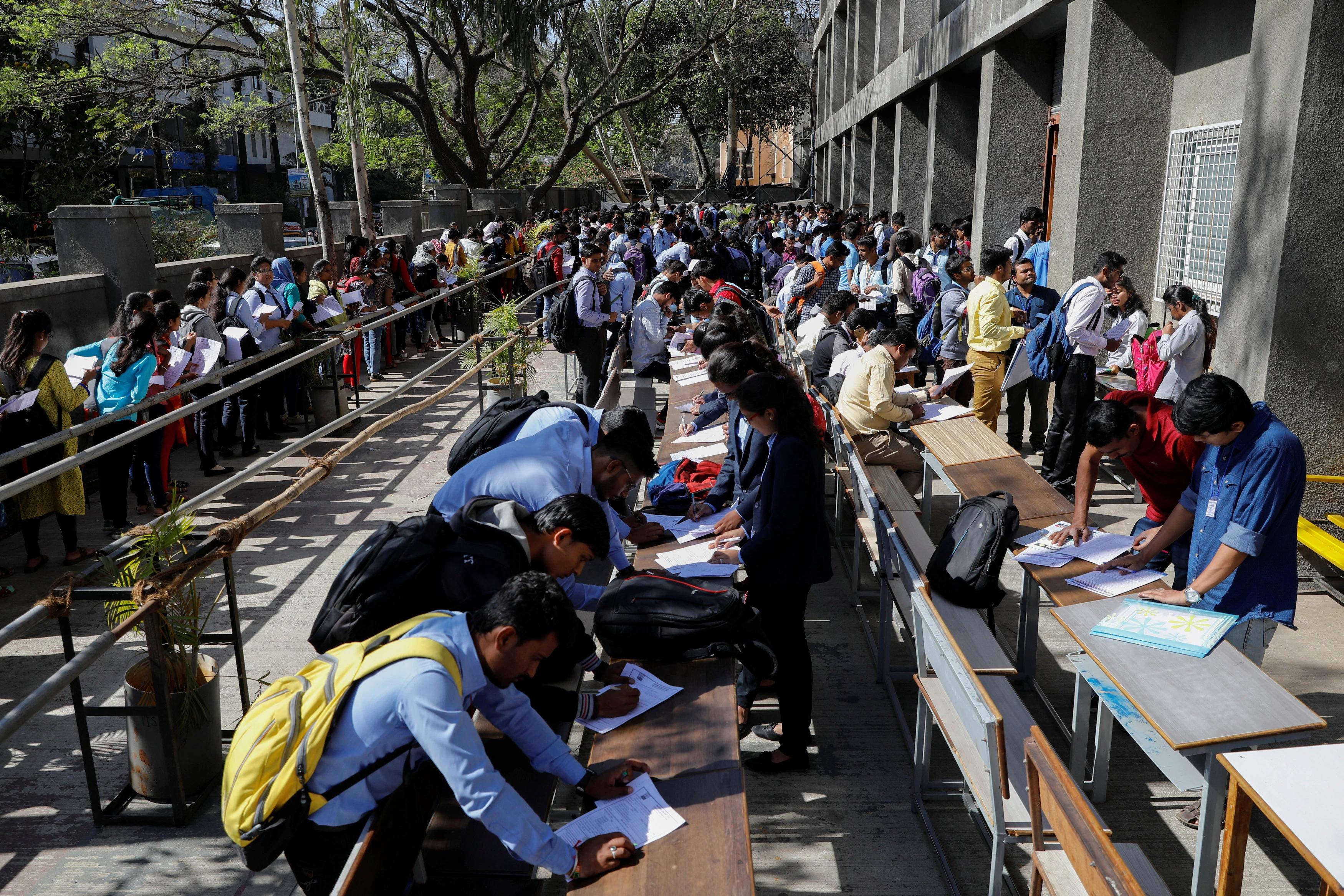
India's economic growth has been impressive, but growth alone is insufficient if it fails to create productive employment.
WHO OWNS KASHMIR’S WATER?
Sohail Bhat
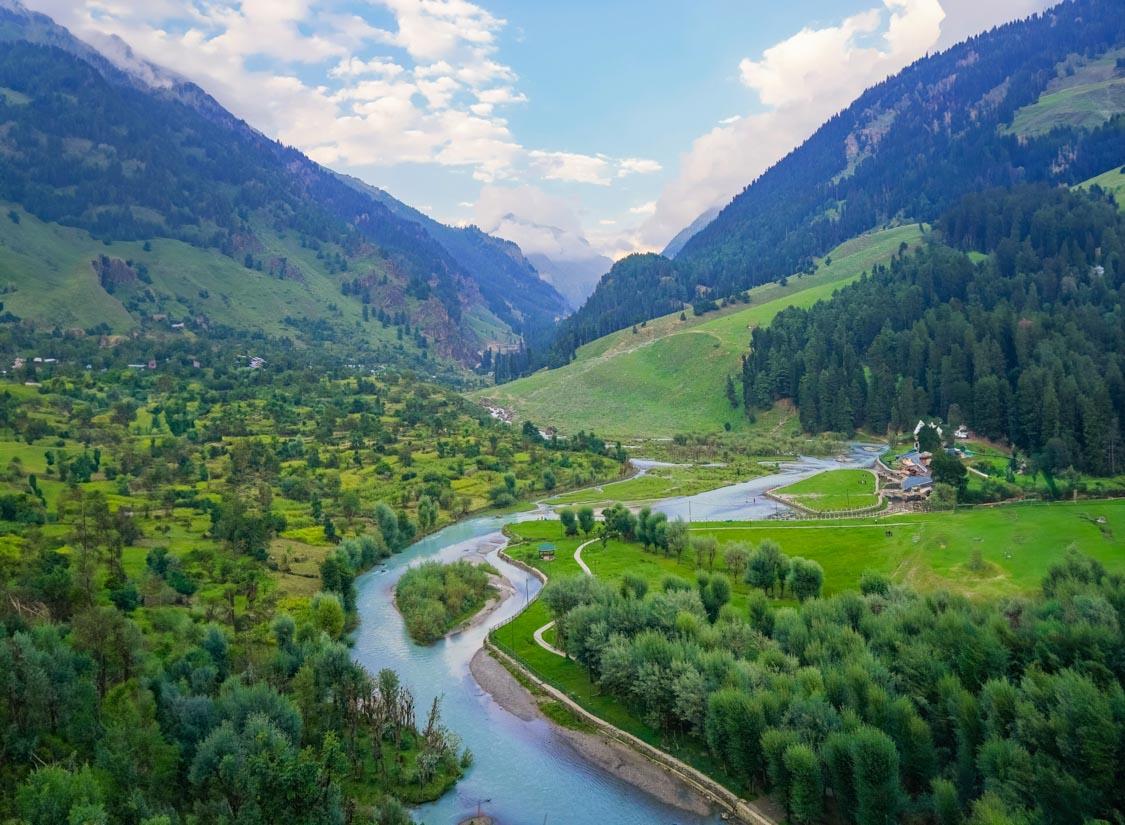
The rivers of Kashmir have always been more than scenery. They have carried people, shaped settlements, fed fields, powered machines and remained at the centre of one of South Asia’s enduring conflicts. As the old arrangements around water enter uncertain territory, a more immediate question is emerging inside Kashmir itself: who benefits from the water that flows through it?
TULBUL NAVIGATION PROJECT: Four Decades of Deadlock and Kashmir’s Stunted Water Economy
Pradeep Kumar Saxena
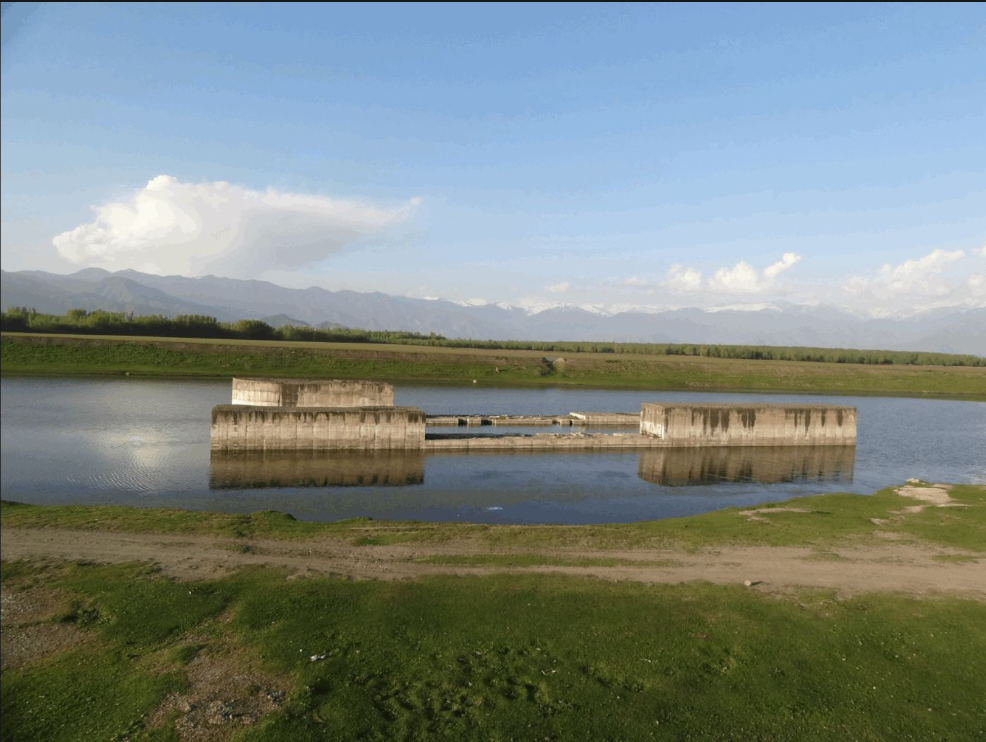
A partially built structure at the outlet of Wular Lake in north Kashmir has stood frozen since 1987, which is a mute testimony to the decades of restraint India exercised in the name of goodwill and friendship vis-a-vis Pak. The Tulbul Navigation Project, a modest navigation lock on the Jhelum at the lake’s outfall, was suspended when India halted construction in good faith following Pakistan’s objection.
Is the Calm Holding
Bashir Assad
Kashmir after Anantnag and Kulgam For much of the period following the Pahalgam attack, the most striking feature of Kashmir's security landscape was the relative absence of major attacks. That did not mean the threat had gone away. The Valley remained heavily guarded, intelligence operations continued and security agencies maintained a close watch over areas that had, at different points, been active theatres of militancy.

Economics of Inflation Crusade
Dr Mehraj Ud Din Shah
Inflation is swiftly unfolding macroeconomic fallout across the various sectors, wiping out income, savings, investment, demand, and employment, thereby giving a rude shock to the countries. The existing Inflationary phenomenon is intensively destabilizing the budget plans and regular consumption patterns of the majority of consumers across the globe, including in India.
The Other Kashmir
Sohail Bhat
Every conflict has two histories. One is recorded in military maps, diplomatic exchanges and official communiqués. The other unfolds in the everyday lives of ordinary people, where politics is experienced through schools, hospitals, employment, courts and the responsiveness of public institutions.