security
TULBUL NAVIGATION PROJECT: Four Decades of Deadlock and Kashmir’s Stunted Water Economy
By Pradeep Kumar Saxena | Tue Sep 08 2026
PART I: A Project frozen in Time
Executive Summary
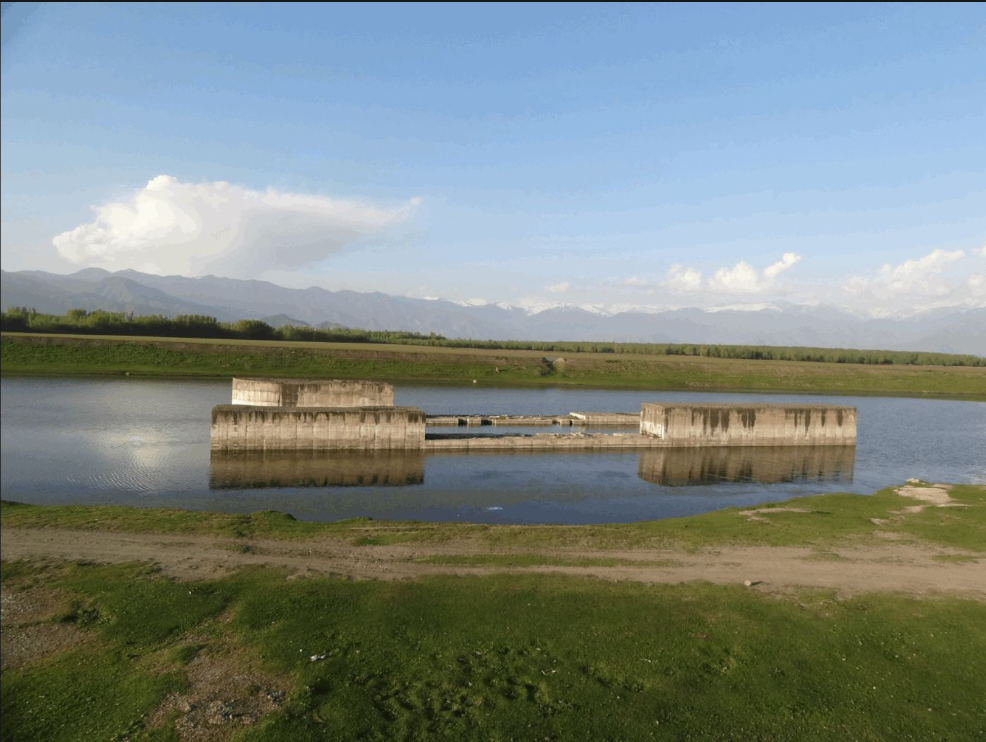
A partially built structure at the outlet of Wular Lake in north Kashmir has stood frozen since 1987, which is a mute testimony to the decades of restraint India exercised in the name of goodwill and friendship vis-a-vis Pak. The Tulbul Navigation Project, a modest navigation lock on the Jhelum at the lake’s outfall, was suspended when India halted construction in good faith following Pakistan’s objection. Fourteen rounds of bilateral talks produced no resolution; Pakistan consistently chose obstruction over agreement. This article, in two parts, exposes four decades of willful deadlock engineered by Pakistan through the systematic misuse of the Indus Waters Treaty and its enduring cost to Kashmir’s economy, waterways, and livelihoods. The costs fall entirely on Kashmir: collapsed navigation, degraded fisheries, and stunted tourism.
Background
For four decades, a partially completed structure has stood at the outlet of Wular Lake in north Kashmir: a monument, unfortunately, not to engineering ambition but to the costs of excessive accommodation. The Tulbul Navigation Project has become an enduring symbol of how the Indus Waters Treaty (IWT) of 1960 has been weaponised by Pakistan to hamper development that touches the daily lives of hundreds of thousands of Kashmiris.
The Jhelum River
The Jhelum is the Kashmir Valley’s sole natural waterway with viable inland navigation potential. Rising from a spring at Verinag on the valley’s southeastern rim, it flows through Khanabal, Anantnag, and Srinagar before emptying into Wular Lake at Baniyari. The lake receives inflows from several streams but drains through a single outlet at Ningli, from where an outfall channel continues to Baramulla. The gentle gradient over this 170 kms stretch between Khanabal and Baramulla has historically made it well suited for navigation.
These waterways have long served as Kashmir’s commercial lifelines. Before Independence, roughly 70% of the valley’s cargo moved by river aboard large wooden boats called ‘khachus’, each carrying up to 15 tonnes. As Kashmir’s horticulture sector boomed after Independence, especially around Sopore, freight volumes grew sharply, and mechanised river transport gradually replaced the oar-driven ‘khachus’.
Wular Lake once guaranteed year-round navigability through sustained winter discharge. That changed in the 1960s when, to reduce flooding in Sopore, authorities dredged 20 kilometres of the river channel between Ningli and Baramulla. The intervention achieved its objective, providing much needed relief to the people of Sopore, but produced an unintended consequence: the lake began draining prematurely each winter, cutting discharge to levels too shallow for commercial boats between October and February. Year-round navigation was effectively lost.
A Project Paused Mid-Construction
The Tulbul Project was conceived only to restore what had been lost through dredging. A navigation lock and flow-regulation structure at the Wular Lake outfall on the Ningli channel would ensure navigable depth across the critical 20-km stretch to Baramulla throughout the year. Beyond restoring navigation, the project promised flood moderation during the monsoon, reduced road congestion, and a measurable cut in truck emissions along the Jhelum corridor.
India began construction in 1984. Pakistan objected almost immediately, characterising the structure as a “storage work” on the Jhelum, a Western River over which the IWT grants Pakistan dominant allocation rights. India maintained, with considerable technical justification, that the project was neither a dam nor a reservoir but a navigation lock impounding a negligible quantum of water well within permissible limits. Six meetings of the Permanent Indus Commission between May 1986 and July 1987 yielded no agreement.
Pakistan’s objections were purely theoretical and in clear conflict with the fundamental object and purpose of the Treaty, i.e. to attain “the most complete and satisfactory utilization of the waters of the Indus system.” The Pakistani position, taken to its logical conclusion, would mandate the rapid depletion of Wular Lake without benefit to any stakeholder while imposing lasting navigational harm on the Jhelum. This destructive approach militates against basic common sense and rationality, as well as universally accepted principles of sound water resource management.
What followed is among the longest diplomatic standoffs in the Treaty’s history. When Commission-level talks failed, the matter was escalated to Secretary level. At Pakistan's insistence, and as a goodwill gesture to facilitate resolution at the governmental level, India suspended construction on 2 October 1987 even though no provision of the Treaty obligated it to do so. The suspension was initially for three months. Following two rounds of Secretary-level talks, India agreed to an additional three-month suspension and subsequently granted two one-month extensions of the work suspension through June 2, 1988. After five rounds of negotiations, India acceded to Pakistan’s request for an indefinite suspension pending an amicable settlement. As always, India demonstrated its commitment to the spirit of goodwill and friendship that undergirds the Treaty and made a concession not mandated by the Treaty.
Pakistan’s conduct reveals a consistent purpose: not to resolve, but to prolong and to defeat through delay. The project has remained suspended ever since, a deliberate outcome that serves Pakistan’s strategic interest in keeping Kashmir’s water resources infrastructure perpetually incomplete.
Part II will examine the human and economic cost of this suspension.
PART II — The Cost of Asymmetry and the Case for Completion
The Navigational and Fisheries Toll
The consequences of the Tulbul suspension were tangible and immediate. Without the project, the Jhelum remains a seasonal waterway. The timber trade, which once moved substantially by water, has migrated to roads, raising freight costs and accelerating highway wear. Local boatmen who once supplemented agricultural incomes through cargo and passenger services have lost that livelihood entirely.
The fisheries toll is equally grave. Wular Lake sustains one of South Asia’s most significant inland fisheries, its ecological health directly tied to regulated inflow and outflow. Without that regulation, post-monsoon discharge drains the lake precipitously, leaving water depths far below what optimal fish production requires. Annual fish output has collapsed from over 10,500 tonnes to barely 1,500 tonnes; lotus harvests have similarly declined. Tens of thousands of fishing families across Bandipora and Baramulla districts have lost their primary livelihoods, a loss that ripples outward, suppressing community investment in tourism infrastructure such as boardwalks and vantage points, and stalling broader economic growth across north Kashmir.
Tourism
Unregulated winter water levels, which become too shallow between October and February, have made river navigation unreliable, effectively killing the revival of scenic boat tourism along the Jhelum between Srinagar and Wular, a historic corridor whose natural beauty rivals the celebrated waterways of Europe. Wular Lake itself, once central to Kashmir’s ecotourism offer, has shrunk from over 200 sq km historically to roughly 80 sq km today under the combined pressure of siltation, weed proliferation, and encroachment, which otherwise could have been moderated by regulated hydrology. Kayaking on the upper Jhelum reaches near Verinag has been similarly curtailed. The economic potential of this corridor, including birdwatching, heritage boat tours, and adventure sports, remains locked and unrealised.
The Asymmetry of Costs
The deeper inequity lies in who bears the cost of the stalemate. The commissioning of the Mangla Dam downstream altered the natural hydrological and ecological dynamics of the Jhelum system. Pakistan has no navigational, fisheries, or livelihood interest in the Jhelum at the reach downstream of Wular; its objections are theoretical and strategic. Indian technical experts have consistently argued and shown that the impoundment is minimal and the project falls squarely within Treaty limits. Yet, Pakistan has refused to budge. India is made to pay a totally avoidable price through stunted infrastructure and forgone opportunity.
A valley whose primary economic assets are its landscapes, waterways, and natural abundance has been denied the basic water management tools those assets require. Had the Tulbul Project been completed, it would have cost a fraction of what has since been spent on road infrastructure built to compensate for the loss of navigable waterways. The Dal Lake restoration programme alone has absorbed thousands of crores over three decades with limited success, partly because the hydrological levers that would make restoration durable remain out of reach.
The Case for revival
The Tulbul suspension stands as the most brazen instance of Pakistan’s systematic misuse of the Indus Waters Treaty to obstruct legitimate Indian development. For nearly four decades, Pakistan has exploited this unresolved matter as a diplomatic instrument by blocking Treaty mandated negotiations, conflating the issue with the broader Jammu & Kashmir issue and ensuring that vital infrastructure for a landlocked, economically marginal region remains permanently frozen.
The case for completing the project has not weakened with time but grown stronger. Completion would restore year-round navigability along the Jhelum, revitalise agriculture and horticulture transport, stimulate water-based tourism, and deliver meaningful flood moderation for vulnerable towns like Sopore. Regulated flows would also firm up downstream hydroelectric output.
The Navigation Project at Wular’s outlet was conceived as a modest structure to meet genuine and addressable needs. The Tulbul case stands as a clear illustration of why India’s decision to keep the Indus Waters Treaty in abeyance was a measured correction.
Pradeep Kumar Saxena is the Former Indian Commissioner for Indus Waters
Related Articles
Economics of Jobless Growth in India
Dr Mehraj Ud din Shah
India's economic growth has been impressive, but growth alone is insufficient if it fails to create productive employment.

The Protest That Won’t Go Away
Rafi Ahmad Mir
Pakistan-administered Kashmir and the limits of political management
WHO OWNS KASHMIR’S WATER?
Sohail Bhat
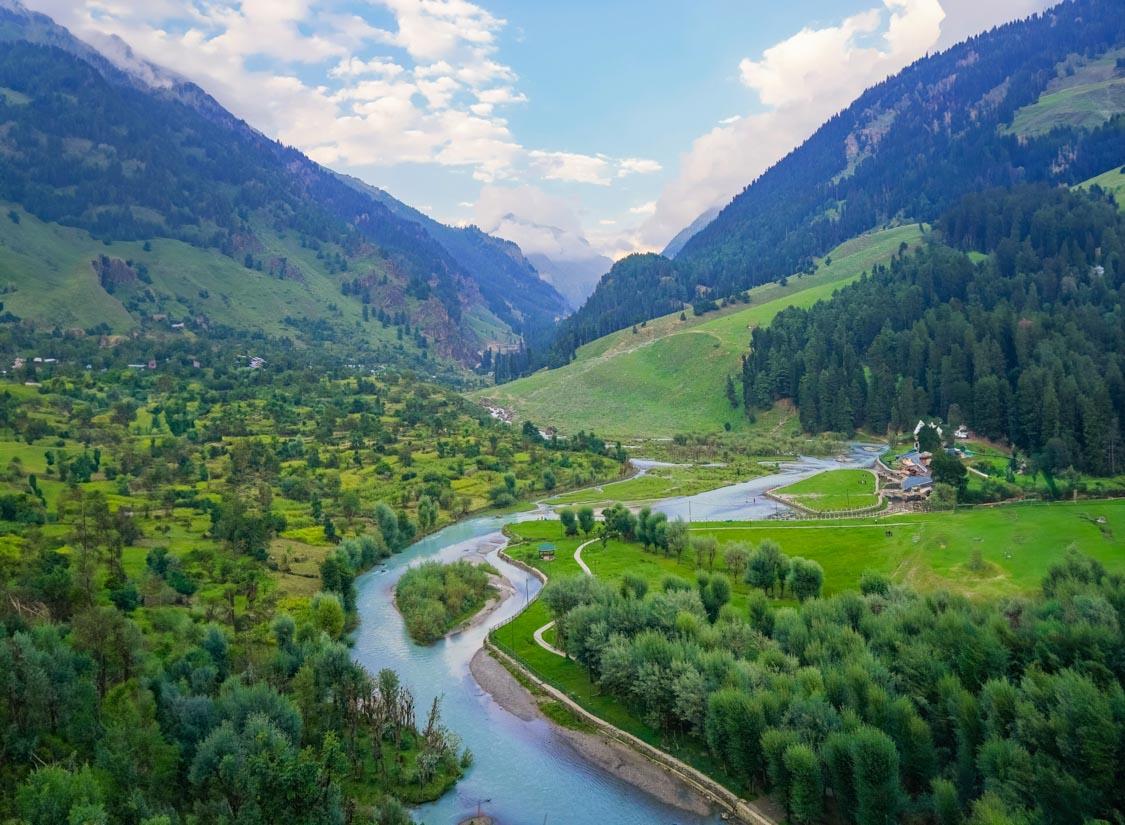
The rivers of Kashmir have always been more than scenery. They have carried people, shaped settlements, fed fields, powered machines and remained at the centre of one of South Asia’s enduring conflicts. As the old arrangements around water enter uncertain territory, a more immediate question is emerging inside Kashmir itself: who benefits from the water that flows through it?
Is the Calm Holding
Bashir Assad
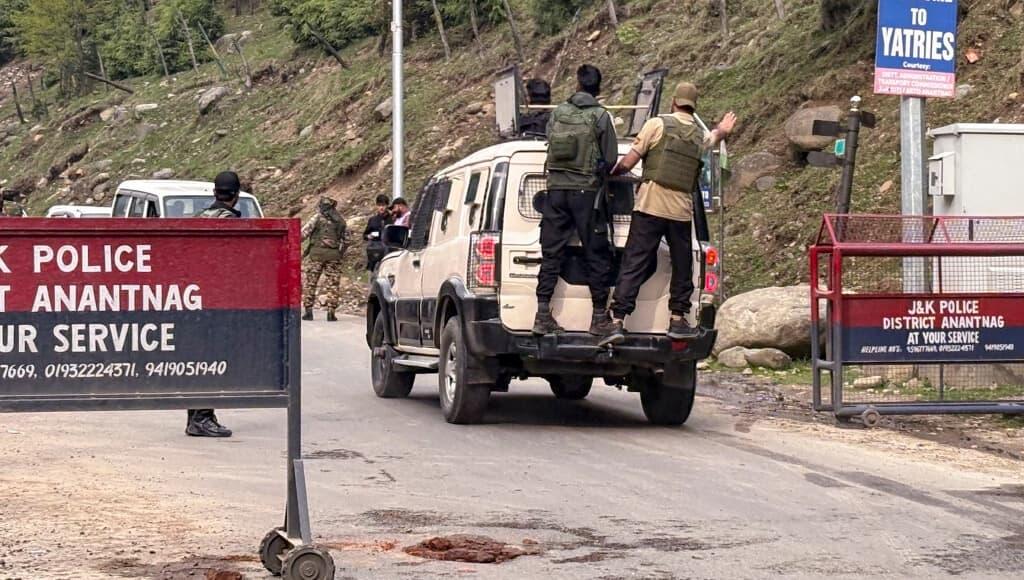
Kashmir after Anantnag and Kulgam For much of the period following the Pahalgam attack, the most striking feature of Kashmir's security landscape was the relative absence of major attacks. That did not mean the threat had gone away. The Valley remained heavily guarded, intelligence operations continued and security agencies maintained a close watch over areas that had, at different points, been active theatres of militancy.
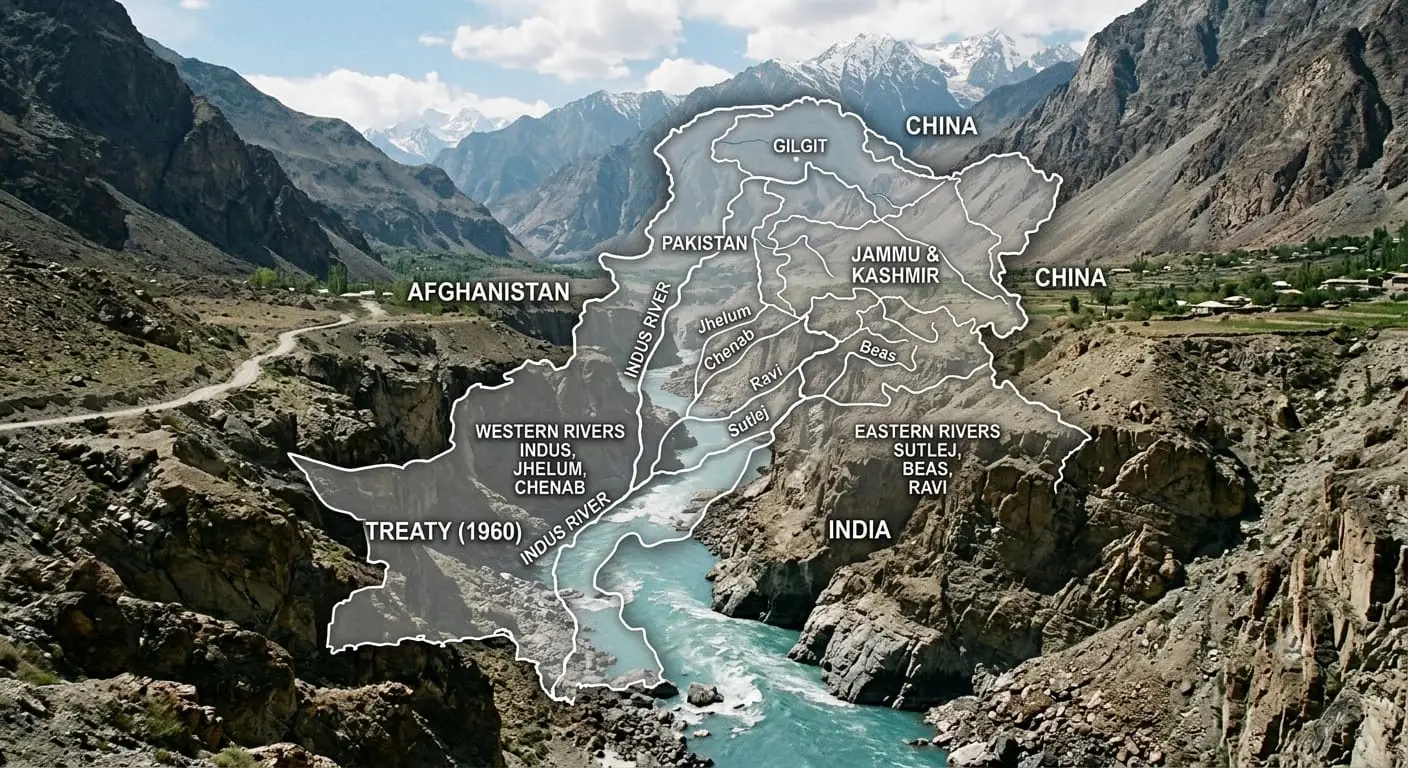
India Kept the Indus Waters Treaty Alive — Until It Became an Unbearable Burden
Kushvinder Vohra
For decades, the Indus Waters Treaty (IWT) has been celebrated globally as one of the world’s most successful international water-sharing agreements. It survived wars, military stand-offs, and prolonged hostility between India and Pakistan. Yet one fundamental question has rarely been examined honestly: what actually kept the Treaty alive for over six decades?
Kashmir and the New Asian Geopolitics How China’s Rise is Reshaping the Strategic Environment
KC Desk
For much of the twentieth century, the Kashmir region was understood through a relatively stable analytical framework. It was a territorial and political conflict between India and Pakistan, shaped by Partition, sustained by competing claims of sovereignty, and periodically intensified by military confrontation.