politics
Beyond the Pomp: The Logistical Strain of the 3-Tier Local Governance Promise
By Bashir Assad | Thu Nov 05 2026
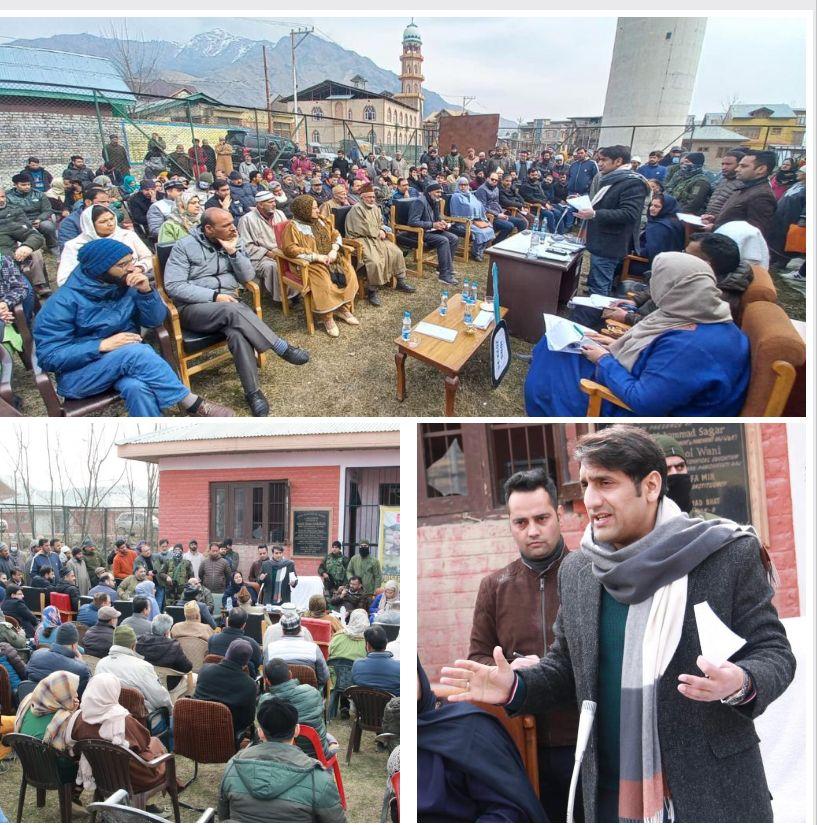
For twenty-eight thousand former Panchayat members across the fractured valleys and rugged highlands of Jammu and Kashmir, democracy has long been an exercise in prolonged anticipation. Following the highly publicized Assembly elections that finally restored a regional legislative assembly, the focus has abruptly shifted from the grand statecraft of the civil secretariat to the unpaved alleys of rural development. The recent announcement by the Lieutenant Governor that the long-delayed, three-tier local body elections will soon be conducted to restore Panchayats and Urban Local Bodies has been met with a mix of political triumph and deep institutional anxiety.
The backdrop to this sweeping promise is a stark administrative void. For over a year, the fundamental democratic architecture of the region has been entirely vacant. The terms of the primary Panchayats and Block Development Councils expired in January 2024, while urban municipal corporations wrapped up their tenures shortly before that. By February 2026, the five-year term of the final tier-the District Development Councils-came to a definitive close.
In the long interim, the territory has functioned under a system of pure bureaucratic administration. Through sweeping executive orders, Block Development Officers were designated as institutional administrators, replacing elected village representatives with mid-level state officials. While this arrangement maintained the illusion of continuity on paper, the ground reality across the province has been defined by severe operational paralysis. The upcoming polls, intended to breathe life back into grassroots democracy, face an uphill battle. Rural municipal machineries find themselves severely under-equipped for a sudden decentralization of power, even as they face systemic friction from a newly structured state assembly eager to assert its own legislative domain over local development funds.
The backdrop to this sweeping promise is a stark administrative void. For over a year, the fundamental democratic architecture of the region has been entirely vacant.
The Anatomy of the Year-Long Void
When the grassroots bodies dissolved, the immediate consequence was not a sudden collapse of public order, but rather a slow, suffocating erosion of local accountability. In rural districts like Kupwara, Anantnag, and Doda, the Panchayat Ghar was transformed overnight from a bustling forum of community dispute resolution into a locked, dusty outpost of the state apparatus. Under the bureaucratic administration model, a single Block Development Officer was routinely handed administrative control over twenty to thirty distinct Halqa Panchayats. The mathematical impossibility of an individual bureaucrat effectively addressing the hyper-local grievances of forty thousand residents across distinct topographies became apparent almost immediately.
Basic village infrastructure issues, from the clearing of seasonal irrigation canals to the maintenance of rural solar grids, ground to a halt. In the border districts, where residents depend heavily on local panches and sarpanches to act as intermediaries with the security forces and central construction agencies, the lack of elected representatives left a profound representation deficit. Without a local representative to sign off on small-scale projects, funding under the Mahatma Gandhi National Rural Employment Guarantee Act experienced massive processing bottlenecks. The direct, informal channel of community dispute resolution disappeared, forcing ordinary citizens to navigate a rigid, multi-layered bureaucratic labyrinth just to obtain a basic income or residency certificate.
Rural Municipalities and the Decentralization Shock
The core assumption behind the sudden push for the three-tier local body elections is that the rural municipal machinery can instantly pivot back to an empowered, decentralized model of governance. However, an objective audit of the ground infrastructure reveals a system plagued by severe administrative exhaustion.
The J&K State Election Commission has aggressively pushed forward with the technical prerequisites for the polls, finalizing the extensive Panchayat electoral rolls with a registry exceeding 72 lakh voters. Yet, the physical and administrative framework of the Rural Development Department is struggling to keep pace. Local block offices are facing severe staff shortages, lacking the necessary technical assistants, junior engineers, and account clerks required to verify and authorize grass-roots development plans.
The logistical reality of managing an abrupt transition from centralized, top-down bureaucratic control back to highly localized community planning is immensely challenging. For over a year, funding pathways have been recalibrated to bypass local consensus entirely, operating instead through executive sanctions. Reversing this top-down flow overnight requires re-training thousands of line-department officials who have grown accustomed to managing public funds without the oversight of village committees. Rural municipalities are also grappling with an immense backlog of delayed projects, meaning the newly elected local bodies will inherit a mountain of stalled work, depleted budgets, and public distrust from day one.
The Impending Institutional Tug-of-War
The most complex challenge facing the three-tier local governance structure is not logistical, but constitutional. The recent revival of the Jammu and Kashmir Legislative Assembly has introduced a powerful new dynamic into the region's balance of power. For the past several years, in the complete absence of a regional legislative body, the three-tier Panchayati Raj system-particularly the District Development Councils-was heavily promoted by the administration as the primary democratic voice of the territory. DDC chairpersons were granted extensive protocols, substantial budgets, and direct access to state planning boards.
With a newly structured state assembly now fully operational, an intense institutional conflict over territorial authority is inevitable. Members of the Legislative Assembly are naturally eager to reclaim their traditional control over local development funds and regional planning priorities. Many MLAs view the entrenched power of the DDC structures as an artificial administrative creation designed to dilute the influence of the legislative assembly.
This impending friction manifests in several key areas. Direct competition is brewing between MLA constituency development funds and the rural development allocations managed by DDCs. Furthermore, ongoing friction regarding administrative protocols, office space allocations, and formal seating arrangements at official state functions has sparked bitter arguments over the local warrant of precedence. There is also a concerted push within the new assembly to amend regional municipal acts, aiming to bring local bodies under tighter legislative oversight. This institutional rivalry threatens to create a deeply gridlocked environment, where rural Sarpanches and district chairpersons will likely find themselves caught between the administrative directives of the civil secretariat and the political demands of their local MLAs.
Despite the public declarations of intent from the Lieutenant Governor's office, the actual timeline for the polls remains a highly contested political issue. A complex debate involving the State Election Commission, the ruling regional coalition, and the national opposition has effectively stalled the announcement of formal dates. The primary delay stems from the complex process of finalizing reservation percentages for Other Backward Classes within the local bodies.
The Political Brinkmanship of Delay
Despite the public declarations of intent from the Lieutenant Governor's office, the actual timeline for the polls remains a highly contested political issue. A complex debate involving the State Election Commission, the ruling regional coalition, and the national opposition has effectively stalled the announcement of formal dates. The primary delay stems from the complex process of finalizing reservation percentages for Other Backward Classes within the local bodies. While the State Election Commission notes that technical preparations—including the procurement of voting compartments and ballot boxes—are largely complete, the political clearance of the Dedicated Backward Classes Commission report remains bogged down in cabinet reviews.
The national opposition has repeatedly accused the regional government of deliberately using these administrative hurdles to delay the local polls, arguing the ruling coalition is hesitant to test its standing at the grassroots level so soon after the assembly elections. Conversely, the ruling coalition maintains that conducting local elections without resolving the complex structural issues surrounding OBC ward rotations would permanently disenfranchise marginalized communities. Amid this political standoff, the All Jammu and Kashmir Panchayat Conference has launched a massive outreach program targeting newly elected MLAs, issuing a strict 90-day ultimatum demanding the immediate restoration of grassroots democracy and warning of widespread public agitations if local governance continues to be sacrificed for short-term political convenience.
The Cold Reality of Winter Logistics
As political parties debate structural policy points, the relentless geography of the region presents a strict physical deadline. The State Election Commission had previously warned the administration that if a final decision to hold the polls was not reached before the onset of the harsh winter season, the entire electoral window would have to be deferred to the spring of the following year.
Conducting a multi-phased election across the territory's tens of thousands of polling stations requires an immense logistical deployment. Transporting voting materials, securing remote polling stations in snow-bound mountainous zones, and maintaining communication lines across isolated districts becomes nearly impossible once the winter freezes set in. While the administration has made the strategic decision to retain the additional security forces deployed during the assembly polls within the territory to avoid high redeployment costs, the window for safe, accessible voting is closing fast. If the political logjam over ward reservations drags on much longer, the promise of immediate grassroots restoration will inevitably run into the harsh realities of winter isolation, forcing a long delay that will keep the territory under bureaucratic control well into the coming year.
The Path Forward
The path forward requires moving past high-minded rhetoric to confront the deep systemic imbalances in the region's governance model. The long reliance on bureaucratic administrators has created an insular administrative style that is fundamentally incompatible with the principles of localized, public accountability.
To ensure the long-term success of the three-tier local governance model, the administration must prioritize a strict demarcation of authority. This requires clearly defining the legislative boundaries between the regional assembly and the local panchayat structures to prevent ongoing political gridlock. Additionally, there must be a rapid capacity-building effort to substantially increase administrative staffing and technical support within the Rural Development Department before the transfer of power occurs. Finally, the depoliticization of institutional timelines is vital, establishing an independent, permanent framework for local body elections to ensure corporate terms cannot be arbitrarily extended or suspended by executive decree.
True grassroots democracy cannot be treated as a temporary administrative fix or a performative political exercise. Until the local bodies are fully restored, properly funded, and legally protected from the shifting priorities of the state assembly, the three-tier system will remain a promise unfulfilled. The ordinary citizens of the region will continue to pay the price, caught in a frustrating limbo between the absolute control of the bureaucrat and the distant promise of the ballot box.
Related Articles
Economic Potential in Jammu and Kashmir- Part-I
Dr Mehraj Ud Din Shah
This anecdote attempts to uncover the economic potential of Jammu and Kashmir through a multidimensional analysis of its primary, secondary and tertiary sectors. It explores the prospects of agriculture, horticulture, tourism, handicrafts, food processing, renewable energy,
The Indus Waters Treaty in Abeyance: Separating Facts from Rhetoric
Devendra Kumar Sharma
The Indus Water Treaty (IWT), signed in Karachi on September 19, 1960, by the Indian Prime Minister Jawaharlal Nehru and Pakistani President Ayub Khan, was a historic water-sharing Agreement.

The Connectivity Conundrum: Hybrid Vulnerabilities in the Trans-Regional Grid
Insha Sofi
For generations, the primary objective of the security architecture in Jammu and Kashmir was defined by predictable paradigms. The state apparatus focused on securing urban population centers against street agitation, while simultaneously reinforcing the multi-layered counter-infiltration grids along the Line of Control.
The Silicon Ravine: Global Capital, Remote Tech, and Kashmir’s Sovereign Digital Frontier
Sohail Bhat
In the quiet, low-lit cafes lining the Bund in Srinagar and within the minimalist co-working spaces cropping up across Srinagar and Jammu, a quiet macro-economic transformation is unfolding.
The Durbar Move Dilution and the Winter Secretariat Model
Kashmir Central Desk
For nearly a century and a half, the seasonal rhythm of governance in Jammu and Kashmir was dictated by a monumental administrative migration. Introduced in 1872 by Maharaja Gulab Singh, the bi-annual Darbar Move saw the entire government machinery-complete with thousands of employees, ministers, and truckloads of official files-pack up and travel across the treacherous Jammu–Srinagar National Highway.
The Pulpit vs. The State: The Waqf Board Backlash
Intikhab Alam
For generations, the Friday congregational prayer across the Kashmir Valley has served as a profound spiritual anchor and a mirror to contemporary society. The Mimbar, or pulpit, has stood as a sacred yet highly contested space where the religious, social, and political currents of the territory converge.