culture
BRINGING KASHMIR’S BORDER AREAS ONTO THE TOURISM MAP
By Dr. Mareaya Fayaz | Tue Mar 17 2026
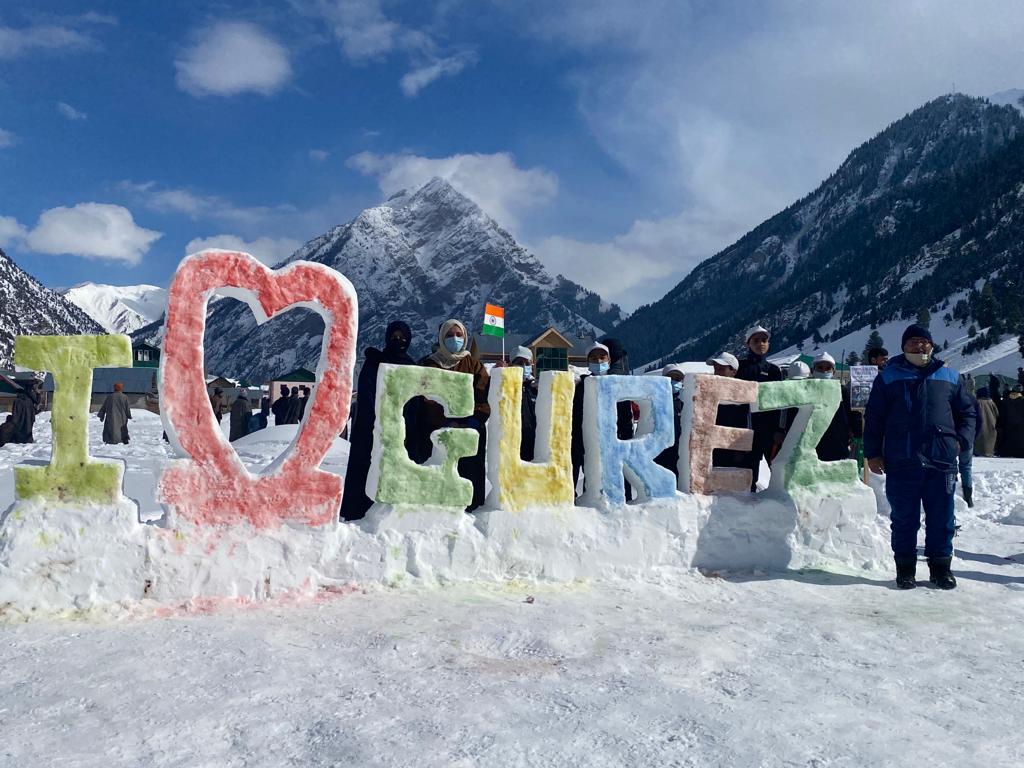
For decades, Kashmir’s tourism narrative revolved around its iconic destinations like, Gulmarg’s snowy slopes, Pahalgam’s pastoral charm and Srinagar’s shimmering Dal Lake. Yet beyond these celebrated landscapes lies another Kashmir, tucked along the Line of Control where valleys unfold in silence, rivers cut through rugged terrain and villages stand as living testimonies of resilience.
Places such as Teetwal, Tulail, Keran, Machil, Tangdhar, Gurez and the lesser-known hamlets of Karnah, Hajipass and Masilburis represent a frontier of beauty that has remained largely unexplored. Today, with an improved security environment and renewed administrative focus, these border areas are gradually stepping into the spotlight, carrying with them the promise of a new tourism chapter for the valley.
From Teetwal and Tulail to Karnah and Gurez, a new era of peace, community resilience and the Army’s outreach is transforming Kashmir’s frontier landscapes into emerging tourism frontiers.
The story of border tourism in Kashmir is inseparable from the story of conflict and calm. For years, these regions were synonymous with cross border shelling, restricted movement and the anxieties of life on the frontier. Tourism was not merely absent; it was unimaginable. However, the reaffirmation of the ceasefire understanding along the LoC in February 2021 marked a turning point. The gradual decline in hostilities brought a sense of normalcy to villages that had long lived under the shadow of uncertainty. Roads reopened, travel advisories softened and perhaps most importantly, curiosity replaced caution among travellers.
As peace took root, the untapped potential of these landscapes began to reveal itself. Teetwal offers a rare blend of history and natural splendor where the famed Kaman Bridge stands as a symbol of connection and hope. Tulail valley, extending beyond Gurez, remains one of Kashmir’s most pristine stretches, an expanse of alpine meadows, wooden hamlets and glacial streams that evoke a timeless wilderness. Karnah, with its breathtaking vistas and cultural richness and Masilburis, nestled amid dense forests and high ridges, embody the raw charm of Kashmir’s frontier life. These places are not merely scenic destinations; they are living cultural landscapes where traditions, folklore and community bonds continue to thrive.
The reopening of border destinations following security reviews by the administration last month has further strengthened this transformation. Remote pockets of Kupwara have witnessed a remarkable influx of visitors while Uri and Gurez have also recorded encouraging tourist numbers. Lolab Valley’s recognition as the best offbeat destination in 2023 underscores a growing acknowledgment of Kashmir’s hidden treasures. For residents who once sought shelter in bunkers during shelling, the sight of tourists exploring their villages has become a powerful symbol of change.
Yet the emergence of border tourism is not solely the result of improved security. It is equally a story of local aspiration and institutional support. Residents, particularly youth, have begun to view tourism as a pathway to livelihood and stability. Homestays in Keran, Tangdhar and Tulail have emerged as intimate windows into local life, offering visitors an authentic experience of Kashmiri hospitality while generating income for families. The cultural simplicity, traditional architecture and organic lifestyles of these villages have become key attractions, often leaving visitors with memories that extend beyond scenic photographs.
Central to this evolving narrative has been the role of the Indian Army, whose presence in these regions extends beyond security. In many remote border villages, the Army has functioned as a lifeline, facilitating infrastructure development, providing healthcare outreach and supporting educational initiatives. Under programmes such as Operation Sadbhavana, schools, vocational training centres and community projects have been established, helping bridge developmental gaps. Army supported cultural events, adventure activities and local fairs have also contributed to promoting these regions as safe and welcoming destinations.
The Army’s engagement with youth through sports initiatives, skill-development programmes and national integration tours has fostered a sense of confidence and connectivity. For many young residents, participation in recruitment drives and educational programmes has opened new avenues, reducing the vulnerabilities that once plagued border communities. Women empowerment initiatives and vocational training for marginalised groups have further strengthened the socio-economic fabric, ensuring that tourism growth is inclusive and community driven.
Despite these encouraging developments, challenges remain. Infrastructure continues to lag behind the growing tourist interest. Many border destinations lack adequate accommodation, reliable transport networks and consistent communication facilities. Harsh weather conditions and restricted access in certain areas add to the complexities of travel. The need for structured tourism planning, improved road connectivity and professional guiding services is evident. Locals and stakeholders have also voiced the demand for dedicated development authorities, particularly for regions like Gurez and Tulail, to ensure coordinated and sustainable growth.
The concept of homestays has emerged as a practical solution to infrastructure constraints while preserving the authenticity of these destinations. Encouraged by the administration and supported by security agencies, homestays not only provide accommodation but also deepen cultural exchange between visitors and hosts. However, awareness about these opportunities remains limited, highlighting the importance of targeted promotion and digital outreach to position border tourism on the national and international travel map.
Beyond economics, the rise of tourism in these frontier regions carries profound social implications. The return of weddings to village homes, the revival of local festivals and the visible enthusiasm of residents welcoming travellers all signal a renewed sense of normalcy. Tourism has become a bridge, connecting isolated communities with the wider world, fostering dialogue and reshaping perceptions about life along the LoC.
In this broader transformation, the collaboration between the government, local communities and the Indian Army stands out as a defining factor. Administrative efforts to reopen destinations, improve connectivity and encourage private investment are gradually complementing grassroots initiatives. Meanwhile, the Jammu & Kashmir government and Army’s continued engagement in developmental and outreach activities has reinforced the confidence necessary for tourism to flourish. Together, these efforts are not only bringing visitors to the borderlands but also restoring hope among residents who long awaited such opportunities.
Kashmir’s border regions today stand at a crossroads between memory and possibility. The valleys of Teetwal, Tulail, Karnah and Masilburis embody both the scars of conflict and the promise of peace. Their inclusion on the tourism map is more than a geographical expansion; it is a narrative of resilience, partnership and renewal. As travellers seek experiences beyond crowded destinations, these frontier landscapes offer a rare blend of serenity, adventure and cultural depth.
The journey of border tourism in Kashmir is still unfolding, shaped by evolving realities and sustained efforts. What remains undeniable is the transformative power of peace and collaboration in unlocking hidden potential. If nurtured with thoughtful planning, community participation and continued institutional support, these remote valleys can redefine Kashmir’s tourism identity by inviting the world not only to witness their beauty but also to understand the strength and spirit of the people who call them home.
Related Articles
As the tide shifts…
Dr. Mareaya Fayaz
JAMMU & KASHMIR. Here, a complex tapestry of political, social, and historical threads, weaves the narrative of a place long marred by conflict. The recent years, however, have witnessed a subtle but significant transformation in the security environment, offering a glimmer of hope for peace, progress and a renewed sense of ambition in the valley.
SNOWLESS WINTERS, SCORCHED ORCHARDS
Mian Tufail
In Kashmir, winter has always been more than a season. It is the valley’s silent architect, shaping rivers, nourishing springs and preparing orchards for the bloom of spring. Snow resting on the Pir Panjal and the higher Himalayas has traditionally functioned as a natural reservoir, melting slowly to sustain agriculture and drinking water systems through summer.
NARCO-TERRORISM AS HYBRID WARFARE AND THE CENTRALITY OF J&K POLICE
Mohammad Zaid Malik
Hybrid warfare does not announce itself with tanks or troop movements. It advances silently, exploiting social fractures, psychological vulnerabilities and illicit economies. In Kashmir, narcotics have become one of the most effective non-kinetic weapons deployed against internal stability. The response to this threat has not been led from distant command rooms or border posts but from within society itself.
WHY EDUCATED KASHMIRI YOUTH ARE CHOOSING TO COME BACK?
Sohail Ahmad
On a pale winter morning, as mist rises gently above the waters of the Dal Lake and shopkeepers lift their shutters in civil lines area in Srinagar, 29-year-old Aamir opens his laptop in a quiet cafe overlooking the boulevard. His screen flickers to life with dashboards, data streams and code repositories connected to a fintech firm headquartered in Pune.
PAKISTAN’S VANISHING DEMOCRATIC SPACE ECHOES OF ZIA IN ASIM MUNIR’S ERA
Bashir Assad
Watching General Asim Munir steadily undermine Pakistan’s political system, consistently shrinking the space for elected leadership and leaving almost no room for civilian voices in domestic governance or diplomatic decision-making, I chose to write on the legacy of General Zia-ul-Haq.
Economics of Jobless Growth in India
Dr Mehraj Ud din Shah
India's economic growth has been impressive, but growth alone is insufficient if it fails to create productive employment.